

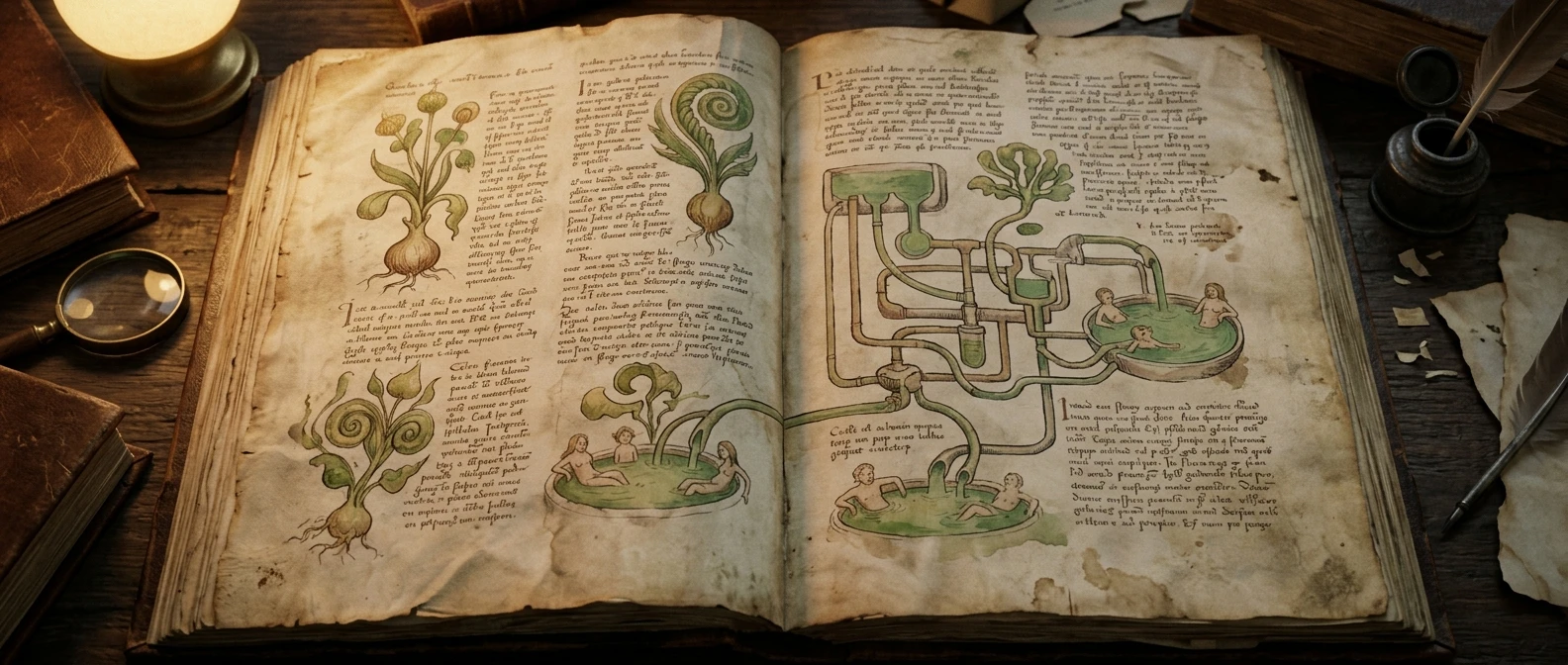
A rare book dealer named Wilfrid Voynich bought a manuscript in 1912 from a Jesuit college near Rome, and more than a century of professional codebreakers, linguists, and now machine learning researchers have failed to read a single sentence of it. That track record is the real story. Has the Voynich Manuscript been decoded? No, and the specific shape of that failure tells you more about the book than another breathless theory would.
A Book That Shouldn’t Exist: What Wilfrid Voynich Found in 1912
Voynich was already known in the trade for digging rare volumes out of European libraries and convents, and the manuscript he found at the Villa Mondragone fit the pattern of his best finds: old, unusual, and unidentified. It runs to around 240 vellum pages filled with flowing, confident handwriting in an alphabet nobody recognized, alongside drawings of plants that match no known species, star charts, and small nude figures bathing in green liquid through connected pipes. Voynich spent the rest of his life trying to get scholars to identify the text, and none of them could.
The manuscript is sometimes called the most mysterious book in the world, and the label has stuck for a reason: every serious attempt to read it has run into the same wall.
The Script Nobody Can Place: Why Voynichese Isn’t Like Any Known Language
The writing system, now called Voynichese, uses somewhere between 20 and 30 distinct characters, none of which match any known alphabet. That alone isn’t strange; plenty of historical ciphers invented new symbols. What’s strange is the statistical behavior of the text underneath them.
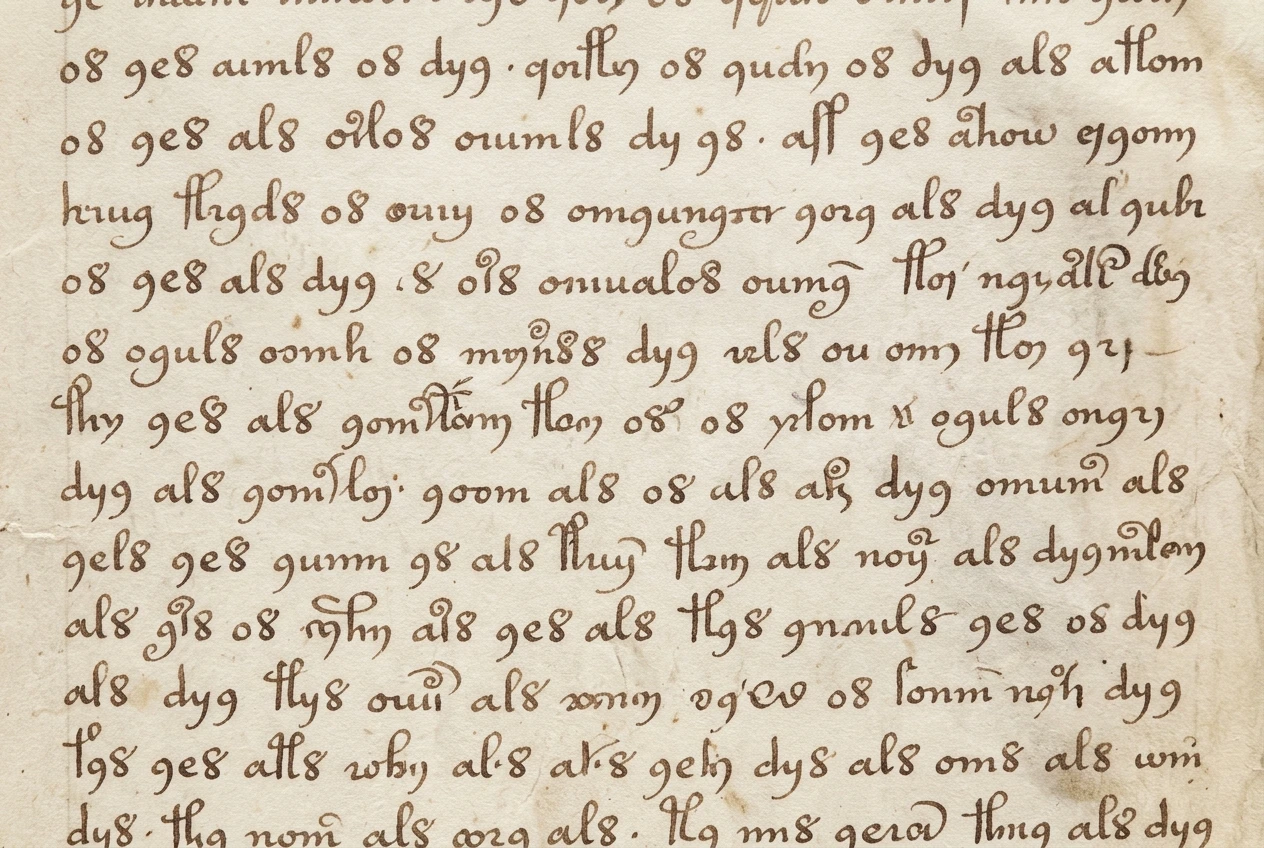
Word lengths cluster tightly, certain characters almost never appear next to each other, and some “words” repeat three or four times in a row in ways no natural language does. Linguists who run frequency analysis on Voynichese get patterns that look too regular to be a real language and too structured to be random gibberish. That contradiction sits at the center of every decoding attempt that has followed.
William Friedman and the Codebreakers Who Met Their Match
William Friedman built his reputation cracking Japanese military codes during World War II, and he spent decades of his spare time afterward on the Voynich Manuscript, forming a study group of fellow cryptanalysts to attack it with the same tools. He suspected an invented language, a constructed system rather than an encoded natural one, and he never got further than that suspicion.
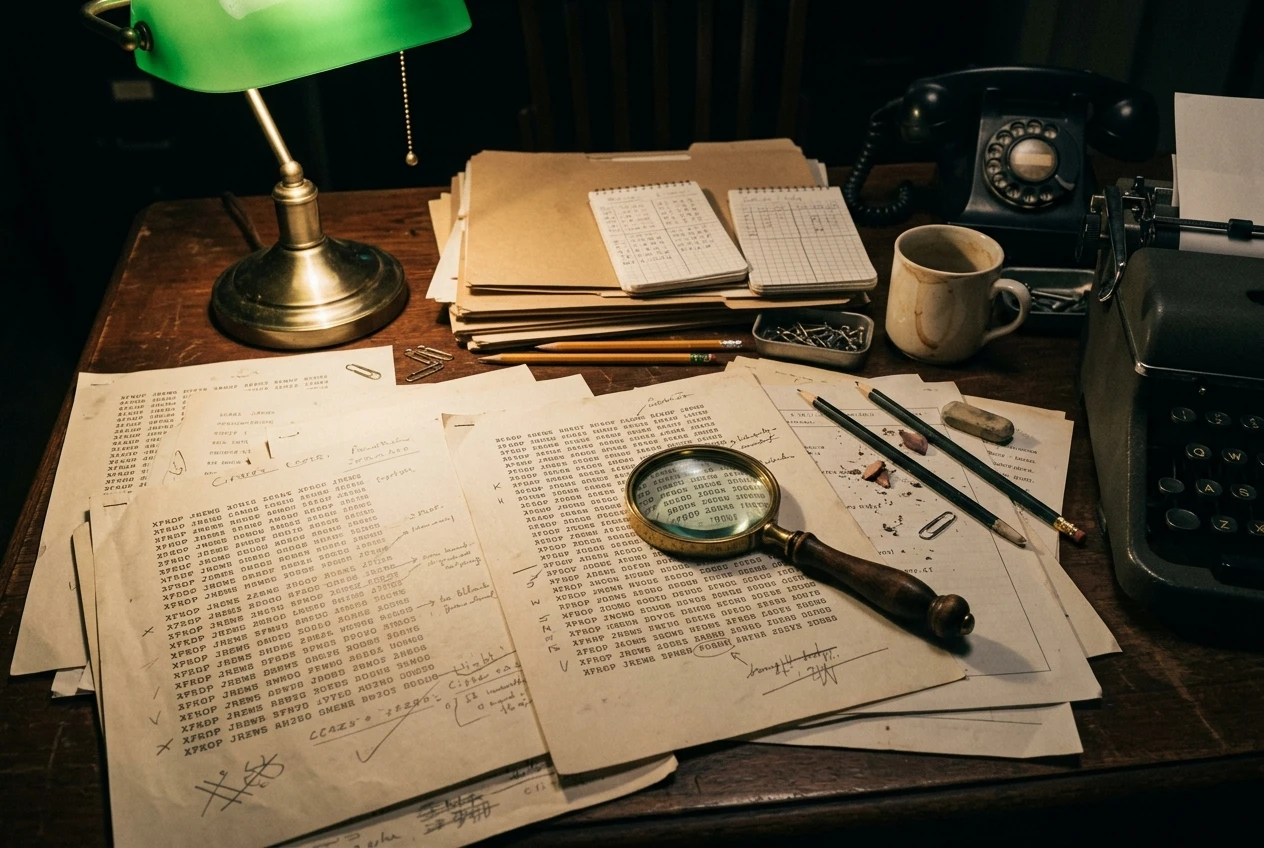
Other wartime and postwar codebreakers took their own runs at it, some convinced they’d found the key, none able to produce a readable paragraph from it. A text that can defeat people trained to break military ciphers for a living is not an ordinary puzzle.
The Theories That Fell Apart: Roger Bacon, Aliens, and Elaborate Hoaxes
Voynich himself promoted the idea that the medieval philosopher Roger Bacon wrote the manuscript, which would have made it a genuine scientific treatise in secret code. Radiocarbon dating later ruled that out entirely. Other theories have suggested a lost Native American language, an extraterrestrial origin, or a glossolalia-style text produced by someone in an altered state.
The hoax theory has the most staying power: the idea that the manuscript is an elaborate fraud, created to be sold to a wealthy collector, with no meaning at all. Statistical analysis cuts against a pure hoax too, though, since faking that much internal linguistic structure by hand would have been its own extraordinary feat for a medieval forger.
What Radiocarbon Dating and Ink Analysis Actually Proved
In 2009, radiocarbon dating of the vellum placed its origin between 1404 and 1438, confirming the manuscript is genuinely medieval and not a later forgery on old parchment. Ink analysis has shown the pigments are consistent with that period as well. These tests settled one argument and opened another: the manuscript is real and old, which means whatever is inside it was meaningful, or at least intended to look meaningful, to someone in the early 15th century.
The AI Era: Why Machine Learning Hasn’t Cracked It Either
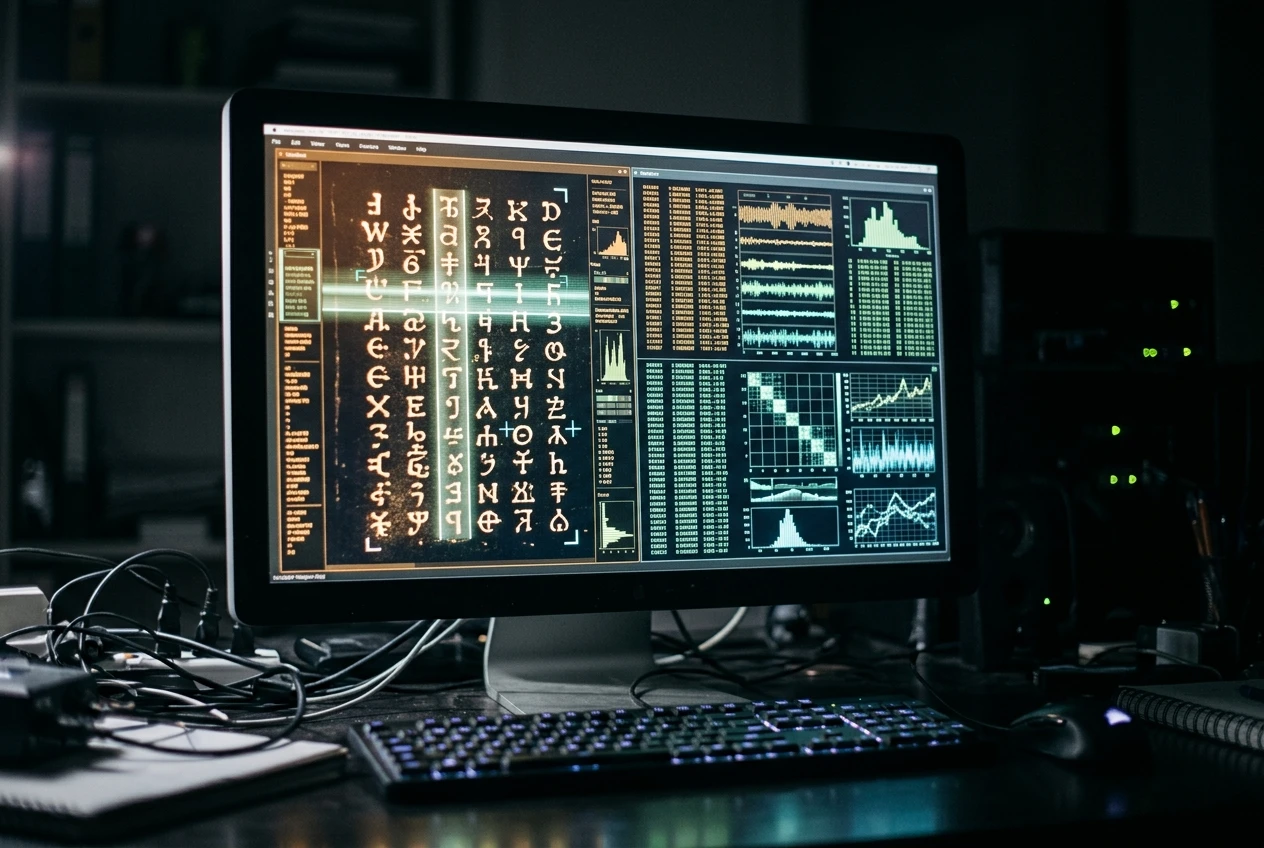
Machine learning researchers have fed Voynichese through natural language processing models trained to detect patterns across hundreds of known languages, hoping statistical similarity would point toward a source language. Some studies have reported partial matches to Hebrew or Latin word structures; none has produced a translation anyone else can replicate, and peer review has knocked down every high-profile claim so far.
What 600 Years of Failure Tells Us About the Manuscript
The consistent result across cryptanalysts, linguists, and algorithms is not confusion but convergence: every method finds real structure and no method finds meaning. That combination is unusual enough that it may be the most important data point the manuscript offers. Whatever it is, it was built with enough internal logic to survive six centuries of expert attention, which places it in a strange category of its own, neither solved nor dismissed.
For another case where science keeps hitting a wall, see Real Unexplained Phenomena That Still Puzzle Scientists.