

Synesthesia: What It Is, How It Feels, and Why It Happens
Synesthesia is a trait where one type of input automatically triggers another experience. A sound may bring a color to mind. A word may create a taste. A number may appear in a fixed place in space.
For people with synesthesia, these connections are usually automatic, consistent, and present from early life. They are not chosen or invented. They are simply part of how a person experiences the world.
Synesthesia is different from many reports of unusual experiences. It is a recognized area of research with repeatable patterns, even though scientists are still studying its causes. For comparison, documented unexplained phenomena often involve events that have been reported or recorded but do not yet have one agreed-upon explanation.
In this article, you’ll learn what synesthesia is, how it can feel, what researchers know about its causes, and how it may affect creativity and daily life.
Synesthesia is a perceptual trait where one type of input automatically triggers another experience. For example, a person may see colors when hearing music, taste certain words, or picture numbers in fixed positions. These connections are usually involuntary, consistent, and present from childhood.
What Is Synesthesia?
Synesthesia happens when one kind of input triggers an additional experience. The input is called an inducer, and the extra experience is called a concurrent.
For example, someone may always associate the letter A with red and the number 5 with green, no matter what color ink is on the page. This is called grapheme-color synesthesia.
Synesthesia can involve the traditional senses, including sound, sight, taste, touch, and smell. It can also involve concepts such as letters, numbers, names, days of the week, months, or time.
Not everyone with synesthesia has the same experience. One person may see colors when listening to music. Another may taste certain words. Someone else may picture the months of the year as a map arranged around them.
For most synesthetes, these associations have existed for as long as they can remember. Because of that, many do not realize their experience is unusual until they talk with someone who sees things differently.
How Common Is Synesthesia?
Estimates vary, but research suggests that around 2% to 4% of people may have some form of synesthesia. It may be more common than reported because many people never realize their perceptions differ from those of others.
Someone might assume that everyone sees Wednesday as green, hears a song in shades of blue, or sees the months arranged in a circle. They may not question it until they discover that other people do not share those same associations.
Synesthesia can occur in anyone. It also appears to run in some families, which suggests that genetics play a role. Researchers have not found one single gene that explains it. The trait is likely influenced by several genetic and developmental factors.
Scientists have studied synesthesia since the 1800s. Modern brain-imaging research has found differences in activity and communication between brain regions in some synesthetes. However, researchers are still working out exactly why synesthesia happens.
Types of Synesthesia
Researchers have described dozens of forms of synesthesia. Some of the most common include:
| Type | What Triggers It | What It May Feel Like |
|---|---|---|
| Grapheme-Color Synesthesia | Letters or numbers trigger fixed colors. | The letter A may always appear red, B may always appear yellow, and 7 may always appear dark blue. These colors are usually stable over time. |
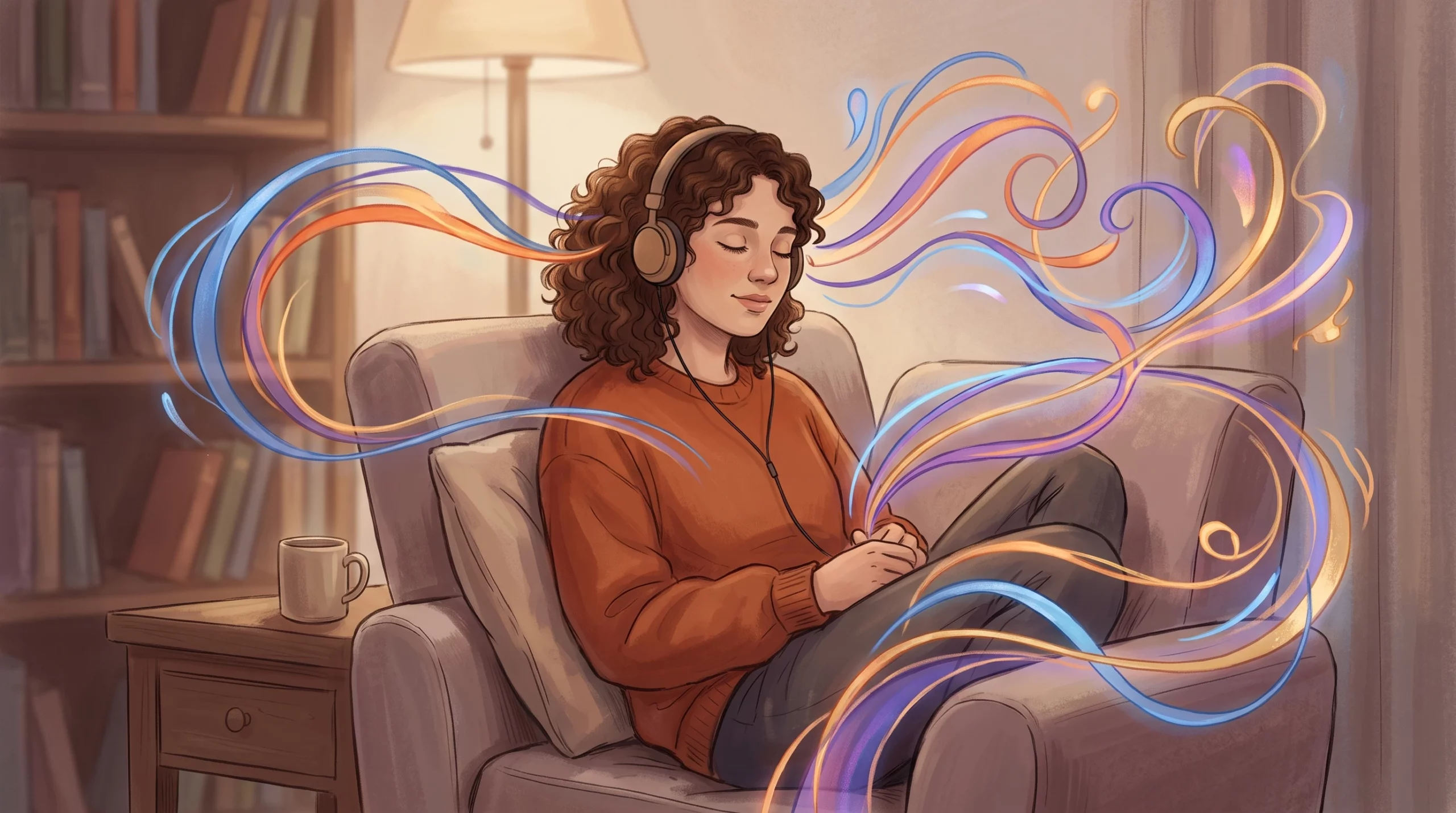
| Sound-Color Synesthesia, or Chromesthesia | Sounds trigger colors, shapes, movement, or patterns. | Music may create a visual experience in the mind’s eye. A piano note might feel silver or blue, while a drumbeat might appear as a sharp burst of orange. |
| Lexical-Gustatory Synesthesia | Words, names, or sounds trigger tastes. | A person named David might taste like cinnamon. The word “table” might taste like toast. These experiences can be pleasant, strange, or neutral. |
| Number-Form Synesthesia | Numbers, dates, or times trigger fixed spatial patterns. | A person may picture the year as a circle, a staircase, or a path that stretches away from them. Dates and number sequences may feel like they have a physical location. |
| Spatial-Sequence Synesthesia | Days, months, years, or other sequences trigger spatial arrangements. | January may always appear to the left, while December appears above and behind the person. |
| Mirror-Touch Synesthesia | Seeing another person being touched triggers a physical sensation. | Watching someone get tapped on the shoulder may create a similar sensation on the observer’s own shoulder. |
| Auditory-Tactile Synesthesia | Sounds trigger physical sensations on the skin or body. | A voice, bell, or musical note may feel like a light brush, vibration, or pressure. |
For most people with synesthesia, these experiences are not distracting. They are a normal part of everyday life.
Someone with grapheme-color synesthesia may read a page and notice that certain letters have colors. Someone with chromesthesia may hear music as a blend of sounds and visual forms. Someone with lexical-gustatory synesthesia may experience tastes during conversation.
The experience is usually automatic. A person does not decide that Tuesday should be blue or that a certain name should taste like mint. The association simply appears.
It is also usually consistent. If the letter R has always been orange for someone, it will likely remain orange years later. That consistency helps researchers tell synesthesia apart from a random imagination exercise or a one-time mood-based association.
Not everyone experiences synesthesia in the same way. Some people experience colors and shapes internally, almost like mental imagery. Others feel as if the associations are projected into the space around them. Both experiences can be part of synesthesia.
Synesthesia should also be separated from other unusual sensory reports. For example, the Taos Hum involves reports of a persistent low sound that only some people notice. It is a mystery involving sound perception, not an example of synesthesia. A person with synesthesia experiences an additional sensation in response to a specific trigger, such as a color connected to a sound.
Why Does Synesthesia Happen?
Researchers do not yet know the exact cause of synesthesia.
One leading idea is that people with synesthesia may have differences in how certain brain regions communicate. Areas that process color, sound, language, numbers, or touch may activate together more easily than they do for most people.
Another theory suggests that everyone begins life with many brain connections. As the brain develops, some of those connections are reduced. In synesthetes, some links between different kinds of information may remain more active.
Genetics also seem to matter. Synesthesia often appears in families, though it does not always show up in the same form. A parent may associate letters with colors, while their child may experience music as colors or shapes.
Early learning may help shape the details of some associations. For example, childhood books, magnets, toys, or school materials may influence the colors a person connects with letters and numbers. Still, early exposure to color, music, or art has not been proven to cause synesthesia.
Developmental synesthesia is usually present from childhood. Some people only recognize it later in life because they assumed everyone perceived the world in the same way.
New cross-sensory experiences that begin suddenly in adulthood are different. They can sometimes be linked to substances, medications, migraines, sensory changes, or neurological conditions. Anyone who develops sudden or concerning changes in perception should speak with a health professional.
Synesthesia and Creativity
Synesthesia can be a rich source of inspiration.
Some artists, musicians, and writers say their sensory associations affect how they create. A song may suggest a color palette. A word may bring up a texture, taste, or mood that helps shape a scene in a story.
Pharrell Williams has spoken publicly about experiencing music in color. For him, certain sounds and chords connect with specific visual experiences.
Synesthesia does not automatically make someone more creative, talented, or intelligent. But some research suggests that synesthetes may be more likely to take part in creative activities such as music, art, and writing.
Some people also feel that synesthesia helps with memory. A person who sees numbers in color may find it easier to remember phone numbers, dates, or math facts. Someone who sees the year as a fixed spatial map may have an easier time remembering when events happened.
These benefits vary. Some people find synesthesia useful, while others see it as simply another part of their perception.
Challenges and Daily Life
Synesthesia is usually positive or neutral, but it can sometimes be distracting.
A person with lexical-gustatory synesthesia may find certain names or words unpleasant because of the taste they trigger. Someone with strong sound-color synesthesia may feel overwhelmed in a noisy environment.
Explaining synesthesia can also be difficult. People may worry that others will think they are exaggerating or making things up. Children can be especially confused if they discover that their classmates do not see letters, days, or music in the same way.
Support and understanding can make a big difference. Parents and teachers do not need to fix synesthesia. They can listen, ask respectful questions, and reassure the person that their experience is valid.
The difference between perception and proof matters in many unusual experiences. Wondrous Stories explores a similar question in its article about time slips and the way memory, stress, and expectation can shape perception. Time slips are not synesthesia, but both topics show how differently people can experience the same world.
Synesthesia Is Not a Disorder
Synesthesia is not itself considered a disability, illness, or mental health condition. It is a difference in perception.
Most people with synesthesia do not need treatment or a diagnosis. Many value their experiences and would not want them to disappear.
That said, new or sudden changes in perception should be taken seriously, especially if they occur alongside headaches, confusion, vision changes, weakness, or other symptoms. Those experiences may not be developmental synesthesia and should be discussed with a medical professional.
Testing for and Identifying Synesthesia
If you think you may have synesthesia, consistency is one of the strongest clues.
For example, if the letter S has always been yellow for you, it will likely still feel yellow when you are asked again later. A person without synesthesia may make color associations too, but those associations are less likely to stay exactly the same over repeated tests.
The Synesthesia Battery at synesthete.org offers questionnaires and consistency-based tests that have been used in research.
These tools can help people explore their experiences, but synesthesia does not usually require a clinical diagnosis. Brain scans are sometimes used in research, but they are not necessary for most people.
For parents and teachers, the best response is simple: listen without judgment. A child who says that numbers have colors or music creates shapes may be describing a real and lasting part of their experience.
Frequently Asked Questions
Can You Develop Synesthesia as an Adult?
Developmental synesthesia is usually present from childhood, even if a person does not notice it until later.
Cross-sensory experiences that begin suddenly in adulthood can have other causes, including medications, substances, migraines, or neurological changes. If the experience is new, intense, or concerning, speak with a health professional.
Does Synesthesia Affect Intelligence?
Synesthesia does not determine intelligence.
Some people feel it helps with memory, creativity, pattern recognition, or learning. Others do not notice any clear advantage. Intelligence varies widely among people with and without synesthesia.
Can You Learn Synesthesia?
People can train themselves to make strong links between things, such as associating colors with numbers. But trained associations are not the same as developmental synesthesia.
Synesthesia is usually automatic, involuntary, and highly consistent over time.
Is Synesthesia Rare?
It is unusual, but not extremely rare. Research estimates vary, though several studies suggest that a few percent of people may have some form of synesthesia.
Living With Synesthesia
For many people, synesthesia adds another layer to daily life. Music may have color. Words may have flavor. Time may exist as a shape or map.
It can be confusing at first to realize that other people do not share those same experiences. But learning about synesthesia often brings relief. It gives people a name for something they may have experienced quietly for years.
If you or someone you know has synesthesia, connecting with online synesthesia communities or reading books like “Wednesday Is Indigo Blue” by Richard Cytowic and David Eagleman can help make sense of these experiences and show you that you’re not alone.
Synesthesia reminds us that perception is personal. Two people can hear the same song, read the same word, or look at the same number, yet experience it in very different ways.
Affiliate disclosure: The book link above is an affiliate link. If you purchase through it, the site may earn a commission at no extra cost to you.