
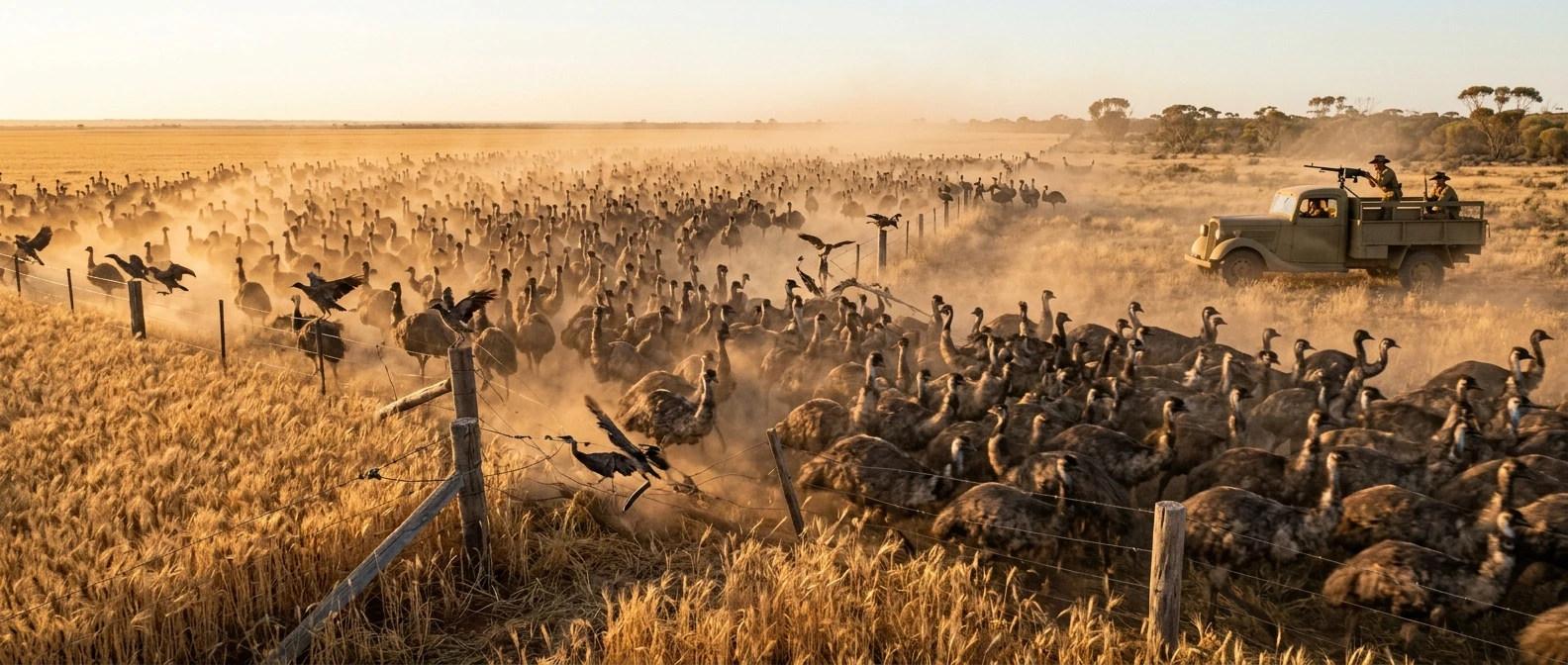
The Emu War of 1932 began in Western Australia, where thousands of emus moved into wheat-growing areas near Campion and Walgoolan. Western Australia in late 1932 had a bird problem that had outgrown the word “problem.” Roughly 20,000 emus had moved inland toward Campion and Walgoolan, following their usual migration pattern toward the coast after breeding season, and found wheat country waiting for them instead of empty scrub. The land had been cleared and planted by veterans of the First World War, settled there under a government soldier resettlement scheme that promised farmable acreage in exchange for military service. The emus ate the wheat, trampled the fences chasing water, and left gaps that let rabbits pour through behind them. The wheat farmers, many of them still paying off loans from the Great Depression’s worst years, faced a harvest wiped out before it was cut.
A delegation of farmers took their case to the federal government, and because several of them were veterans, they asked for military help in terms the Defence Department understood: machine guns. Sir George Pearce, the Minister of Defence, agreed to send two Lewis guns, 10,000 rounds of ammunition, and soldiers to operate them. The farmers would cover transport and board. Someone also floated the idea of filming the operation, on the theory that dead emus might make good newsreel footage, which tells you something about how confident everyone was going in.
Western Australia’s Emu Problem in 1932
The scale of the migration is what pushed this past the range of ordinary pest control. Emus are large, and in a mob of 20,000 they do not graze so much as process through a landscape, flattening fences as a side effect of their size rather than any particular aggression. Farmers already contending with drought-stressed yields and depressed wheat prices now had fencing and crop losses stacking on top of each other, and the usual response of shooting a few birds with hunting rifles could not keep pace with a population that size.
The request for military assistance was not entirely unprecedented. Soldier settlers had firearms and some had shot at emus already, with limited success, and the idea of government-issued machine guns had an obvious appeal: a faster rate of fire against a faster-moving, larger target. The plan also carried a political upside for Pearce, since demonstrating the army’s willingness to help struggling returned soldiers played well in a country still working through the economic strain of the early 1930s.
Major Meredith’s Plan: Soldiers, Lewis Guns, and 10,000 Rounds
Command of the operation went to Major G.P.W. Meredith of the Royal Australian Artillery, who arrived at Campion in early November 1932 with Sergeant S. McMurray, Gunner J. O’Halloran, two Lewis guns, and the promised 10,000 rounds of ammunition. The Lewis gun was a proven weapon, a light machine gun that had served through the First World War, capable of firing around 500 to 600 rounds per minute from a drum magazine. On paper, two of them against flightless birds looked less like a military operation than overkill.
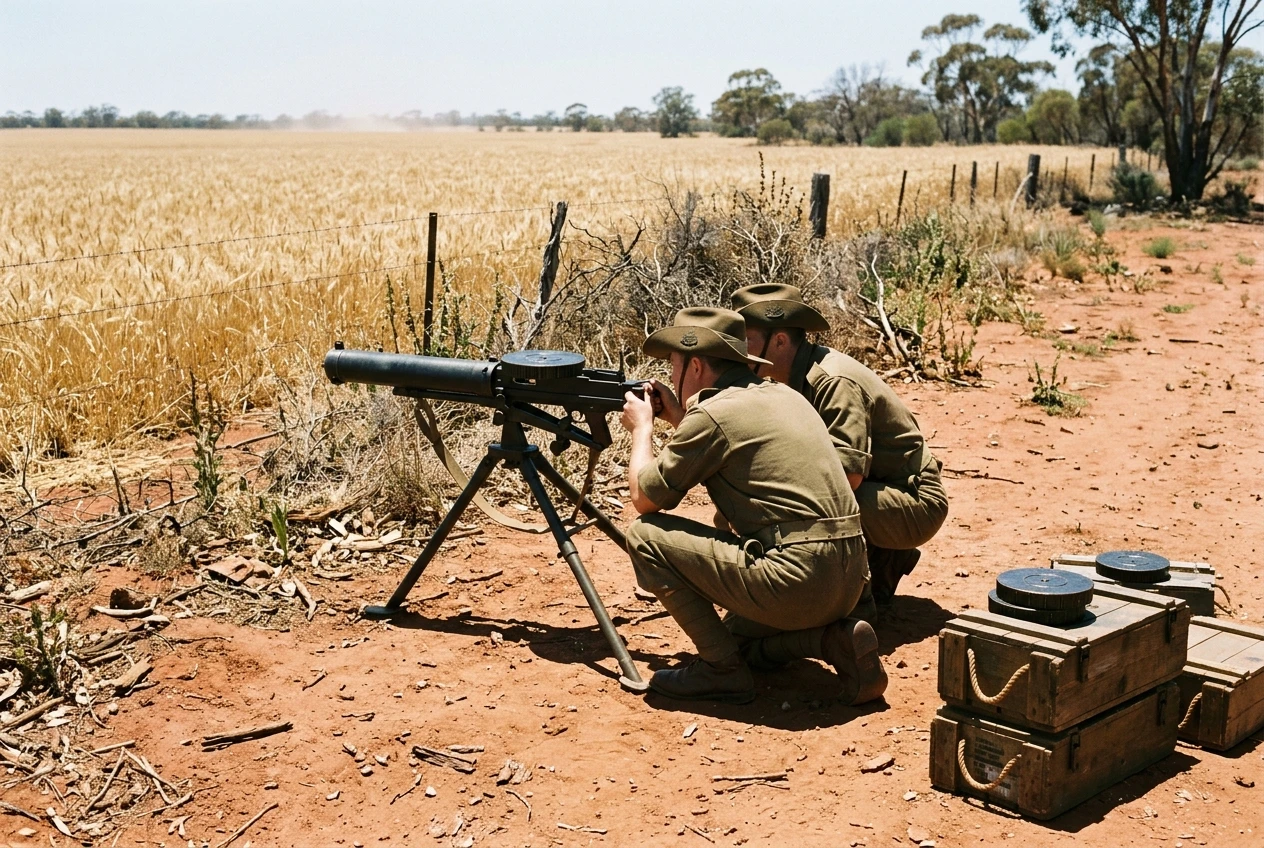
The plan was straightforward: locate concentrations of emus, drive them toward the guns or set up near a water point the birds relied on, and let the Lewis guns do the rest. Local farmers would act as spotters and drivers, since they knew the terrain and the birds’ habits better than soldiers arriving from Perth. Meredith expected the campaign to last a matter of days.
The First Engagement Goes Wrong Almost Immediately
The first attempt, on November 2, 1932, targeted a group of around 50 emus spotted near Campion. The soldiers set up the guns, and the farmers worked to drive the birds within range. The emus, instead of bunching into an easy target, split into smaller groups the moment they sensed something was wrong, scattering in different directions across the open ground.
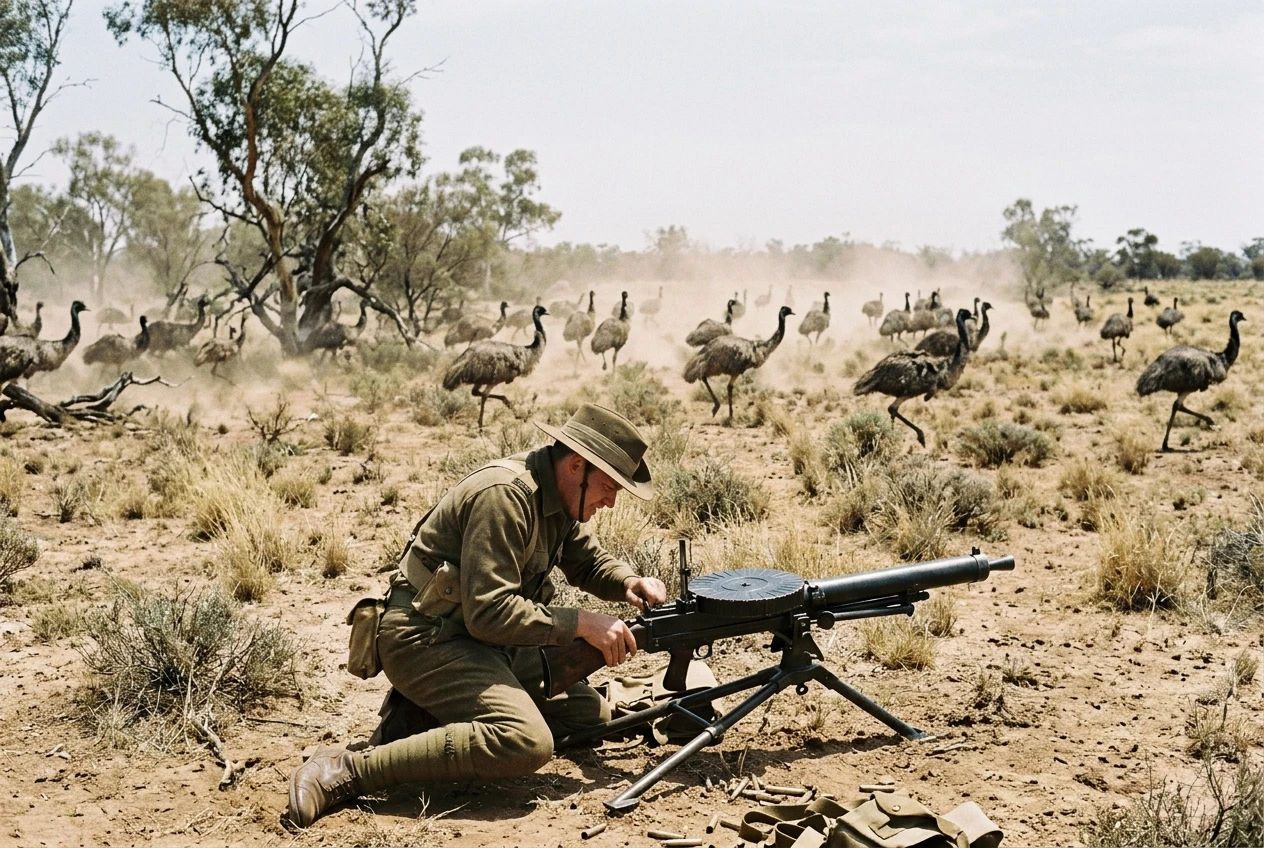
The gun crew managed to fire only a short burst before the group was already out of effective range, and the Lewis gun jammed partway through, a problem that would recur throughout the campaign given the dust and the awkward angles soldiers were forced into while trying to track a moving target low to the ground. A handful of birds went down. Most did not.
A second attempt the same week tried a different approach: ambushing a larger group, estimated at over 1,000 birds, near a dam where emus were known to drink. The gun was set up and ready, but the mob approached in a way that put most of the birds outside a clean line of fire, and by the time the crew adjusted, the emus had scattered into the bush. Fewer than a dozen were killed from that encounter, a dismal return against the ammunition expended.
Why Emus Turned Out to Be Nearly Impossible Targets
Everyone involved had planned around the assumption that a flightless bird would be an easy target for a machine gun. The emu’s actual advantages worked against that assumption from the first shot. An adult emu can run at speeds approaching 50 kilometers per hour, fast enough to outpace a vehicle on rough farmland, and they do not run in a straight line. Their gait is irregular, with sudden changes of direction, which made tracking them with a gun mounted for sustained fire on a fixed or slow-traversing arc extremely difficult.
Emus also proved to be tougher than expected relative to the rounds being used. Reports from the campaign describe birds absorbing multiple hits and continuing to run, something later put down to the bird’s build: a body plan adapted for absorbing the physical punishment of running through scrub at speed, with a smaller vital area than the bird’s overall size suggested. Soldiers also noted that the birds seemed to post lookouts, with one or more emus appearing to watch for danger while the rest of the group fed, scattering the whole mob at the first sign of trouble before the gun crew could get close enough for a clean shot.
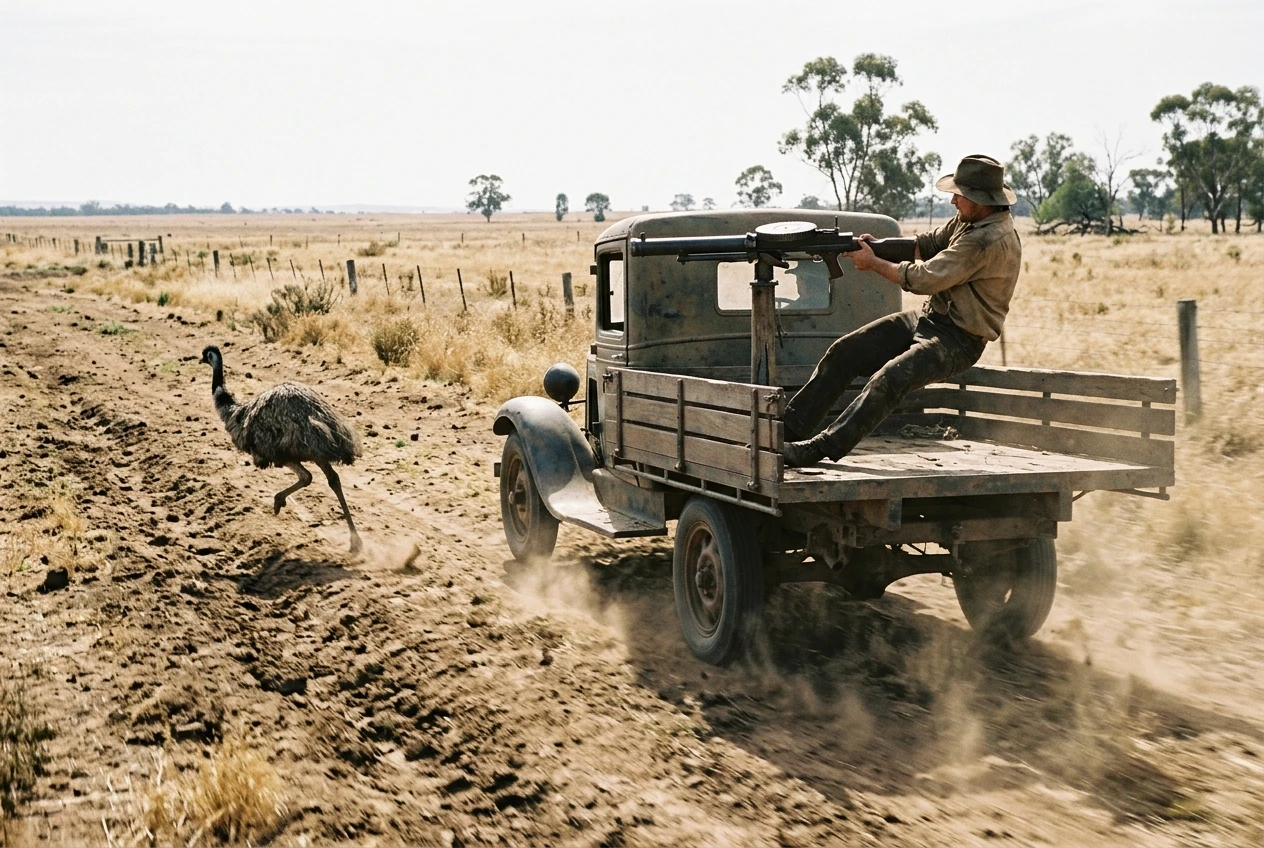
Meredith later tried mounting a Lewis gun on a truck to chase emus directly, hoping speed and mobility would solve the targeting problem. It made things worse. The truck could not match the emus’ turning speed across uneven ground, and the gunner, bounced around by the terrain, could not hold a line on a bird weaving at close range. In one incident, a flock ran into the truck’s path and a bird struck the vehicle hard enough to damage the steering, forcing the driver to swerve to avoid a crash. The idea was abandoned.
The Numbers: Rounds Fired Versus Emus Killed
By the time the operation wound down in early December 1932, Meredith’s own report put the total at roughly 2,500 rounds fired for somewhere between 50 and 200 confirmed emu kills, depending on which account you take as authoritative. Even the higher estimate put the cost at well over a dozen rounds per bird, a ratio that would have been embarrassing for a unit facing a human enemy, let alone an animal with no weapons of its own.
Meredith’s report to his superiors tried to put a positive spin on the numbers, noting that his men had suffered no casualties, which was true but beside the point the farmers cared about. The crops kept getting eaten regardless of how the engagement reports read. Requests for a resumption of the campaign later in 1932 and again in 1934 both went ahead on a smaller scale, with slightly better results attributed to experience and better-placed ambushes, but neither matched the scale of the original November operation, and neither solved the underlying problem. Farmers eventually leaned more heavily on bounty systems and exclusion fencing, which did more to manage the emu population long-term than the machine guns ever had.
Parliament Reacts and the Press Has a Field Day
Word of the campaign’s lopsided results reached Canberra quickly, and the operation became a target for ridicule in Parliament almost as soon as the numbers came out. Opposition members needled Pearce over the ammunition expenditure versus the kill count, and the exchange became one of the more quotable moments of the parliamentary session, with critics pointing out that the birds had, by any reasonable measure, come out ahead.

The press outside Australia picked the story up too, and international coverage treated it with the mixture of amusement and disbelief that has kept the episode alive in the decades since. One ornithologist, Dominic Serventy, is frequently credited with a line describing the emus’ tactics as showing something close to military cunning, the kind of detail that made the story irresistible to editors looking for a laugh at the military’s expense. Pearce eventually withdrew the soldiers and the guns, officially closing the operation, and the government declined to send the military back out for future emu problems, leaving it instead to local bounty hunters and better fencing.
How the Emus Won and Why the Story Still Resonates
Nobody declared the emus the winners at the time, but the framing stuck almost immediately in public retelling, and it has never really gone away. Part of the appeal is the mismatch itself: a modern army unit with machine guns, deployed against birds, coming away with a kill ratio that would embarrass a hunting party armed with shotguns. Part of it is the detail that keeps surfacing in retellings, the idea that the emus seemed to understand they were being hunted and adjusted their behavior faster than the soldiers could adjust their tactics.
The story also fits a pattern that shows up again and again in military history, where overwhelming force on paper runs into terrain, timing, or an opponent that simply will not behave the way the plan assumed. The Emu War is remembered less as an aberration than as an extreme, almost comic version of something that has happened to professional militaries throughout history.
Other Wars History Somehow Lost
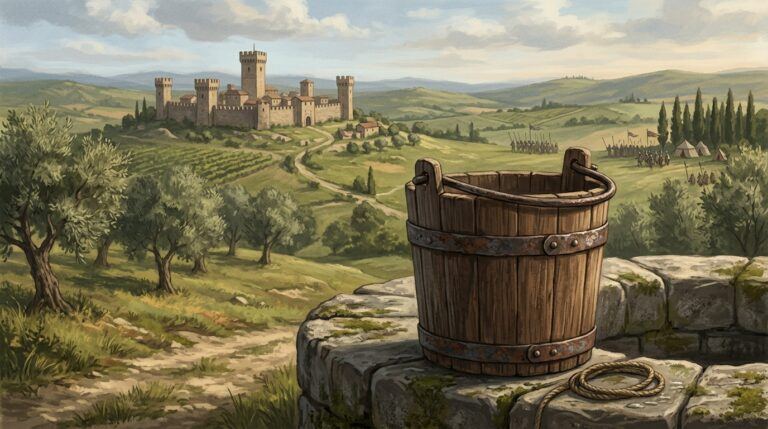
The Emu War has good company among conflicts that turned out stranger, pettier, or more lopsided than their names suggest. The War of the Oaken Bucket saw two Italian city-states fight over a wooden bucket, and the long history of papal battles includes conflicts that look just as absurd once you get past the title. If the Emu War scratched an itch for history that reads more like farce than strategy, both are worth your time.