

Aliens have been a fixture in pop culture (movies, TV, books, comics, and games) for over a century. But here’s the grounded truth: most science fiction stories about extraterrestrial life aren’t about aliens. They’re about us. About what we fear, what we want, and what we’re scared to admit out loud.
That’s why the “alien” keeps changing. In some eras, it’s a hostile invader. In others, it’s a lonely outsider who needs help. Sometimes it’s a hidden infiltrator that looks just like your neighbor, which is always the creepiest version, because it turns everyday life into a test.
Public interest in UFO sightings and unidentified aerial phenomena has also surged again, and in early 2026, the topic remained in U.S. headlines amid ongoing political and media attention. That can blur fiction and reality. This post sticks to the cultural record: how aliens work as symbols, and why they keep showing up when societies feel tense, curious, or both.
Aliens as a mirror for human fears, from Cold War paranoia to modern tech worries
Science fiction alien narratives often track the emotional weather of their time. Not in a tidy one-to-one way, and not because every writer is making a political speech. Plenty of creators just want a great monster, a big set piece, or a mystery that grabs you by the collar. Still, audiences bring their own context, and meaning tends to stick to the story like burrs on a jacket.
In the 1950s, American science fiction leaned hard into alien invasion plots and unstoppable technology. The backdrop matters: nuclear anxiety, ideological conflict, and a growing sense that the future could arrive overnight and wipe the board clean. Alien invaders were a clean way to stage that fear without naming it.
By the 1970s and 1980s, the tone split. You get gentler “contact” stories that treat the alien as a being to understand, and you also get body-horror aliens that turn the human body into a battleground. One path says, “What if we’re not alone?” The other says, “What if contact isn’t noble, it’s a violation?”
In the 1990s and beyond, alien stories like Star Wars often widened into global stakes and system-level distrust. You see swarms, shadow agencies, “truth” that’s always just out of reach, and even media like The Simpsons parodying institutional secrets. In more recent sci-fi, the alien can even be a communication problem, not a villain, as in Arrival, which fits an era obsessed with information, mistranslation, and what happens when signals get misread.
For a smart overview of how pop culture shapes expectations about aliens, see The Guardian’s discussion of aliens and public imagination.
The “outsider” alien, how sci-fi talks about prejudice and belonging
Some of the most lasting alien stories aren’t invasion stories at all. They’re about an outsider walking into a human world and getting judged fast.
In E.T. the Extra-Terrestrial, the alien is small, vulnerable, and clearly lost. The tension isn’t “Can we beat it?” It’s “Can we protect it long enough to understand it?” The emotional engine is misrecognition: adults see a threat, children see a person. It’s a simple switch, and it stings because it’s familiar.
In District 9, the alien presence becomes a pressure test for how a society treats a powerless group it labels as dirty, dangerous, or less-than. The story uses sci-fi distance to make a real pattern visible: segregation, dehumanizing language, and the way fear can become policy. You don’t have to claim a single “correct” message to see why it hits. The alien works as a stand-in for the kinds of people a culture decides not to understand.
These plots, as explored in Star Trek, ask a question that’s hard to dodge: when faced with difference, do we choose empathy, or do we choose control?
From these depictions of extraterrestrials in fiction that emphasize empathy, we shift to portrayals rooted in fear.
Alien invasion and infiltration plots, why do secret aliens hit harder in tense times
Invasion is loud. Spaceships, lasers, screaming crowds. Infiltration is quiet, and that’s why it crawls under the skin.
Cold War era stories like Invasion of the Body Snatchers turned fear into a private nightmare: your friend looks the same, sounds the same, but something inside is missing. That idea fits any moment when people worry about conformity, propaganda, or the loss of personal agency. It also plays on a basic social terror, the fear that your community can flip overnight.
Later stories modernized the same unease. The X-Files treats the alien as a secret threaded through institutions. Men in Black plays it for comedy, but it still runs on the same engine: the sense that the world has a hidden layer, and the public isn’t invited.
A caution worth saying plainly: these are storytelling patterns, not evidence of cover-ups. They work because they dramatize distrust, not because they confirm it.
How alien portrayals evolved across decades, and why the look keeps changing
Alien designs don’t come from a single source. They come from art, rumor, science headlines, wartime nerves, and practical filmmaking. Sometimes the “why” is cultural. Sometimes it’s brutally simple: the actor has to fit in the costume, the budget is tight, and the lighting hides the seams.
A quick timeline makes the shifts easier to see:
- Early roots (late 1800s to early 1900s): aliens as invaders, visitors, or strange beings that expose human arrogance.
- 1950s Atomic Age: hostile, technologically superior threats, often tied to nuclear-era dread.
- 1970s to 1980s science fiction: two lanes at once, wonder-struck contact stories like Steven Spielberg’s Close Encounters of the Third Kind, plus body horror from H.R. Giger’s designs that treat the alien as a parasite or predator, like the Xenomorph and its chestburster.
- 1990s to today: big global disasters, conspiracy frameworks, and “first contact” stories that focus on language, ethics, and misunderstanding.
That “human with ridges” look popular in long-running franchises also has a down-to-earth explanation: it’s cost-effective. Humanoid aliens are easier to film, easier to emote, and easier to relate to. The limitation became a style, and viewers got used to reading small differences as whole cultures.
From War of the Worlds to flying saucer fever, the early roots of our modern alien image
Pulp magazines helped shape early alien designs as invaders, visitors, or strange beings. H.G. Wells’ The War of the Worlds (1898) laid down a template that still runs: a superior force of Martians arrives, humans realize they’re not on top, and survival becomes the only plot that matters. It’s not the first story to imagine life beyond Earth, but it’s one of the most influential invasion narratives in modern media, cementing the Martian as a towering threat in early 20th-century imaginations.
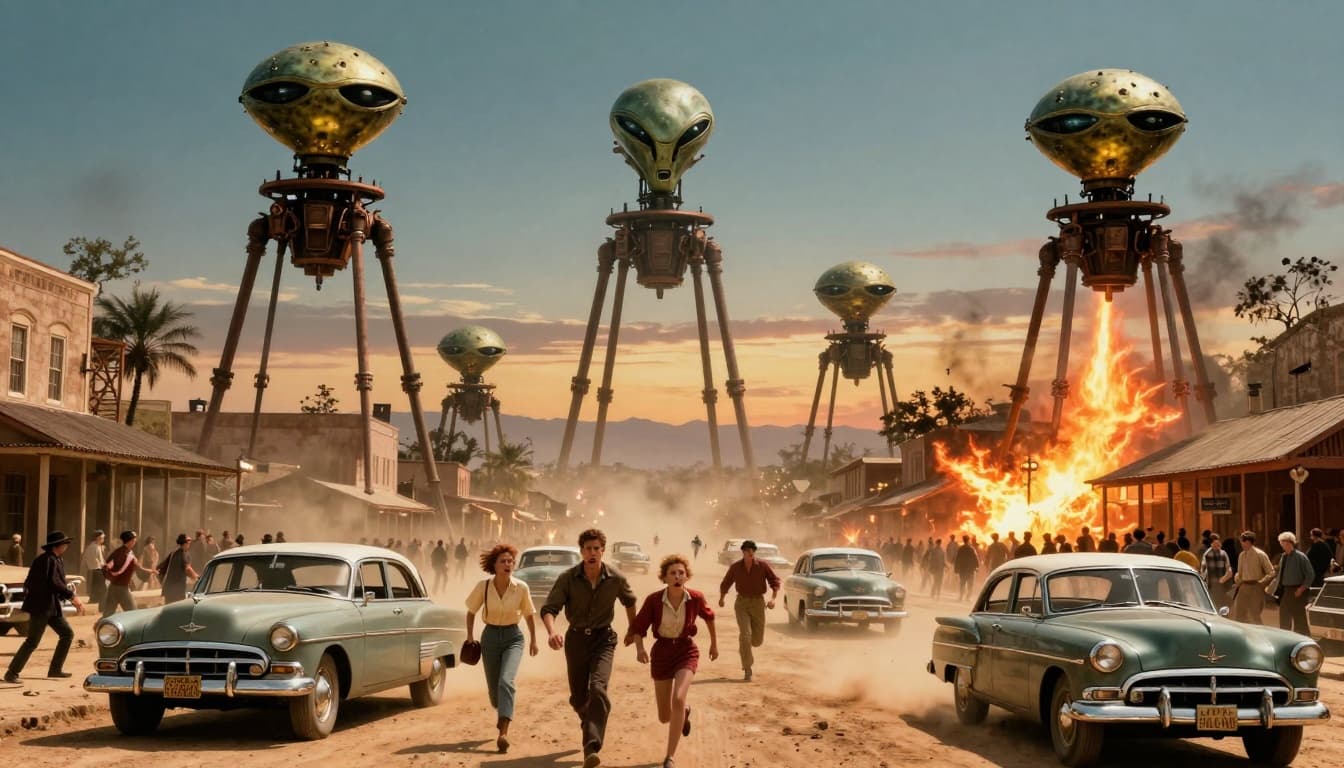
Then came the 20th century’s flying saucer wave, especially after 1947, which helped cement the idea of “space visitors” as modern folklore. The media also proved it could make fiction feel immediate. Orson Welles’ 1938 War of the Worlds radio adaptation is still a famous lesson in that: even when reports of nationwide panic get overstated in retellings, the broadcast remains a case study in how believable presentation can override skepticism for some listeners.
That’s a theme that never goes away. New medium, same human brain.
Why “the Greys” and abduction tropes stuck in the public imagination
The big-eyed grey aliens didn’t rise from science alone. They hardened into a shared image through repeated claims, retellings, and pop culture feedback loops.
A key touchstone is the Betty and Barney Hill story from the early 1960s, often cited as one of the best-known alien abduction accounts in the U.S. It’s still disputed, still unverified, and often debated in terms of memory, hypnosis, and interpretation. But culturally, it mattered. Details like large eyes, small mouths, and medical-style examination scenes became sticky. They keep showing up because they’re easy to recognize and hard to shake.
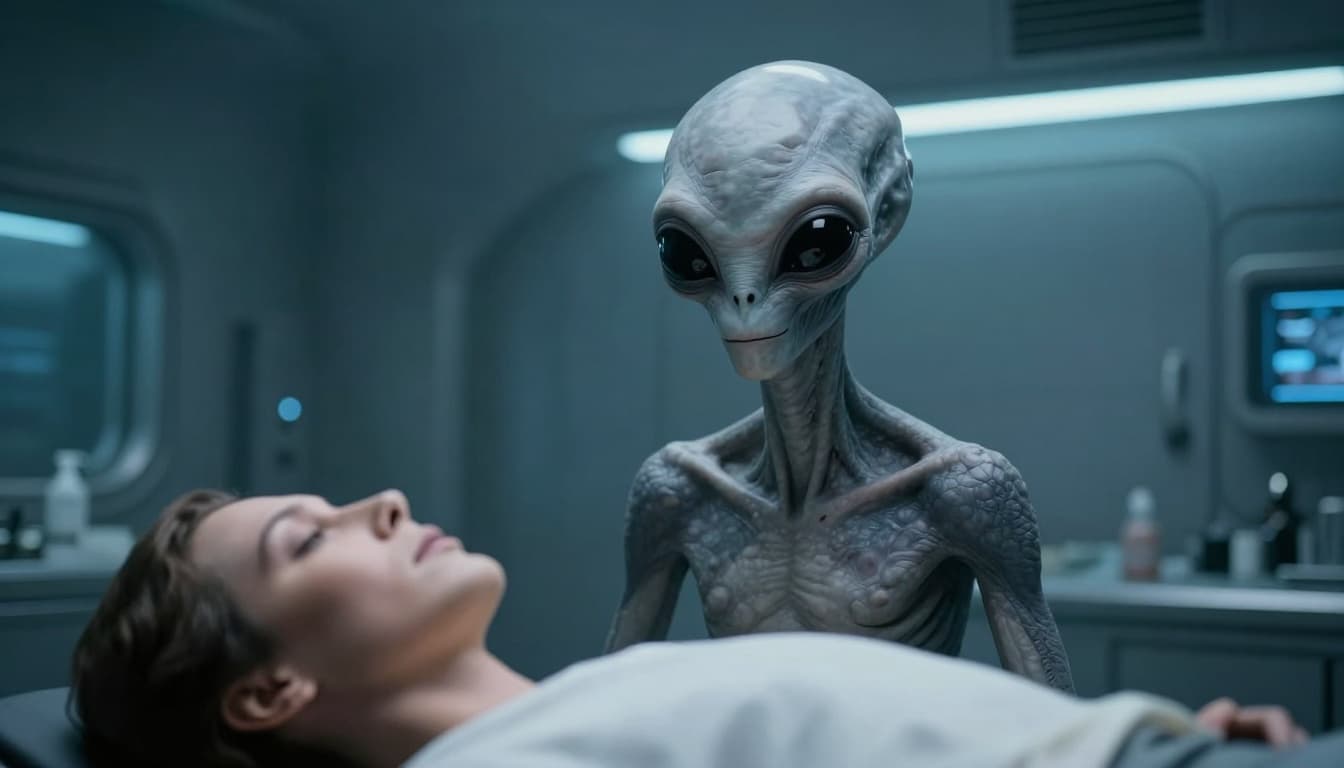
Why does the exam-room imagery land so hard? Because it hits two fears at once: loss of control, and being treated like an object. It’s a nightmare with fluorescent lighting.
What alien stories do to audiences, and how to enjoy them without mixing up fiction and evidence
Alien media changes people, even when it doesn’t change their beliefs. It shapes pop culture expectations of first contact (what aliens “should” look like), boosts interest in astronomy and space exploration, and spreads the idea that the truth is always being hidden by someone in a back room.
That doesn’t mean alien science fiction is harmful. It means it’s powerful.
If you like this topic because you’re also curious about real scientific questions, such as how the theory of evolution might apply to biology beyond Earth, it helps to keep one foot on the ground. A good starting point is Understanding the Fermi Paradox, which lays out a simple tension: the galaxy seems like it should be busy, and yet we don’t have confirmed evidence of visiting civilizations.
Here’s a quick media-literacy checklist that keeps the fun intact:
- Separate entertainment from evidence: depictions of extraterrestrials in fiction aren’t data points.
- Look for primary sources: official documents, direct statements, and original footage, beat screenshots of screenshots.
- Watch for allegory: ask what human fear or hope the alien is standing in for.
- Notice the era: the same alien plot feels different in 1956 than it does today.
Hold the line between story and proof, and the stories get better, not worse.
Conclusion
Aliens in popular culture do three big jobs. They carry fear through invasion and infiltration. They train empathy through the outsider who wants safety more than conquest. And they give us a safe stage for huge questions about meaning, communication, survival, and what we owe each other when the rules change.
We still don’t have public, repeatable proof of extraterrestrial life among us. That part stays unresolved. But alien depictions in pop culture remain useful, because they let people talk about real human problems clearly, at a slight distance, as seen in Star Trek, when speaking directly might feel impossible.



This is definitely a topic I’m very interested in. I am regularly listening to podcasts and watching Youtube videos about peoples encounters with aliens and other paranormal phenomena. Although, UFOs for me are one thing I’m a bit iffy about. I see one I think around 2007 after walking home late one night and this thing was flashing all sorts of different colours and when I went to take a photo on my old Nokia phone it just shot off in the sky and disappeared. Although, I think now maybe who knows what technology we actually have ourselves? I think certain agencies would like us to think that their advanced technology is alien but how much of it really is?
I stayed in the desert in Jordan a couple days ago – I see 3 things in the sky that I thought were UFOs but turns out they was Elon Musks Starlink Satellites – I mean this goes to show that if there were aliens visiting us we probably wouldn’t know for sure.
I reckon there must be other life forms out there. If we think about our bodys and all the bacteria inside of us we are like planets. Other humans their bacteria is extra terrestrial to us and then the other thing is – are we Micro Organisms inside something larger and so on… I think to say their is no life outside of us is very hard to not believe. But is there really any contact I think that is the real question?
He Alex,
Thanks for the comment. I like hearing different angles on this.
I’m not trying to prove anything here, I’m mostly sharing experiences and questions that stick with me.
The Starlink moment is exactly why I think it’s good to stay cautious, even when something looks off or wild.
Michael
You clearly frame aliens not as the point of the stories, but as reflections of our own fears, hopes, and blind spots at different moments in history. Moving from Cold War paranoia to modern concerns around information, mistrust, and miscommunication feels especially sharp, and the way you kept one foot firmly in media analysis without slipping into speculation was well-received. The media-literacy reminders toward the end helped tie everything together in a responsible, balanced way.
Love the contrast you drew between invasion narratives and outsider stories like E T and District 9. That shift from fear to empathy (and sometimes back again) says a lot about how societies process difference and power. Infiltration stories hitting harder because they’re quiet and personal explains why those narratives remain unsettling, no matter the era. Alien design, budget realities, and cultural symbolism was another nice layer that added depth without overcomplicating things.
With today’s mix of AI, deepfakes, and information overload, do you see future alien stories leaning even more into “miscommunication” and perception rather than physical threat, almost treating reality itself as the unreliable element? I’d love to hear where you think that evolution is heading next.
David, this is a fantastic read of my post. I’m really glad the balance came through the way I hoped it would.
You’re picking up on exactly the thread that fascinates me most right now which is the shift from “aliens as physical threat” to “aliens as a problem of perception.”
I do think we’re heading into an era where first contact stories lean harder into confusion, translation, and unreliable reality. Not just “we can’t understand them,” but “we can’t fully trust what we’re seeing in the first place.” When you add AI-generated imagery, deepfakes, and algorithm-shaped information bubbles, the old question “Are they out there?” starts sharing the same space with a newer one: “Can we trust our own evidence?”
That’s a different kind of fear than Cold War invasion panic. It’s more focused, and less about being conquered, and more about being disoriented. Stories like “Arrival” already hint at this, where the real tension isn’t weapons but interpretation. I wouldn’t be surprised if future alien narratives feel more like epistemology thrillers than war movies, dramas about signals, translation errors, manipulated footage, and institutions arguing over what’s real.
In a strange way, that brings alien fiction even closer to its long-running role as a mirror. The “alien” itself becomes less a creature and more a stand-in for the limits of human perception. Not just what’s out there, but how fragile our grip on shared reality can be.
Which, honestly, is a pretty on-brand fear for the 2020s.
Thanks for reading.
Michael