

On April 6, 1966, a normal school day in Melbourne turned strange in broad daylight. Students and staff near Westall High School, in the Clayton South area, looked up and saw something they couldn’t name. People later called it the Westall UFO, meaning an unidentified aerial sighting at the time, not proof of aliens.
This case has two things going for it: a lot of witnesses, and the fact that it happened during school hours. It also has two problems: memories changed over decades, and records that could settle key points never surfaced.
What follows separates the best-supported facts from the parts that stay disputed. It sticks to what’s repeatable across accounts, what was reported close to 1966, and what later researchers could and couldn’t verify.
What happened at Westall on April 6, 1966: a careful timeline
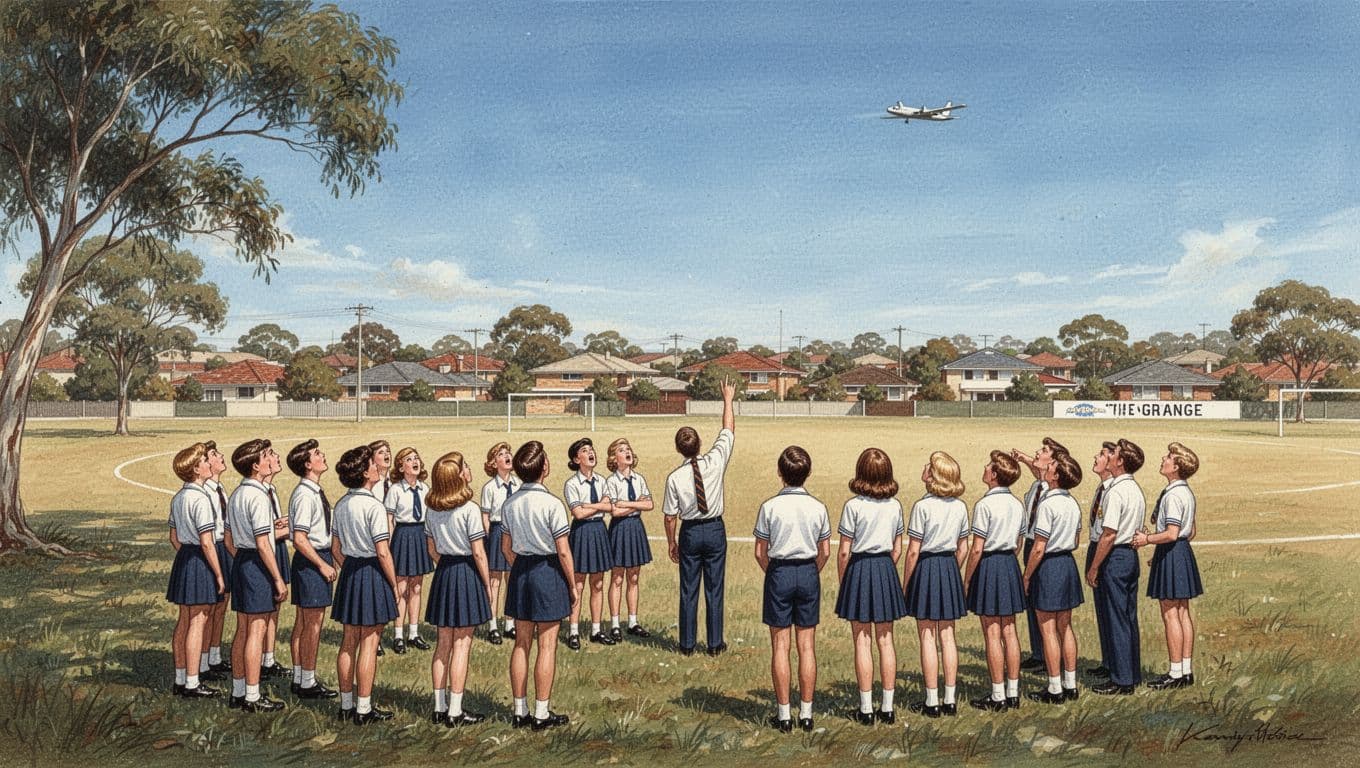
The core story stayed steady for decades. Late morning, during school hours, students noticed an unusual object (or objects) over the area. Teachers became involved because the reaction was public and immediate. Some witnesses said the object moved toward nearby open ground known as The Grange, with reports of hovering or descending near trees.
Then came a second element that keeps showing up: small aircraft in the same sky. Accounts often describe light planes circling, sometimes described as chasing. The whole episode, in many retellings, ran for roughly 20 minutes before the object or objects left quickly.
The hard part is time. People didn’t log it with clocks. They lived it, then tried to pin it down later. So any timeline needs humility.
Here’s the most defensible sequence, using approximate windows rather than exact minutes:
| Approx. time (late morning) | Reported action | What’s solid | What’s disputed/unknown |
|---|---|---|---|
| School hours | Students notice something unusual | Many witnesses reacted at once | Who saw it first |
| Minutes later | Object appears to move across the sky | Repeated motion descriptions | Exact direction and altitude |
| Shortly after | Reports of hovering/descending near trees at The Grange | Location repeats across accounts | Whether it “landed” or only looked low |
| Same period | Small planes appear nearby | Often reported in interviews | Number of planes, who flew them |
| Around 20 minutes total | Object departs rapidly | Departure is a common endpoint | Exact speed, whether more than one object |
The takeaway: the Westall UFO wasn’t a single private sighting. It was a shared interruption, with a beginning, middle, and end that many people remembered in the same rough order.
Where it was seen and why location matters
Two places anchor the case: the Westall school oval area and The Grange (a nearby open field). The oval mattered because it gave students a wide, unobstructed view of the sky. A crowd can form fast on a sports ground. Once one group points upward, attention spreads like a wave.
The Grange mattered because it added depth to the story. Witnesses didn’t only describe something “up there.” Many described it moving toward a specific patch of ground with trees. That changes the kind of misidentification that fits. A far-off plane can fool people, but a low object near a treeline feels closer, and therefore easier to judge, even if people still get size and distance wrong.
People didn’t just point at the sky. Some thought it came down near trees they could walk to.
Different vantage points also explain why details vary. Someone at the oval saw sky and open space. Someone nearer The Grange saw trees, angles, and partial obstruction. Both might be honest and still disagree.
How long it lasted and what parts people agree on most
The most repeated duration is roughly 20 minutes. Treat it as a rough bracket, not a stopwatch. Still, it matters because it suggests the sighting lasted long enough for groups to assemble, react, and keep watching.
Across many accounts, the highest overlap sits in three points:
- The object looked bright, often described as metallic or silver-grey.
- The movement looked odd, meaning it didn’t read like a normal aircraft to the witnesses.
- The sight drew many people at once, not one isolated observer.
The witness count often lands around 200. That figure is an estimate drawn from reports and later summaries, not a roll call with signatures. Even so, “hundreds” fits the setting: multiple schools nearby, a busy weekday, and an open oval where students could gather quickly.
For broader context on cases that sit in this same category of “well-witnessed, still disputed,” see Unexplained Phenomena.
Who saw it, what they said, and how reliable those accounts are
The Westall UFO case rests on people, not instruments. Witnesses fall into three main groups: students, at least one teacher whose name stayed attached to the story, and locals in the surrounding area.
Some accounts were captured close to the time through newspapers and television attention. Much of what the public knows today, though, comes from later interviews, often recorded decades after 1966. That creates a split. Later interviews can be detailed and sincere, but memory is a moving target. People also talk to each other, share documentaries, and compare notes. Over time, stories can line up for social reasons, not because every detail was identical on day one.
Still, there’s a reason this incident doesn’t die. Witnesses keep repeating core elements without needing to be coached: daylight, a bright object, unusual movement, and a location near The Grange that drew people in.
Student and teacher accounts that show up again and again
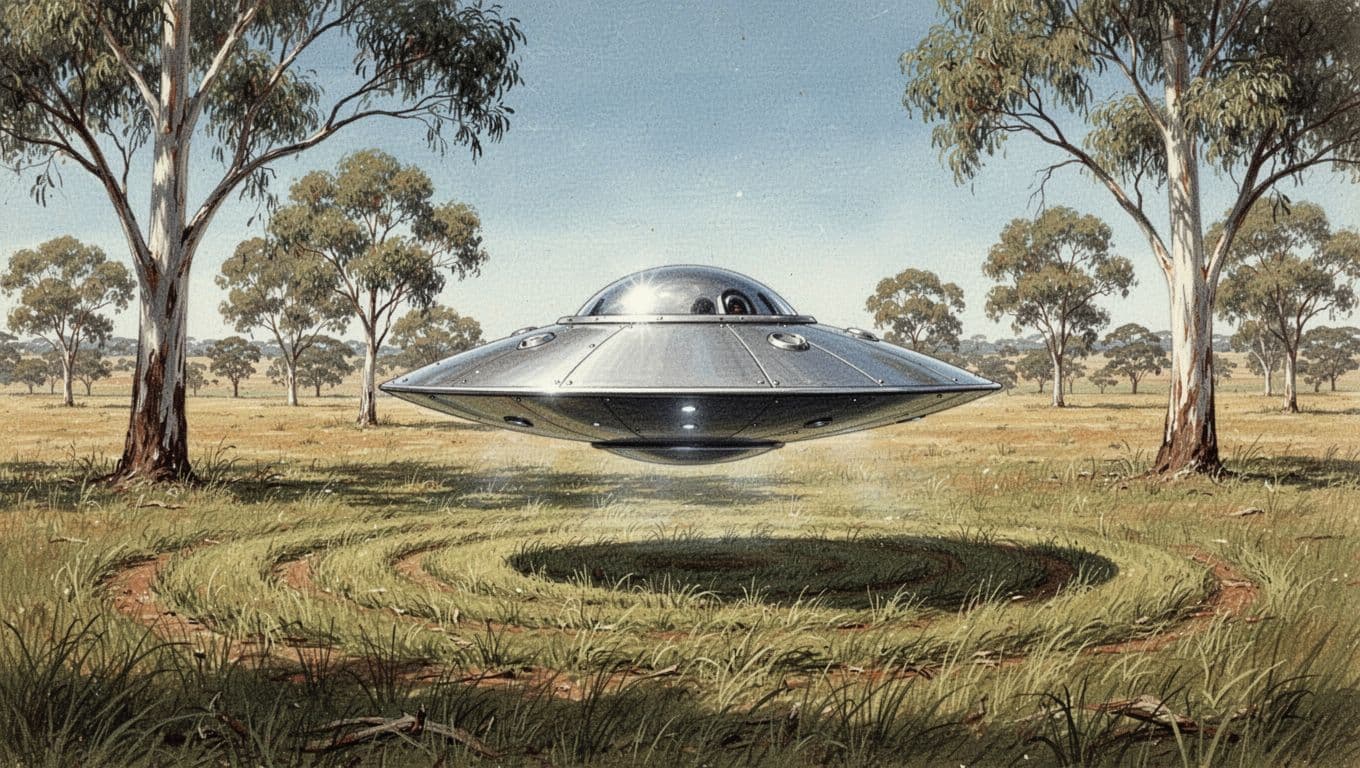
A repeated description is a round or disc-like shape, sometimes with a dome-like top. Witnesses often mentioned a silvery sheen, with some describing a purple tint or color shift. Acceleration also shows up a lot, described as sudden and fast.
One commonly cited teacher witness is Andrew Greenwood. Named witnesses matter because they attach accountability. A person who goes on camera, repeats their account over years, and accepts public scrutiny carries a different weight than an anonymous retelling.
That doesn’t make the story “proven.” It does make it trackable. Researchers can compare old and new interviews and see what stays stable, and what grows.
Reports of small aircraft nearby: what is claimed, and what is missing
The plane element is the case’s sharpest hook and its biggest paperwork problem. Many witnesses claimed three to five small aircraft appeared near the object, circling or moving in a way that felt like pursuit.
What’s missing is just as important:
Pilot names, flight logs, and a clear official statement tying any aircraft activity to the event have not surfaced in a way that settles it. Without records, the planes sit in a fog zone. They could have been routine traffic. They could have been training flights. They could also be a memory that grew stronger because it made sense of the scene.
The honest position is simple: planes are widely reported in firsthand accounts, but documentation that pins them down remains absent.
Evidence beyond memory: media reports, physical traces, and the silence claim
Because witness memory has limits, the strongest anchors come from things that exist outside anyone’s head: media coverage close to 1966, reports of ground effects at The Grange, and claims of official attention afterward.
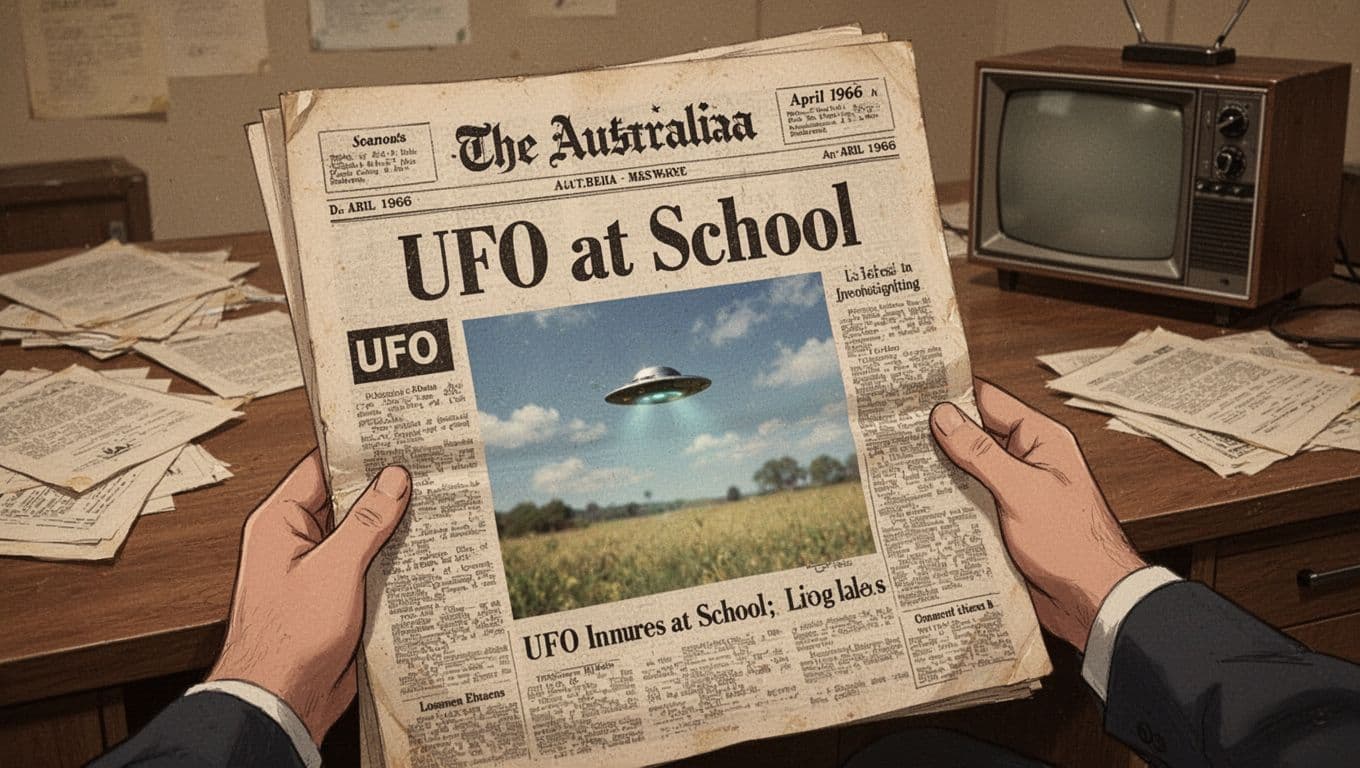
Witnesses have long said television crews arrived that day. Local press also reported the story soon after, including coverage associated with the Dandenong Journal. Media attention matters for a basic reason: it shows the incident wasn’t invented in a later decade. People talked about it in the moment.
Still, media doesn’t solve identification. A newspaper can confirm a commotion. It can’t confirm what flew overhead.
The best role for early media is simple: it proves timing and public interest, not the object’s identity.
The other sticky piece is the “keep quiet” claim. Many witnesses have said school authorities told them not to talk, or that adults steered the story away. That kind of instruction is hard to document unless someone kept a memo or a recording, and those haven’t surfaced in a definitive way.
As of February 2026, there hasn’t been a major new release of official records that closes the silence question. Calls for more formal inquiry continue, but the public file stays thin.
What the 1966 media coverage shows (and what it doesn’t)
The strongest point from 1966 reporting is that the Westall UFO story reached journalists quickly. That reduces the odds of a pure urban legend built years later. It also gives researchers a chance to cross-check: who was quoted, what was emphasized, and which details appeared early versus later.
What it doesn’t give is a clean description backed by measurement. No radar plot is publicly tied to the event. No confirmed flight record has been produced that explains the full set of reports. In other words, media helps lock the case to a date and place, but it doesn’t deliver a final label.
Flattened circles in the grass and later site checks
Some witnesses described flattened circles or pressed grass at The Grange, sometimes framed as landing marks. This kind of trace sounds strong, but it’s fragile evidence. Grass can be flattened by people running in, by wind, by routine ground use, or by later disturbance after the story spreads.
Reports also circulate that an air force check occurred days later and found nothing. Even if such a check happened, “found nothing” doesn’t mean “nothing happened.” It only means investigators didn’t recover clear physical proof.
Time also worked against verification. The area changed. A field can be altered by development and maintenance. Once the ground changes, later checks turn into guesswork.
For a useful comparison, ball lightning reports show a similar pattern: strong witness agreement, weak physical capture, and a lot of room for misread cues under stress. See Lightning Ball Insights.
Explanations that have been proposed, and how well they fit the known facts
The Westall UFO sits in a tight space. Any explanation has to handle daylight visibility, a metallic look, unusual motion, the impression of low altitude near The Grange, and the repeated plane reports. That’s a lot to satisfy at once.
It’s also fine if an explanation fits most points but not all. Real events can look messy because humans observe them from different angles and with different expectations.
As of February 2026, no new official release has ended the argument. So the best approach is comparative: which theory explains the most, with the least forcing of the facts?
The HIBAL balloon theory: why researchers take it seriously
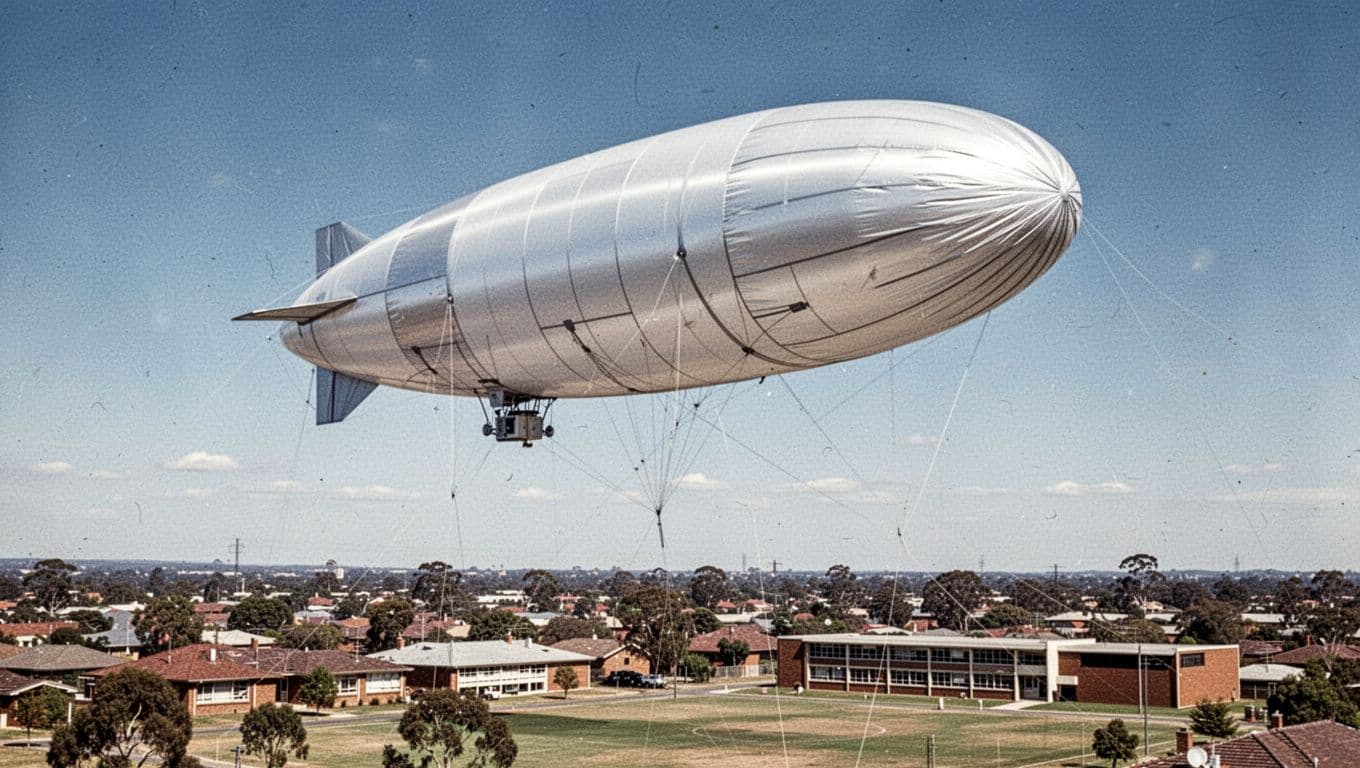
One serious proposal points to HIBAL high-altitude balloons used in Australia in the 1960s for upper-atmosphere research, including radiation monitoring in the broader Cold War era. Researchers who favor this idea argue that a bright balloon (or related equipment) could present as a shining object in a clear sky, especially to people not expecting it.
This theory earns attention because it has a realistic backbone. Governments and agencies did launch balloons. Balloons can drift off course. Seen from the ground, a bright object can look disc-like when glare washes out shape cues.
Still, The balloon explanation begins to strain under certain details.
Reports of rapid acceleration don’t fit a drifting balloon well. The “hovering and descending near trees” impression also strains the model, unless witnesses misjudged distance badly. The plane chase narrative becomes harder too, unless the planes had a separate reason to be there, or witnesses interpreted routine flights as pursuit.
So the balloon theory stays plausible, but not definitive.
Other suggestions and why they remain unproven
Other ideas keep circulating, and they share one weakness: missing records.
Misidentified aircraft sits on the table, because planes can look strange at angle, especially with glare. Yet many witnesses insisted the motion didn’t match normal flight, and the object didn’t read like a standard aircraft silhouette.
Secret testing gets mentioned because the 1960s were full of quiet programs. That claim needs paperwork to move from suspicion to fact, such as test schedules, range logs, or recovered communications. None have appeared in a way that resolves Westall.
Mass misperception is the clean skeptic answer. Crowds can amplify errors. People can copy each other’s certainty. Still, this case involved enough independent observers, in daylight, that “everyone imagined it” doesn’t feel like a complete account either.
The case survives because each explanation fixes one part and leaves another part hanging.
Where the Evidence Stops
Westall endures because the essentials look solid while the proof never arrived. Hundreds saw something unusual. Media responded quickly. The event lived in the open, not in the shadows. Still, the window for clear verification closed before anyone realized it mattered.
By the time questions sharpened, the sky was empty, the field had changed, and the moment that could have settled the story had already passed.
As of February 2026, no major new declassification has closed the file. That’s why Westall still carries weight: shared memory, missing documentation, and gaps that never got filled when the trail was fresh. The smartest stance is careful curiosity, plus respect for the people who stood on that oval and reported what they thought they saw.
Westall UFO FAQ
What happened at Westall High School in 1966?
On April 6, 1966, students and staff near Westall High School in Melbourne reported seeing an unusual aerial object in broad daylight. Witnesses described a bright, metallic-looking object moving across the sky and appearing to descend near nearby open ground known as The Grange. The sighting reportedly lasted around 20 minutes.
How many people witnessed the Westall UFO?
Estimates often suggest around 200 witnesses, including students, teachers, and local residents. This number is based on later summaries and interviews rather than a formal count, but the sighting clearly involved a large group reacting at the same time.
Did the object land at The Grange?
Some witnesses believed the object descended low near trees at The Grange, while others only saw it hover. There is no confirmed physical evidence proving a landing, and reports of flattened grass remain inconclusive.
Were there planes chasing the object?
Many accounts describe small aircraft appearing in the same airspace, sometimes interpreted as pursuing the object. However, no flight logs or official records have surfaced that clearly explain these aircraft or confirm their purpose.
Is there an official explanation for the Westall UFO?
No single explanation has been confirmed. One leading theory suggests a high-altitude research balloon may have been misidentified. While plausible in some respects, this explanation does not account for all reported details, leaving the case unresolved.
Why does the Westall UFO case remain unsolved?
The case persists because many witnesses reported similar details, yet documentation that could confirm or explain the event never surfaced. The combination of shared memory and missing records has left key questions unanswered.