

Wurzburg sat on the Main River like a locked fist. In the late 1620s, the Thirty Years’ War pressed hard on the region. Troops moved, prices jumped, disease followed, and politics turned sharp. In that kind of strain, people looked for hidden enemies.
This happened inside the Prince-Bishopric of Wurzburg, a small state where one man ruled as both church leader and territorial prince. That ruler was Prince-Bishop Philipp Adolf von Ehrenberg, in office from 1623 to 1631. Under his watch, Wurzburg ran one of the most aggressive witch persecutions in Europe.
A story keeps coming up in serious histories of the trials: the bishop let the machine run so far that a close relative described as his nephew ended up executed. The claim is credible, but details shift in retellings.
This piece lays out what happened, how the system fed itself, what the records support, and where the story gets messy.
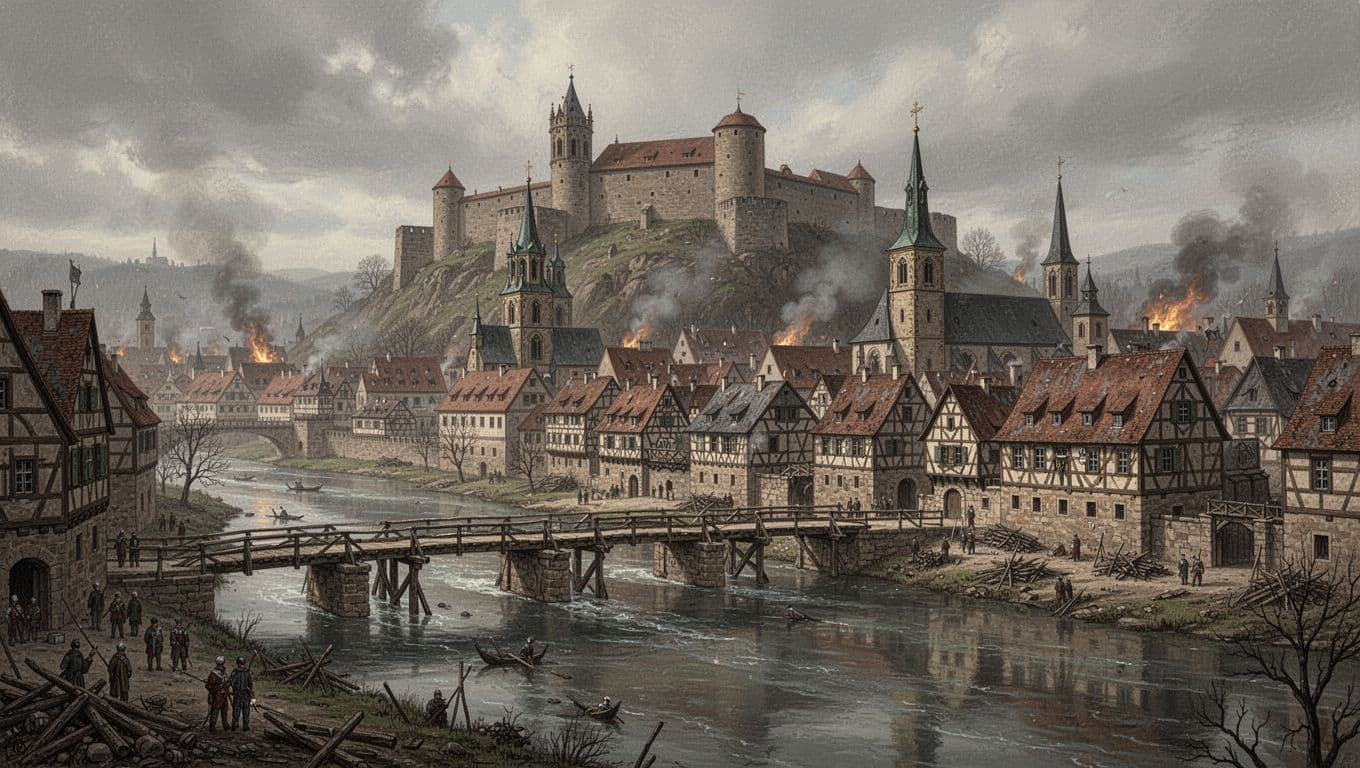
What the Würzburg witch trials were, and why they spiraled so fast (1626 to 1631)
The Wurzburg witch trials were not a loose village panic. They were a court-driven persecution backed by law, paperwork, and official muscle. That difference matters.
A Prince-Bishopric was both a religious and political unit. The prince-bishop controlled courts, police power, and much of public life. When authorities treated witchcraft as a real threat to the community, accusations became state business.
The main wave in Wurzburg ran from 1626 to 1631. Earlier cases existed in the region, but these years marked the surge. The war did not cause the trials by itself, yet war conditions helped. Shortages, fear of invasion, and religious tension created a climate where harsh answers sounded like order.
The legal engine also mattered. Early modern courts often treated a confession as the key proof. A “confession under torture” meant a statement extracted through pain or threat of pain. Once officials accepted that method, the process rewarded whatever story the interrogators expected to hear.
The scale in plain numbers, and what we can safely say
The most cited figures split into city totals and wider territory totals, because records survive unevenly.
Many historians cite about 157 to 219 executions in the city of Wurzburg during the peak years. For the wider Prince-Bishopric, estimates often run roughly 600 to 900. Those larger numbers vary because rural documentation broke, vanished, or never existed in full.
What stands out is the range of victims. Wurzburg did not limit accusations to poor, older women. The net caught men and women, children, and also people with status, including members of the clergy and local elites. Several accounts note dozens of children among the accused, and multiple Catholic priests executed during the persecution.
The collapse came fast. By 1631, the pressure shifted when Swedish forces captured Wurzburg during the war. The trials slowed and effectively ended as power changed hands and the old court structure broke apart.
How accusations multiplied: torture, forced confessions, and chain naming
The machinery ran on repetition.
Officials arrested a suspect. Interrogators pushed for a confession. Torture or the threat of it made resistance costly. Once a prisoner spoke, the court asked the same next question: “Who else?” Names spilled out because naming others sometimes brought a pause in pain, or at least the hope of it.
That produced chain accusations. One file created five more. Those five created twenty. The court treated this as confirmation, because the same names kept appearing. In practice, it was contamination, like copying a rumor by hand until it looks like a record.
A Jesuit priest, Friedrich Spee, saw the system up close while serving as confessor to the condemned. In 1631, he published Cautio Criminalis (often translated as “A Warning for Prosecutors”). Spee argued that torture did not find truth, it manufactured it. He did not deny that people believed in witchcraft. He said the method guaranteed false outcomes.
When confession is forced, the court stops testing facts and starts collecting signatures on a story it already wrote.
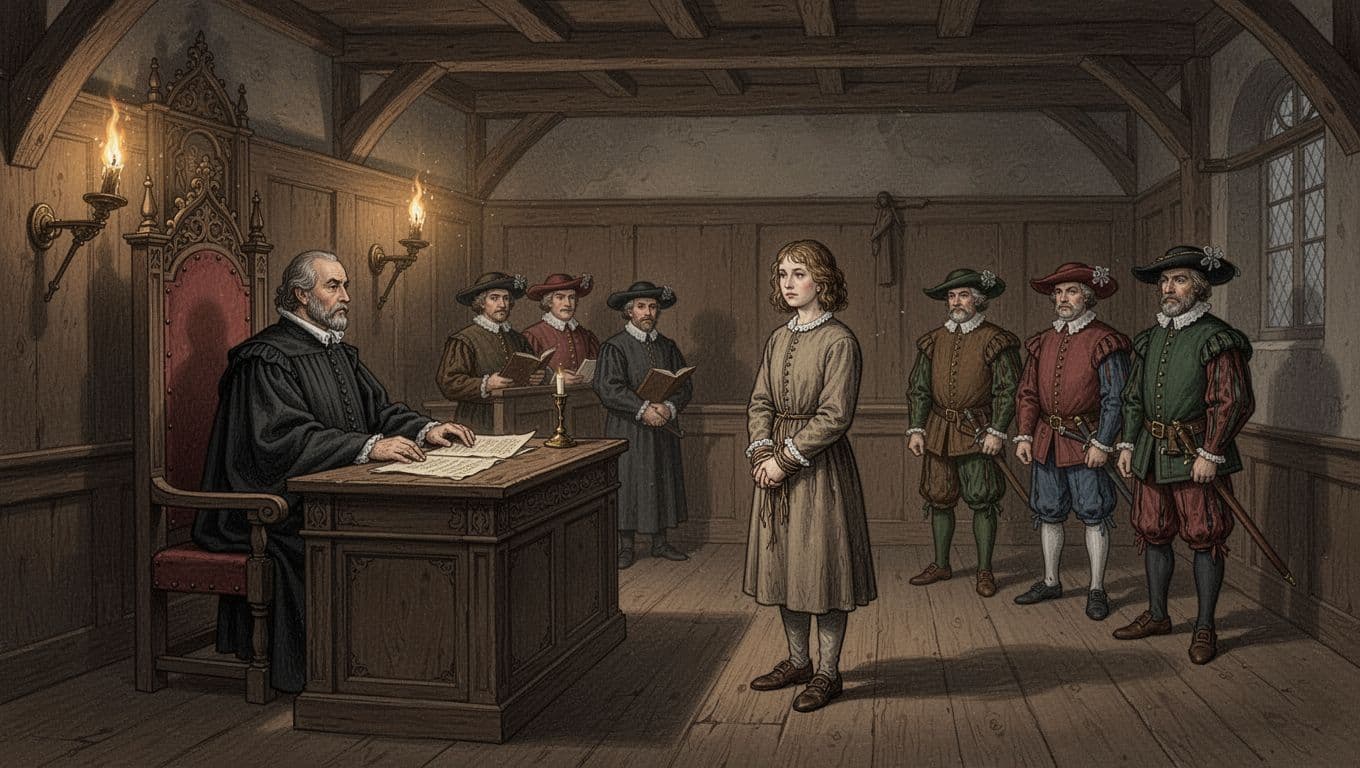
The bishop and the nephew: what records suggest, and what is still disputed
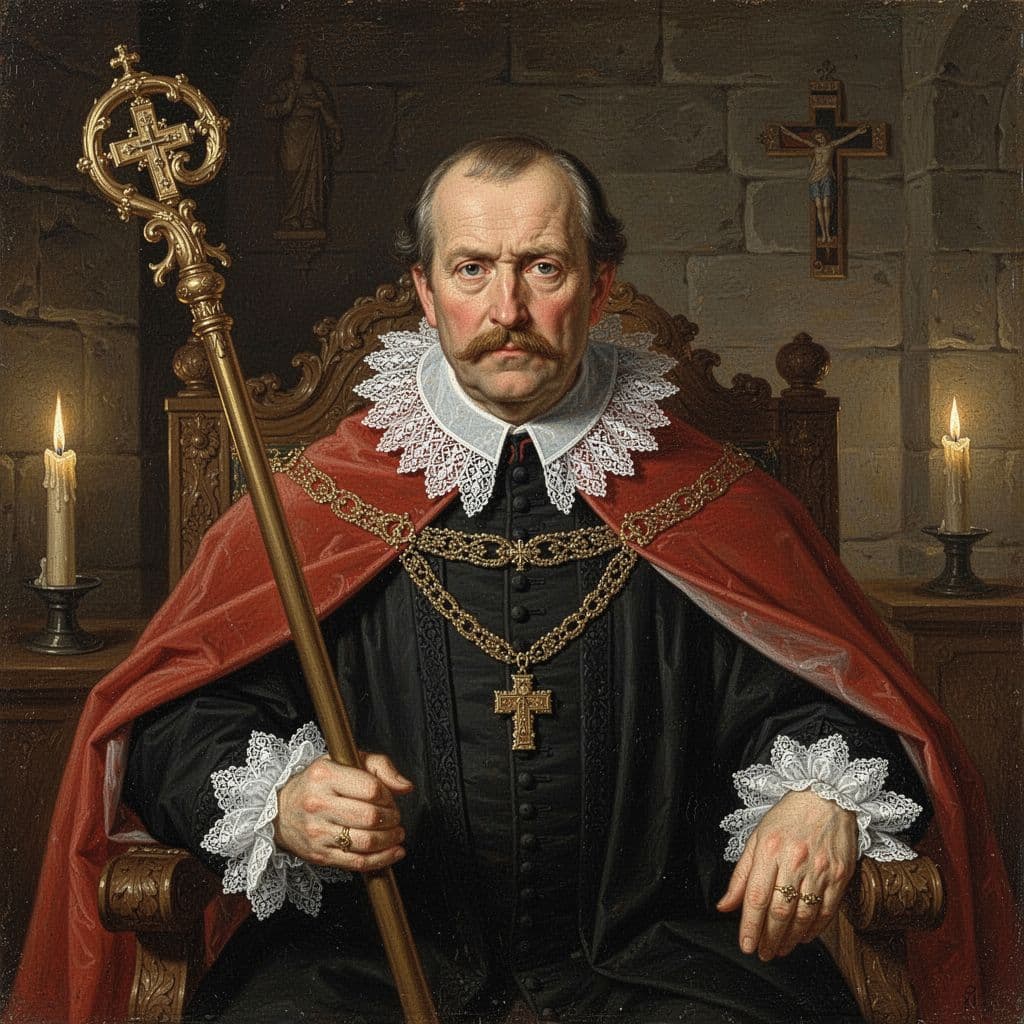
People remember Wurzburg for its numbers, but the leadership story keeps the case alive. Philipp Adolf von Ehrenberg sat at the top when the killings peaked. That does not mean he signed every paper by hand. It does mean the courts worked inside his state, under his authority, with his approval.
The “nephew” claim lands like a gut punch because it cuts against the usual escape hatch. Many assume rank protects you. Wurzburg shows rank could make you visible instead.
Still, the strongest version of this story has to be handled with care. Some details are solid across reputable accounts. Other parts shift depending on the author and the sources they used.
Philipp Adolf von Ehrenberg’s role, authority, and incentives
A prince-bishop held two jobs in one body. He served as a Catholic bishop, and he ruled as a secular prince over territory. That combination mattered during the Thirty Years’ War, when rulers sold security and certainty as political goods.
Under Ehrenberg (1623 to 1631), Wurzburg pursued witchcraft cases with unusual intensity. Courts built dedicated procedures, held repeated interrogations, and used torture to secure confessions and lists of alleged accomplices. The result was a widening sweep that hit groups most hunts did not touch so heavily.
Historians point to several possible drivers, but they frame them as interpretation, not a single proven motive. Religious zeal played a role in many Catholic and Protestant territories. Social control mattered too, especially during wartime strain. Local politics, grudges, and property pressures also appear in the background of many witch panics across Europe.
Earlier groundwork existed before Ehrenberg. Prior rulers, including Julius Echter von Mespelbrunn (in office long before the 1620s), strengthened Catholic reform and governance in the region. That older institutional setup made later crackdowns easier to run at scale.
Did he execute his own nephew, and who was he?
Multiple credible histories report that Ehrenberg’s own nephew was executed during the Wurzburg witch trials. The relative is often identified as Ernst von Ehrenberg in secondary sources. That identification appears frequently enough to treat it as more than a rumor, although not every account provides the same level of documentary detail in print.
What does not hold up well is the drifting set of names found in popular retellings. For example, some internet versions attach the story to a figure called “Gottfried Schwärtzer.” That name shows up in dramatic summaries, but it does not show up reliably in strong historical treatments of the Wurzburg trials.
The naming problem matters because it shows how a sharp fact can get bent. “The bishop’s nephew died in the trials” is already extreme. Once writers start swapping names, ages, or roles without records, the story turns into a prop.
A careful way to phrase it stays honest: sources report the execution of a nephew, often identified as Ernst von Ehrenberg, while published accounts differ on naming and documentation in secondary retellings.
What this story teaches about mass fear, power, and evidence
The nephew detail, whether a name is stable or not, points to the same hard lesson. Once a court builds a system that rewards accusation and treats confession as proof, the system stops caring who you are.
Wurzburg also shows that “witch trials targeted outsiders” is too simple. Children and clergy did not sit outside society. They sat near the center. When they started showing up in case files, it signaled a process running hot, chewing through the ordinary boundaries that normally protect people.
When the system rewards accusations, almost anyone can become the next target
Chain naming created a trap. The accused named neighbors because they wanted pain to stop. Witnesses repeated rumors because silence could look like sympathy. Officials trusted the growing list because it looked like a pattern.
Status did not solve the problem. In some cases, status made things worse, since elite networks touched more people. More contacts meant more ways to get named.
The grim logic ran like this: the court believed witches hid in groups, so a solitary accused person looked suspiciously incomplete. That belief turned each interrogation into a recruitment tool for the next arrest.
A practical way to read witch trial claims without falling for myth
Use a simple filter before accepting sharp details, especially the ones that sound designed to travel.
- Check for primary traces: trial registers, execution lists, city records, or archival citations.
- Compare serious histories: if only one modern writer says it, stay cautious.
- Watch for late flourishes: extra dialogue and perfect “twist” facts often arrive centuries later.
- Track numbers and names: shifting totals and swapped identities usually signal weak sourcing.
- Treat torture confessions as unreliable: they show what people said to survive, not what happened.
These steps do not drain the horror away. They keep the story clean.
The Lesson Buried in the Records
The Wurzburg witch trials (1626 to 1631) ran as an official campaign, not a folk tale. Records and strong scholarship support a death toll in the hundreds, with higher estimates across the wider Prince-Bishopric. Philipp Adolf von Ehrenberg ruled during the peak years, and his government let the courts keep grinding.
The claim that a nephew of the prince-bishop was executed is widely reported in credible histories, often under the name Ernst von Ehrenberg. At the same time, later retellings muddy names and details, so careful sourcing matters.
Wurzburg endures because it shows how fast evidence can collapse when fear becomes policy, and how power can fail to protect even its own.