
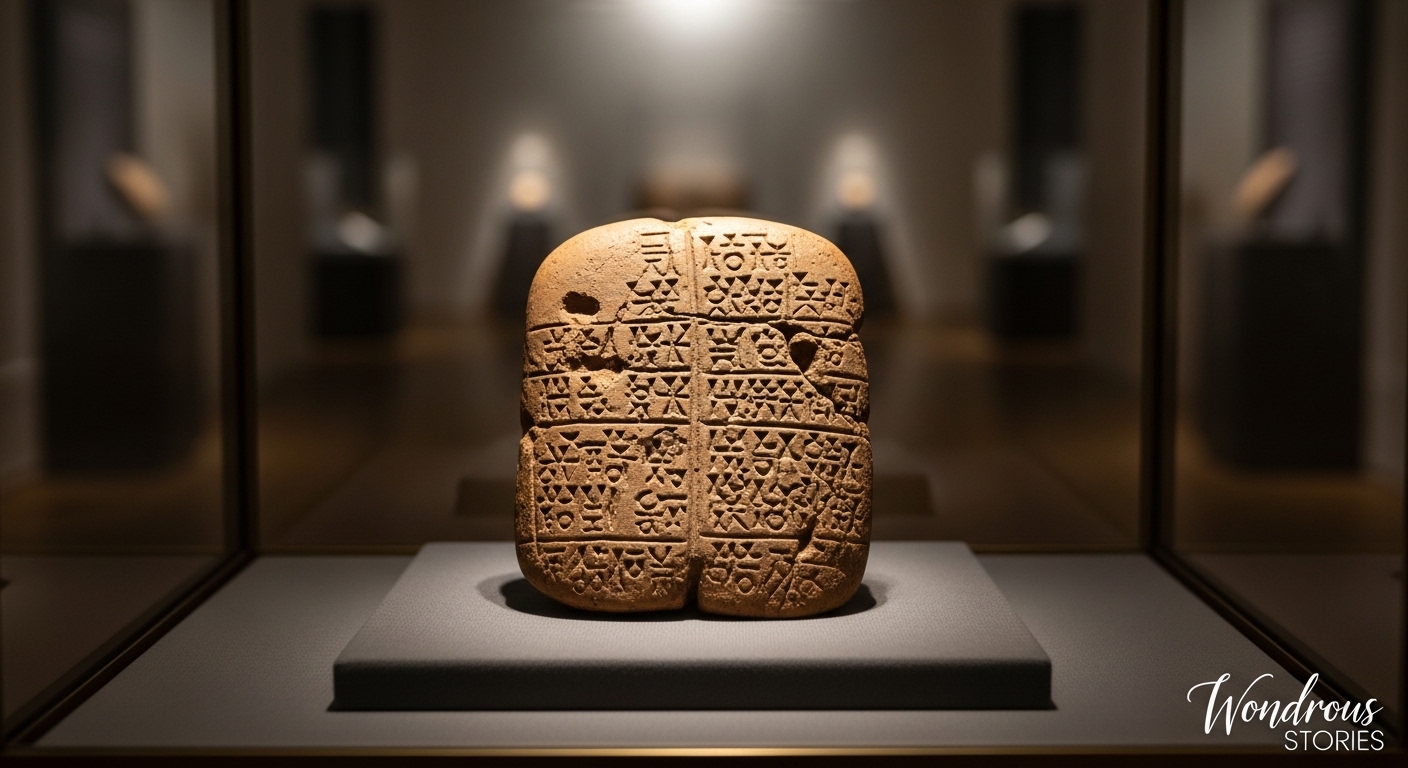
Some of the most frustrating artifacts in museums look almost ordinary: a clay tablet with neat marks, a wooden plank with repeated glyphs, a seal with a short line of symbols. You can photograph them, date them, test the ink or the wood, even map where they were found, yet you still can’t read a single sentence.
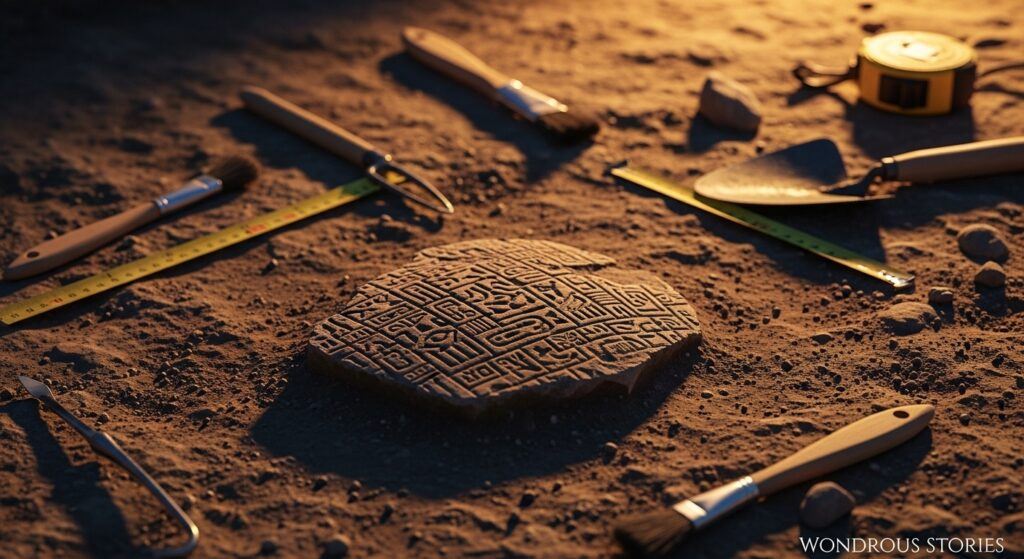
These undeciphered ancient texts aren’t mysterious because of legends. They’re mysterious because the usual tools for reading the past are missing. No bilingual “key,” no long books, no living language that kept the thread unbroken.
What follows is what scholars can say with evidence, and why so much remains out of reach.
How we know a text exists even when we can’t read it
A “text” doesn’t have to be readable to be recognizable. Archaeologists look for pattern and intent: repeated sign groups, consistent direction of writing, spacing that suggests words, and symbol sets that recur across many objects. When the same marks show up on seals, tablets, pottery, and tools, it’s hard to argue they’re random scratches.
Context matters just as much. If an inscribed object comes from a controlled excavation, researchers can link it to a layer, a date range, and nearby finds. That helps narrow down who made it and what it might have been used for (accounting, ownership marks, ritual, trade).
So why can’t we just “crack” it like a code?
Because ancient writing is rarely a simple substitution cipher. A script can represent sounds (like an alphabet), syllables, words, or a mix. And even if you can read the sounds, that doesn’t mean you understand the language. Etruscan is a classic example: the letters are readable, but much of the vocabulary and grammar still isn’t securely understood.
The biggest missing piece is often a bilingual text, the ancient equivalent of a label that says “this means that.” Egyptian hieroglyphs had the Rosetta Stone. Many unsolved scripts have nothing like it, and without a solid bridge to a known language, even smart pattern work can hit a wall. For a grounded overview of what decipherment usually requires, see National Geographic’s report on decoding lost scripts.
Undeciphered scripts with surviving inscriptions (and why they resist reading)
People sometimes lump all unreadable writing together, but the obstacles differ. Some scripts have many examples but very short texts. Others have longer texts but too few samples. A few may not even be full writing in the first place.
A useful catalog of examples is Omniglot’s undeciphered scripts list, which shows how wide the problem really is.
| Script or text | Where | What survives | Main barrier |
|---|---|---|---|
| Indus script | Pakistan and northwest India | Hundreds of seals, short inscriptions | Texts are very short, language unknown |
| Linear A | Crete and Aegean | Tablets, labels, inscriptions | Language unknown, no bilingual key |
| Rongorongo | Rapa Nui (Easter Island) | Few wooden objects, many damaged | Tiny corpus, late collection history |
| Phaistos Disc | Crete | One clay disc | Single object, no comparables |
| Voynich Manuscript | Europe | One illustrated codex | Language and system unclear, no key |
Indus Valley script: lots of artifacts, tiny messages
The Indus script appears on seals and small objects from the Indus Valley Civilization (often dated roughly 2600 to 1900 BCE). There are many inscriptions, but most are only a few signs long. That’s brutal for decipherment. You can’t test grammar on a “sentence” that may be two or three symbols.
Scholars also disagree on what the signs represent. Some argue it encodes language, others think it may be a non-linguistic symbol system tied to identity or administration. With no long texts and no bilingual inscriptions, the debate itself slows progress.
Linear A: a script you can transcribe, but not translate
Linear A was used by the Minoans on Crete, mainly in the second millennium BCE. It’s related in form to Linear B, a later script that was deciphered in the 1950s and turned out to write Greek. Linear A signs overlap enough that researchers can often guess sound values, but meaning remains uncertain because the underlying language isn’t known.
That’s the hard truth: you can sometimes “read” Linear A out loud, in the sense of making sounds, while still having no idea what you just said.
Rongorongo: too few tablets, too much loss
Rongorongo is associated with Rapa Nui. The surviving inscriptions were collected in the 19th century, and only a small number of objects with text are known today. Many are damaged, and the history around their creation and transmission is complicated by colonial disruption and population collapse.
Because the corpus is small, even basic questions stay open: whether it records a full language, how it was taught, and whether any conventions changed over time. Omniglot summarizes the evidence and limits in its Rongorongo script overview.
Phaistos Disc and the Voynich Manuscript: famous, but isolated
The Phaistos Disc (usually dated around the second millennium BCE) is a single object with stamped symbols arranged in a spiral. With no other confirmed examples, there’s nothing to compare, and that makes verification nearly impossible.
The Voynich Manuscript is later (radiocarbon dating places the parchment in the early 1400s), but it illustrates the same core problem: one self-contained system with no reliable key. As of late 2025, there’s still no widely accepted decipherment of the Voynich text, Rongorongo, Linear A, or the Indus script.
When we can read the letters but not the language (and what “lost texts” really mean)
Some cases are less dramatic but just as limiting. Sometimes the script is understood, yet the language behind it isn’t. Researchers can transliterate signs into sounds, but translating into clear meaning stays uncertain because there’s no close linguistic relative and too little vocabulary.
A recent example, reported from excavations at Boğazköy-Hattusha in Turkey, is a short passage in an unknown Anatolian language preserved on a Hittite-era tablet. The cuneiform signs can be read because the writing system is known, but the language itself is not yet understood well enough to translate confidently from a brief snippet. Finds like this are real progress, but they also show how slow the work can be when the evidence is thin.
Then there’s a different category: texts we know existed because ancient people referenced them, but no readable copy survives. This is not an “undeciphered” problem. It’s a survival problem.
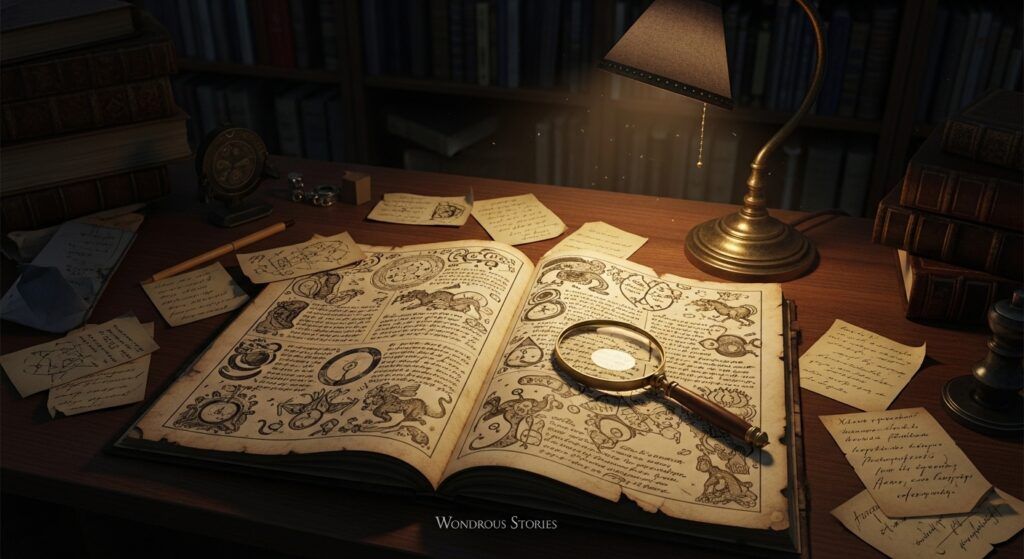
Historians can often document that a work existed (through quotations, library catalogs, or mentions by multiple authors), but without the manuscript, there’s nothing to read. The result is a strange kind of absence: a book title and an author’s name, sometimes a few quoted lines, and then silence. It’s a reminder that what we call “history” is partly a record of accidents, fires, decay, and what later cultures chose to copy.
Conclusion
Unreadable writing sits at the edge of what evidence can carry. With undeciphered ancient texts, the barrier is often simple and brutal: too few examples, too little context, and no trusted bridge to a known language. As of January 2026, major cases like Linear A, the Indus script, Rongorongo, and the Voynich Manuscript remain unresolved.
If you take one thing from all this, let it be this: the past isn’t hiding, it’s missing pieces. And until a new find supplies them, the most honest answer is still, “We don’t know yet.”