

Unexplained Phenomena: Documented Unsolved Mysteries That Still Don’t Have One Answer
Some baffling mysteries aren’t just campfire stories. They’re logged in lab notes, measured by instruments, and described by people who aren’t trying to sell anything. And even then, the best answer is sometimes the simplest one: we don’t know yet.
In this post, Unexplained Phenomena means real, reported events that have documentation but still lack a single agreed-upon explanation. “Documented,” in this context, can mean official records, instrument data (audio, radar, photos, logs), peer-reviewed research, or consistent eyewitness accounts that can be compared across time.
This isn’t a paranormal pitch, and it’s not a conspiracy scrapbook. It’s a look at three categories that keep coming up in serious discussions: strange sounds, strange lights, and strange signals. Uncertainty can feel uncomfortable, but in science, it can also be honest.
What counts as an unexplained phenomenon, and what does not?
A mystery becomes worth discussing when it has limits. Clear limits are what separate unexplainable mysteries, hard problems, from a story that can’t be checked.
Here’s a simple checklist you can use before giving any claim your attention:
- Multiple independent reports: not just one person, one night, one post.
- Measurable data exists: recordings, sensor logs, time stamps, site notes, or repeat monitoring attempts.
- Competing explanations were tested: investigators tried ordinary causes first (weather, vehicles, equipment noise, health conditions).
- The “unknown” part is stated clearly: what’s known, what’s missing, and what would settle it.
Just as important is what doesn’t count.
If there are no primary sources, no dates, no locations, or no way to review the underlying material, it’s not an unexplained phenomenon. Claims about ghosts and Bigfoot often fall short here. It’s a rumor. Hoaxes also belong in a different bucket, along with cases where later evidence shows a straightforward misidentification (planes, planets, insects close to a camera lens).
One more key point: “unexplained” doesn’t mean “supernatural.” It often means the event was rare, conditions were unusual, the data is incomplete, or the thing can’t be reproduced on demand.
A quick reality check: questions to ask before believing a claim
Before you share a story about paranormal activity or build a theory around it, slow down and ask a few plain questions.
- Who recorded or reported it, and do they have a track record of careful reporting?
- What instruments were used, and were they appropriate for the claim (audio range, camera settings, calibration)?
- Can the raw data be reviewed (not just a screenshot, a short clip, or a retelling)?
- Were controls used, like checking background noise, known light sources, or equipment artifacts?
- Has it happened more than once, in the same place, under similar conditions?
- What did qualified experts rule out, and what tests did they run?
- What’s still debated, in a sentence or two, without filling gaps with guesses?
If a claim collapses under those questions, it was probably not solid to begin with; look for a scientific explanation instead.
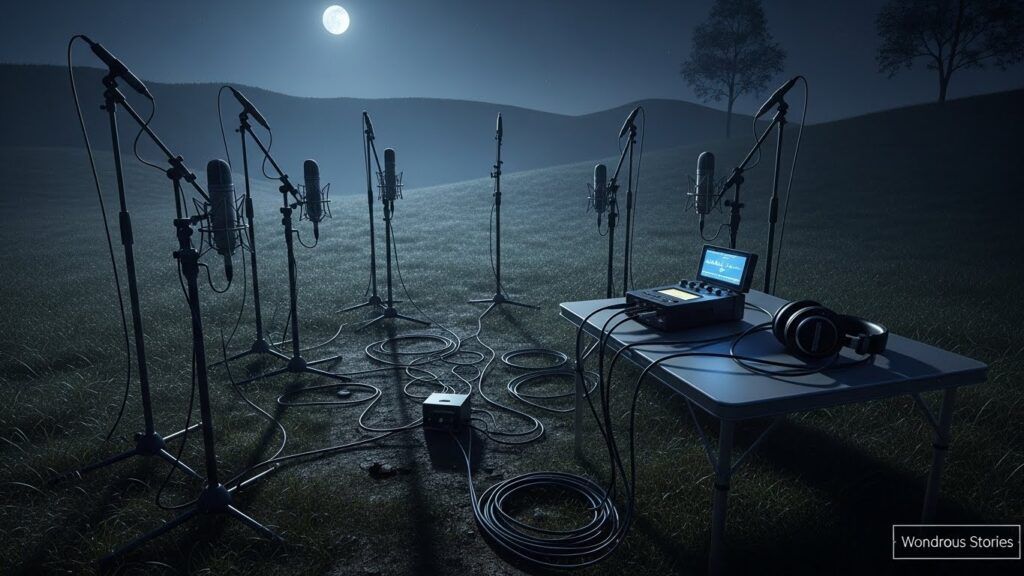
Strange sounds with no clear source: the Taos Hum
In the early 1990s, a small number of residents around Taos, New Mexico, reported a persistent low-frequency sound, often described as a distant engine idling. Estimates vary, but a common figure cited in reporting and research summaries is that only a small percentage of people perceive it.
The Taos Hum became more than a local oddity because it prompted a formal investigation. One well-known effort was reported in the Journal of the Acoustical Society of America in 1994, describing a perceived low-frequency sound and the difficulty of capturing a clear physical source in the field (the article record is accessible through the U.S. Department of Energy’s OSTI database: A perceived low-frequency sound in Taos, New Mexico).
There’s also broader medical and scientific discussion of “the Hum” as a strange phenomenon manifesting as a worldwide low-frequency perception problem, with Taos as a famous example (see: Manifestations of a low-frequency sound of unknown origin perceived worldwide, also known as “the Hum” or the “Taos Hum”).
What makes the Taos case frustrating is also what makes it credible: it is one of the strange cases sitting in the messy overlap between environment, measurement limits, and human hearing.
As of January 2026, there is still no consensus on the cause of the Taos Hum. Investigations have tested common suspects, including industrial sources, traffic, and other environmental noise. Yet many accounts don’t line up neatly with any single source, and recording attempts have not consistently captured a matching signal.
Why the Taos Hum is hard to solve
Low-frequency sound behaves like a stubborn ghost, but not a paranormal one. It can travel far, bend around terrain, and change with the weather.
A few practical obstacles keep showing up in serious discussions:
Different ears, different thresholds: People vary in sensitivity to low frequencies. Two neighbors can stand in the same yard and have honest, conflicting reports.
Conditions shift: Wind, temperature layers, and local geography can alter how low-frequency noise moves. That can make a real external source seem to “turn on” and “turn off.”
Overlapping sources: Even if the Hum is external, it may not be a single source. A quiet town at night can reveal sounds drowned out during the day.
Tinnitus confusion: Some cases may involve health conditions, including forms of tinnitus. That doesn’t mean people are “making it up.” It means the boundary between outside sound and inside perception, shaped by human psychology, can be hard to draw.
Better evidence would look boring, in a good way: reproducible recordings that offer scientific proof, tied to a specific time, place, weather conditions, and independent sensors that agree.
Unexplained lights in the sky: Hessdalen Lights, Marfa Lights, and earthquake lights
When people say they saw “lights,” that can mean almost anything. Stars near the horizon, aircraft, satellites, drones, distant towers, car headlights, and atmospheric refraction can all create honest confusion. People also often jump to conclusions like UFOs or alien spacecraft.
Still, some light reports persist for decades, cluster in specific locations, and attract repeated field studies. That doesn’t prove a single mystery source. It does justify careful attention.
Hessdalen Lights (Norway): years of monitoring, still no complete model
Hessdalen, a valley in Norway, is known for recurring eyewitness sightings of unusual lights, including bright stationary points and moving orbs. What sets this case apart is sustained interest in instrument-based monitoring over many years, including the use of cameras and other sensors in organized observation efforts.
Researchers and observers have described some events as plasma-like, based on appearance and behavior. Natural explanations often discussed in connection with Hessdalen include ionization processes and interactions between local geology and atmospheric conditions. The hard part is closing the loop: even if some observations fit parts of those ideas, there’s still no single model that cleanly explains the full range of reported behavior, brightness changes, and apparent motion.
The most careful position is also the least satisfying: Hessdalen has documentation and patterns, but not a final explanation that fits every observation.
Marfa Lights (Texas): a long record, but refraction does not explain everything
The Marfa Lights in West Texas have been reported since the late 1800s. Many sightings are described as distant, glowing, or flickering lights that appear at night, sometimes seeming to move or split.
A common explanation is that at least some lights are car headlights seen from far away, distorted by distance and atmospheric conditions. Another idea is mirage-like refraction near the horizon. Those explanations fit many reports and are supported by practical field tests under some conditions, contradicting popular myths about UFOs.
The problem is that the Marfa Lights are not one clean, repeatable lab event. Not every sighting is the same, and not every night produces the same results. That leaves room for a mixed outcome: some sightings likely are misidentifications, but the full catalog of reports has not been reduced to one simple recipe that matches all details.
Earthquake lights: documented flashes with unclear physics and weak predictability
Earthquake lights are reported as glows, flashes, or luminous effects seen near the time of earthquakes, often mistaken for paranormal events. Reports exist across different regions and eras, and some modern cases have been captured in photos or video, though documentation quality varies widely.
One mainstream idea, explained in plain terms, is that rock stress and fracturing might create electrical effects that can ionize air or trigger light emissions. The issue is that the physics is still debated, and the phenomenon is not reliably predictable.
Three uncertainties keep earthquake lights in the “documented but unsettled” category:
- Why only some earthquakes show them (or appear to), even among strong quakes.
- Why the shapes and colors vary, from brief flashes to longer glows.
- Why it can’t be used for warning, since reports are inconsistent and often come after the fact.
For readers who want a grounded comparison, it can help to separate “lights” from “sounds.” Earthquakes can also involve reported booms, which the USGS discusses with an emphasis on ordinary causes and complex wave effects (see: USGS explanation of booms heard before or during an earthquake).
Different mysteries, same lesson: nature can produce effects that look dramatic without being mysterious in intent.

A signal nobody has repeated: the 1977 Wow! Signal
On August 15, 1977, the Big Ear radio telescope at Ohio State detected a narrowband radio signal that lasted about 72 seconds. It was strong enough to stand out clearly from background noise and became famous because of a handwritten note on the printout: “Wow!”
Unlike the unsubstantiated tales from Area 51 that dominate pop-culture conspiracy sites, what’s solid here is the paper trail. The event is preserved in logs, it has a known time window, and it triggered decades of follow-up listening in the same region of sky. But the core frustration is also simple: the signal has never been confirmed again, at least not in a way that matches the original event, much like how Area 51 stories evade verification despite endless speculation.
Public discussion often swings toward alien transmission because it’s a clean story. Responsible summaries treat that as one possibility people talk about, not a conclusion. The SETI Institute lays out this balanced view, including why the signal still matters and why natural explanations remain on the table (see: SETI Institute overview of the Wow! Signal).
In 2024, Scientific American covered a proposed scientific explanation involving an energetic cosmic event interacting with a hydrogen cloud, while also emphasizing ongoing skepticism and the difficulty of testing a one-time detection (see: The Wow! Signal SETI Mystery Might at Last Be Solved). That “might” is doing important work. Without repeat data, even a good idea can’t fully close the case.
What researchers can say with confidence, and what they cannot
Known:
- When it was recorded (Aug 15, 1977) and how long it lasted (about 72 seconds).
- Which instrument saw it (Big Ear).
- The signal was narrowband and stood out above the noise.
- It has a long history of follow-up searches.
- A major issue is non-repeatability.
Unknown:
- The exact source, one of astronomy’s enduring unexplained phenomena.
- Whether it was natural, human-made interference, or something else.
- Whether it could have been detected again with different coverage or timing.
Astronomy is full of one-off events. When you get only one clean glimpse, you can measure and describe it, yet still be unable to identify it.
Why some real mysteries stay unsolved (even with good data)
These cases look different on the surface, but their “stuck points” rhyme.
Rare conditions matter. A hum that only appears under certain weather layers, or lights that need a specific mix of terrain and air, can dodge neat explanations for decades.
Events don’t repeat on demand. You can’t schedule an earthquake light. You can’t tell the sky to send the same radio burst again.
Sensors are not everywhere. Even now, coverage is patchy, especially in remote areas like National Parks. Mysterious disappearances in National Parks, where people vanished without a trace, show how rare events in such isolated spots often evade documentation. A camera may miss the moment, a microphone may be pointed the wrong way, or the sampling rate may not fit the phenomenon.
Several partial explanations can be true at once. Some Marfa sightings can be headlights, while others may involve different causes. Some “Hum” reports may be external sounds, while others may be perceptions or health issues.
That’s the part many people skip. “Unexplained” doesn’t always mean “we have no clue.” It often means we have a few workable models, each explaining part of the evidence, and none clearing the whole bar. These create cold cases that stay stuck.
Conclusion
Unexplained phenomena, including historical mysteries like the Mary Celeste, D.B. Cooper hijacking, and Dyatlov Pass, don’t need a spooky explanation to be worth taking seriously. The Taos Hum shows how hard it can be to separate environment from perception, even after formal studies. Long-running light reports like Hessdalen and Marfa demonstrate how repeat sightings can still resist a single neat cause. The Wow! Signal reminds us that a well-documented event can remain open simply because it never happened again.
These unsolved mysteries and unexplainable mysteries, distinct from paranormal activity such as ghosts, psychic powers, psychokinesis, poltergeists, extra-sensory perception, or near-death experiences, emphasize separating solid documentation from speculation.
If you want a good habit to take away, it’s this: look for primary sources, keep track of what’s measured versus what’s assumed, and get comfortable saying “we don’t know yet” when the evidence demands it, even regarding psychic powers.
FAQ: Unexplained Phenomena
These answers reflect how this article uses the term unexplained phenomena: real, reported events with documentation, but no single agreed explanation.