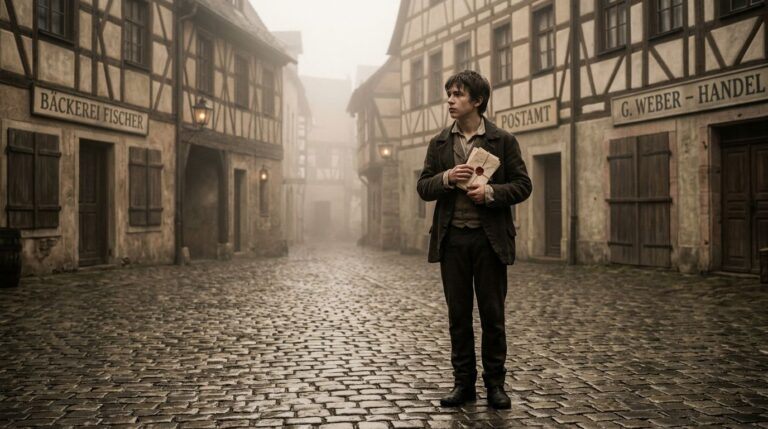


Actual Cases of Time Slips
Most stories about Time Slips aren’t told by people looking for attention. They’re usually told like a confession, with the same tone someone uses when they know they can’t prove what happened.
A typical report is simple: a person walks down a familiar street or path, and for a short time the world looks wrong. Buildings feel older, clothing styles shift, sound goes muffled, and modern details vanish. Then, just as fast, everything returns.
This article sticks to well-known, widely cited cases and the limits around them. Some accounts have a paper trail. Others have only repetition and local memory. None have scientific confirmation.
What “time slips” usually look like in real reports
Across decades of accounts, the details often repeat in ways that feel oddly consistent, even when the cases don’t connect.
People describing Time Slips tend to mention:
- A sudden change in setting, as if the “skin” of a place has been replaced.
- Brief duration, often seconds or minutes, sometimes longer gaps with missing time.
- A physical feeling of wrongness, anxiety, or disorientation, not just surprise.
- Sensory shifts, like silence, dull colors, or a strange stillness.
- Low proof, because the moment ends before anyone can document it.
That last point is the anchor around the whole topic. Time Slip accounts are built on human perception, and perception is powerful but fragile. Even honest witnesses can misread a scene, especially under stress, fatigue, or expectation. At the same time, the repeating pattern is why people keep paying attention.
It’s a hard middle ground: you can respect the witness without treating the claim as settled fact.
The Moberly-Jourdain incident at Versailles (1901)
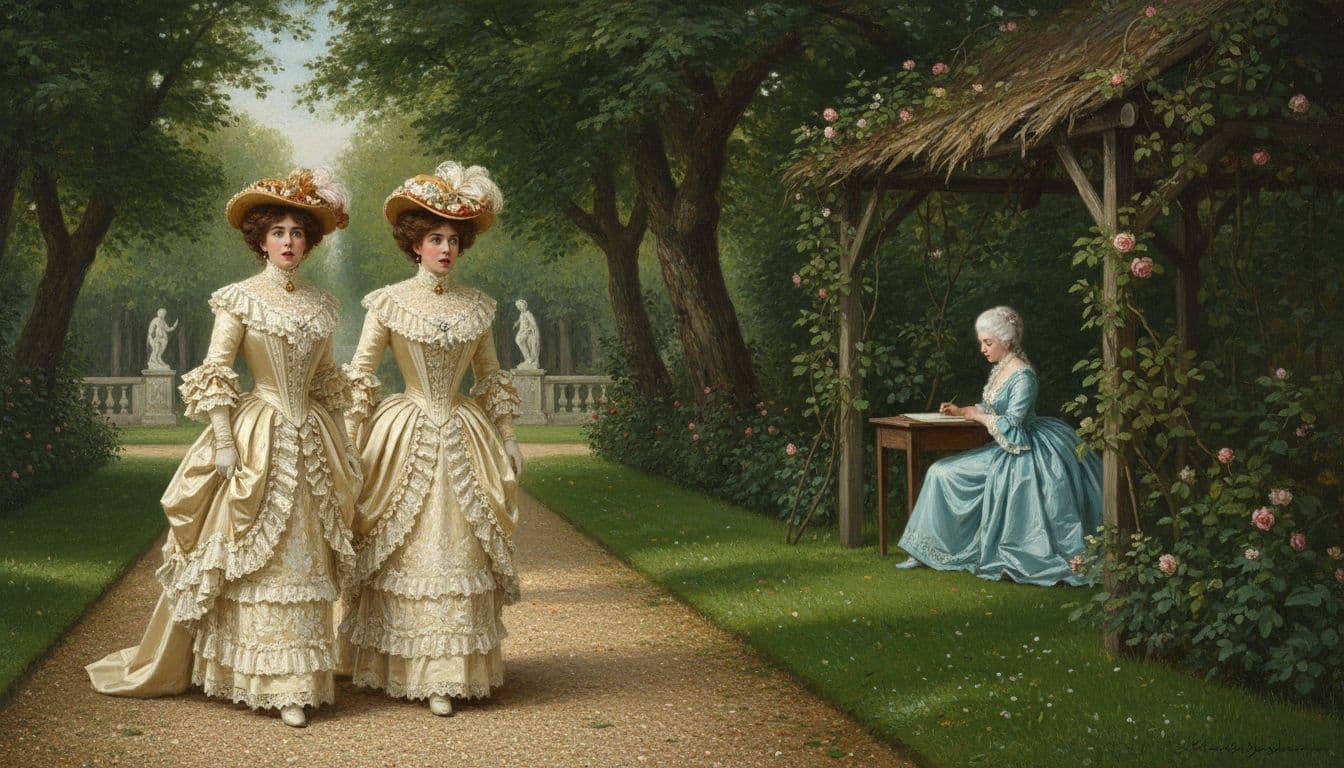
In August 1901, two Oxford academics, Charlotte Anne Moberly and Eleanor Jourdain, visited the grounds near the Petit Trianon at Versailles. Later, they wrote that they became disoriented and experienced a scene that felt out of time, including people in older clothing and a heavy, unnatural atmosphere. Their account became one of the most cited Time Slip stories in the English-speaking world.
The incident matters because it’s more than a campfire tale. It was published, debated, and criticized in print, and it has remained in circulation for over a century. The basic outline is easy to find, along with later arguments about how memory, suggestion, and confusing geography could have shaped what they believed they saw. A useful starting point for the documented timeline and the main critiques is the Moberly–Jourdain incident summary.
What makes the case complicated is that parts of the story changed over time. Details became clearer in later retellings, which can happen naturally, but it also raises the possibility of reconstruction, the mind filling gaps with meaning. Critics have suggested misinterpretation of costumed staff, tourists, or later-added memories after reading about Marie Antoinette and Versailles history. Supporters point to how specific and unsettling the sensory tone feels in their writing.
Either way, it shows the central problem with Time Slips: even a careful witness can’t freeze a moment for review.
The Kersey time slip (1957) and the “stillness” detail
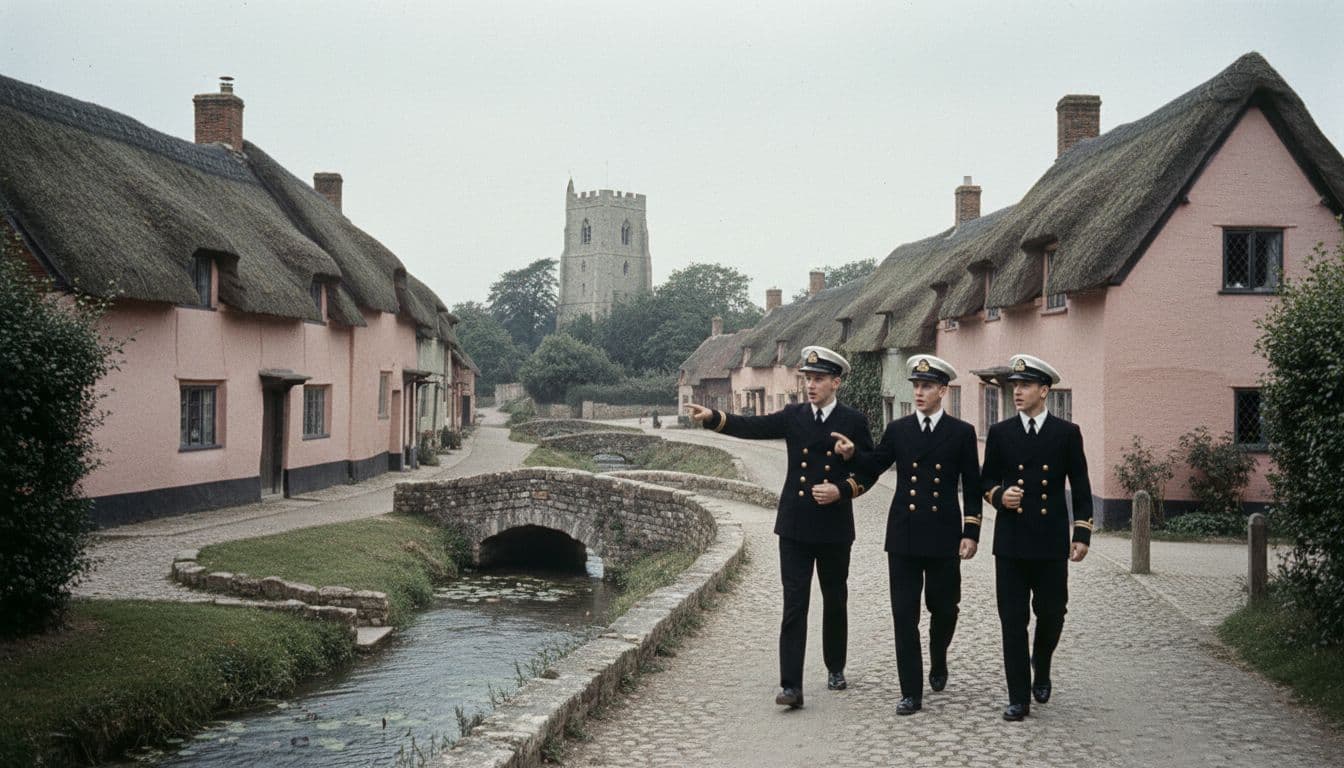
One of the most repeated mid-20th century Time Slip claims comes from Kersey, a village in Suffolk, England. The story is usually framed around three Royal Navy cadets on a navigation exercise who reported that, as they approached the village, the atmosphere changed.
In many retellings, the strongest detail isn’t what they saw, but what they didn’t hear. The village felt muted, almost padded. Normal background noise seemed to drop away. That “muffled” quality shows up in other Time Slip reports too, which is part of why the Kersey account keeps resurfacing.
A mainstream recap that lays out the commonly reported sequence, without pretending it’s proven, is Discovery UK’s overview of the Kersey case. It describes the cadets seeing a village that didn’t match what they expected, then returning to normal once they left the area.
This case still has the same limits as the others. There’s no photo, no independent recording, no way to replay the moment. It survives as testimony and later reporting. That doesn’t make it worthless, but it does set a boundary: the best you can say is that multiple people claimed a brief, shared experience with unusual sensory features.
Bold Street, Liverpool: a place where the reports keep coming
Bold Street in Liverpool is often described as a “hotspot” for Time Slips, mostly because the reports didn’t stop after one decade. Accounts circulated widely from the 1990s onward, often describing quick flashes of older storefronts, vintage cars, and people dressed in styles that don’t fit the present.
Some versions mention specific shop names that witnesses say they saw for a moment, then couldn’t find again. Many also mention the same emotional pattern: a sudden punch of anxiety, disorientation, and the sense of being watched or misplaced. Then the street returns to normal, leaving the witness with nothing except a memory that doesn’t fit their map of the city.
This is where a careful reader should slow down. Bold Street is not a single, tightly documented incident. It’s a cluster of anecdotes that built a reputation over time. That kind of “ongoing file” can be useful for spotting patterns, but it also invites contamination, where newer witnesses unconsciously borrow details they’ve already heard.
So Bold Street is best treated as a case study in repetition, not proof. It shows how Time Slips behave as a modern folk report: place-based, sensory, brief, and hard to verify.
Disputed and misnamed “time slips” (and why that matters)
Not every “time slip” story belongs in the same bucket.
One example often cited in casual lists is a case from Kyiv in 2006, where a man reportedly appeared with an identity story anchored in the late 1950s and carried older items, including a Soviet-era ID and a camera with period-looking photos. The story gained traction because it sounds like a clean punchline: a person from the past steps into the present.
But later scrutiny raised questions about whether parts of the case were staged or embellished. That uncertainty matters. When a story depends on objects and paperwork, the standard of evidence should go up, not down.
There are also “time slip” moments that have ordinary explanations. A clean, provable example is travel across the International Date Line. A flight can leave on one calendar date and land on the previous date, not because time bent, but because the calendar line is a human system. It’s a good reminder that time can feel strange even when physics is behaving normally.
If you’re reading real-life Time Slips with care, separating disputed cases and mislabeled cases keeps the whole topic honest.
Conclusion: what these cases can and can’t tell us
Real-life Time Slips sit in a narrow space between testimony and proof. The strongest cases are the ones with consistent witness descriptions and a clear timeline, even when the cause stays unknown.
The weakest cases are the ones that grow sharper with retelling, rely on convenient artifacts, or can’t survive basic fact-checking.
If you’ve experienced something like this, write it down while it’s fresh, note the time, location, weather, and what you were doing, and talk to someone grounded. The experience can be unsettling, even if the explanation turns out to be ordinary. The question isn’t just “Did time break?” It’s also what the mind does when the world stops matching its expectations.