

The phrase spontaneous human combustion shows up every few years in headlines, documentaries, and forum threads. The story is usually the same: a person is found badly burned, the room is mostly intact, and it seems like the fire started “from within.”
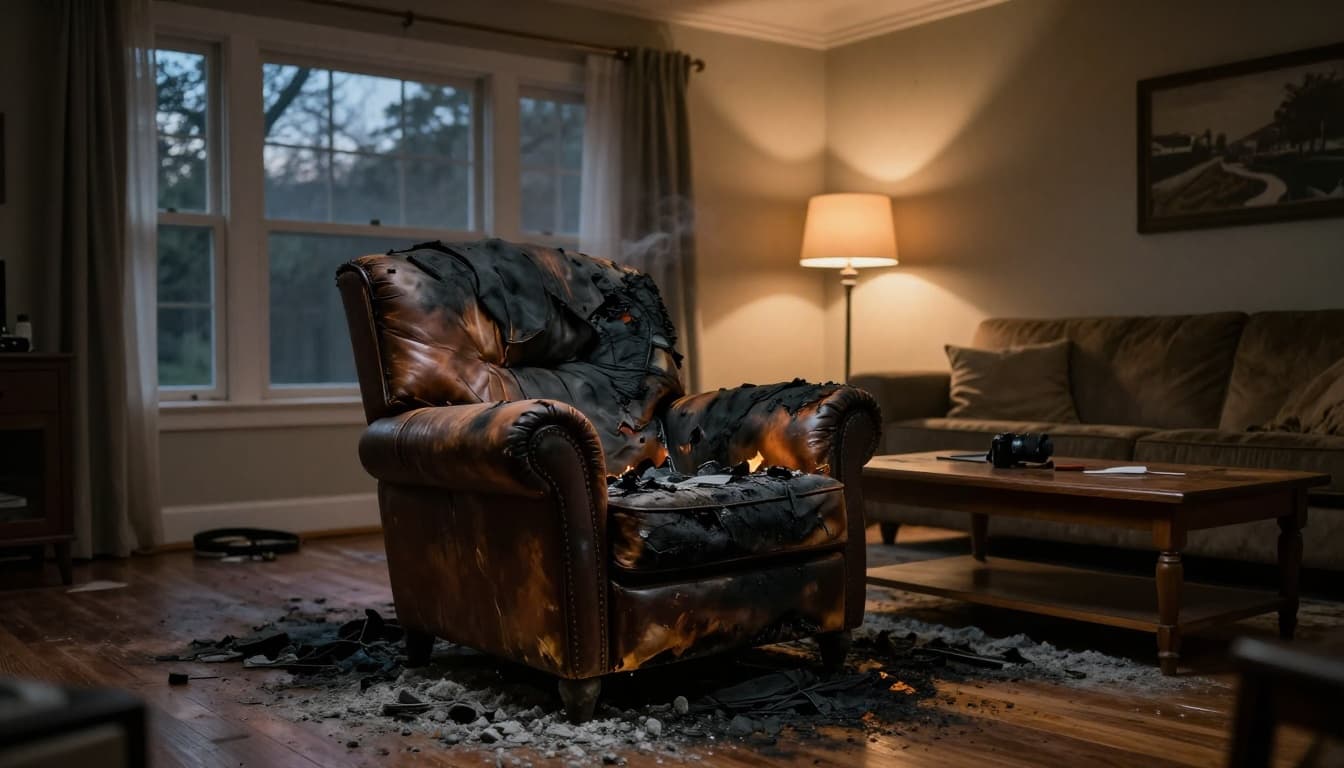
That’s unsettling, but it’s also where careful wording matters. Most of these scenes are strange without being supernatural. Fire can behave in slow, selective ways, and evidence can burn away before anyone arrives to explain it.
What follows is the grounded version: what investigators mean when they talk about the “wick effect,” what the best-known cases actually show, and the reporting patterns that keep the myth alive.
What “spontaneous” implies, and what fire science supports
In everyday talk, spontaneous human combustion means a body ignites with no outside source, no flame, no spark, no heat, no cigarette, nothing. If that were true, it would be a major scientific finding, because human tissue is mostly water and doesn’t self-ignite under normal conditions.
In practice, the cases people cite almost never come with that level of proof. They’re usually unwitnessed deaths where the fire’s starting point is unclear after the fact. That’s not the same thing as “no ignition source existed.” It often means the source wasn’t preserved.
This is why many forensic discussions treat spontaneous human combustion as a mislabel. The more evidence-rich explanation is that a small, ordinary ignition source started a fire that burned in an unusual way. A widely shared breakdown of this idea can be found in the Business Insider’s overview of the myth and the wick effect, which emphasizes that the “mystery” is usually about missing context, not new physics.
It also helps to separate two different questions that get blended together:
- Could a body ignite by itself? There’s no solid evidence for that.
- Could a body burn for a long time without the room fully catching? Yes, under specific conditions.
That second question leads straight to the mechanics.
The known burn mechanics: why the “wick effect” looks so odd
A human body can fuel a long, localized fire if there’s an initial flame and a material that behaves like a wick. Clothes, blankets, and upholstery can do that. Body fat can act like the fuel once it’s heated enough to melt and soak into fabric.
This is the “wick effect,” explained clearly in Scientific American’s overview of how it works. The basic idea is closer to a candle than a bonfire: a small flame starts the process, fabric holds and feeds it, and the fire stays relatively low and slow compared to a fast-moving house fire.

Researchers and forensic specialists have also tested how readily bodies burn under controlled conditions. One frequently cited academic source is a University of Tennessee thesis focused on experiments and the combustibility of the human body. The details vary by setup, but the takeaway is consistent: sustained burning is possible, but it’s not magical, and it needs an ignition source and time.
Here’s why scenes can look “selective” without requiring anything paranormal:
| Scene detail people notice | What it can look like | A grounded explanation |
|---|---|---|
| Heavy damage to torso area | A body seems “mostly burned,” nearby items less so | Torso fat and clothing can sustain a long burn where the person remained |
| Limited spread to the room | Walls and furniture look strangely intact | A low, smoldering burn can release less heat upward and outward than a flash fire |
| Fire source not obvious | No clear accelerant trail, no big burned area | Small sources (cigarette, ember, heater) can be consumed or displaced during burning |
| Extremities less affected | Legs, hands, or skull less burned | Less fat, different clothing coverage, and how the body was positioned |
The wick effect does not explain every fatal fire scene. It’s a model for a specific pattern: prolonged burning in one spot, usually with a vulnerable person who couldn’t react.
Real case summaries: what’s known, what’s missing, and what can’t be proven
Because “spontaneous human combustion” is mostly a label applied after the fact, the best cases to discuss are the ones with relatively good documentation and clear reporting on the scene.

Michael Faherty (Galway, Ireland, 2010)
Michael Faherty, a 76-year-old man, was found deceased in his home in December 2010 with severe burn damage concentrated around where he was located. Reports described limited fire damage elsewhere in the room, which is one reason the case became widely publicized.
The coroner’s conclusion is often repeated as an endorsement of spontaneous human combustion. What matters more is the detail that the home had potential ignition sources (a fireplace has been mentioned in mainstream summaries), and the outcome fits the known pattern of a sustained, localized burn.
A readable mainstream summary that also points toward conventional fire behavior is Popular Science’s explainer on baffling cases. The key limitation remains the same: with an unwitnessed death, investigators reconstruct a sequence from what survived. When the ignition source is small, it may not survive at all.
What can be said carefully is this: the case is unusual, and it’s also compatible with an external ignition plus prolonged burning.
Mary Reeser (St. Petersburg, Florida, 1951)
Mary Reeser’s death is one of the most cited in American SHC lore. She was found in her apartment with extensive burning near the chair area, while much of the surrounding space was reported as less damaged than people expect from a “body burned to ash” story.
Over time, the reporting grew more dramatic. That’s part of why the case still circulates: the imagery is vivid, and the gaps in early accounts make it easy to tell the story as “impossible.”
A crucial restraint here is that many retellings flatten the uncertainty. They’ll say “no fire source,” when in reality the best you can often say is “no fire source was confirmed after the scene was processed.” In case discussions, smoking is frequently raised as a plausible ignition source, but proving it decades later is difficult.
This is the larger lesson: famous cases become famous partly because they’re hard to reconstruct cleanly. That’s not proof of spontaneous ignition. It’s proof of missing information.
Bad reporting patterns that turn ordinary fire into “spontaneous human combustion”
The myth doesn’t persist because people are foolish. It persists because certain phrases and habits in reporting make a confusing scene sound like a new law of nature.
Here are the patterns that show up again and again:
- “No ignition source” becomes “no ignition source existed.” Those are different claims. The first is a finding, the second is a leap.
- Room damage gets described without scale. “The room was untouched” can mean “the rest of the house didn’t burn,” not “nothing else was scorched.”
- Time gets ignored. A slow burn over hours looks different than a rapid blaze over minutes.
- Coroner language gets treated like physics. A coroner may use “spontaneous human combustion” as a label when they can’t pinpoint ignition, not as a claim that the body self-ignited.
- Alcohol myths resurface. You’ll still see claims that heavy drinking makes the body flammable. Blood alcohol levels don’t turn a person into a torch.
- One eerie detail crowds out the boring ones. A nearby heater, a smoker’s habits, mobility limits, or medications often get minimized because they don’t fit the headline.
If you want a quick reality check when you see a new SHC story, look for three things: a documented ignition source (even if small), a reason the person couldn’t respond, and a clear description of what exactly burned (and what didn’t). If those details are missing, treat the story as incomplete, not paranormal.
Conclusion: the mystery is usually in the paperwork
Spontaneous human combustion, as “a body igniting itself,” doesn’t have solid evidence behind it. The cases that keep the idea alive usually make more sense when you apply known fire behavior, especially the wick effect, and when you admit how much evidence can vanish in heat and smoke.
If a future case arrives with full documentation, careful scene work, and a verified lack of ignition, it would deserve serious attention. Until then, the safest reading is also the least exciting: people die in strange fires, and bad reporting can make a tragic scene sound like a miracle in reverse.
Frequently Asked Questions About Spontaneous Human Combustion Stories and Incomplete Evidence
Why do spontaneous human combustion stories so often feel “unsolved” or mysterious?
Because the scene usually can’t be rebuilt with confidence. In most famous reports, nobody saw the fire begin, and the person was alone. That means investigators start with an end state (heavy burning in one spot, limited damage nearby) and have to guess at the first few minutes, which is the part that would show the real ignition source.
Fire also eats the easiest clues. A dropped cigarette, match, heater ember, or small flame can be completely gone by the time anyone arrives. So you end up with a scary looking pattern, and not much trace of what started it.
What’s the “wick effect,” and how does it explain the weird burn patterns?
The wick effect is the most common scientific explanation for these cases. Clothing or fabric works like a candle wick, and body fat becomes the fuel once it melts. With a small outside ignition (often a cigarette in older cases), the fire can burn slowly for a long time, concentrating damage on the torso while leaving the room less affected than you’d expect.
It sounds counterintuitive the first time you hear it. I remember thinking, “A whole body can’t burn like a candle.” But tests using animal tissue and cloth show the basic mechanism is real, and it matches the “mostly body, not much room” pattern that drives the legends.
If it’s not truly spontaneous, what usually starts these fires?
In the consensus view, it’s always an external ignition source, even if it’s not obvious later. Common suspects in case discussions include cigarettes, open flames (candles, fireplaces), heaters, or electrical sources. The hard part is that the original spark might be small, and it doesn’t have to keep burning to do the damage, it just has to start the first fabric fire.
A lot of the classic cases involve people who were alone, seated, and sometimes impaired or asleep. That situation makes it easier for a small fire to grow without anyone reacting fast.
Why does incomplete evidence matter so much in these cases, compared to “normal” house fires?
These scenes are often limited in spread, which is exactly what makes them famous, and exactly what makes them easy to misread. With a typical room fire, you see wide heat damage, multiple burn paths, and a clearer story. With wick effect style burns, the damage can be oddly localized, and that pushes people toward exotic explanations.
Also, once a body is heavily burned, the fire scene becomes messy evidence-wise. Heat warps objects, smoke coats surfaces, and water or foam used to put out flames can wash away residues. So even skilled investigators can end up with fewer solid anchors than they’d like.
Do alcohol, body chemistry, or “internal gases” make someone burst into flames?
No credible evidence says people ignite from alcohol in their system or from normal body chemistry without an outside flame. Alcohol in the bloodstream doesn’t work like pouring liquor on clothing. It doesn’t turn a person into a torch.
Chemicals in the body can burn, but they still need a starter flame and enough heat to keep going. The more realistic story, again, is boring but consistent: a small outside fire starts things, then the wick effect can keep it smoldering far longer than most people expect.
Some links on WondrousStories.com are affiliate links. If you click and buy, I may earn a small commission at no extra cost to you. I only share things I believe fit the story, the topic, or the reader’s curiosity.
Unknown Facts About Spontaneous Human Combustion examines one of the most disturbing and misunderstood subjects in the history of unexplained phenomena.