
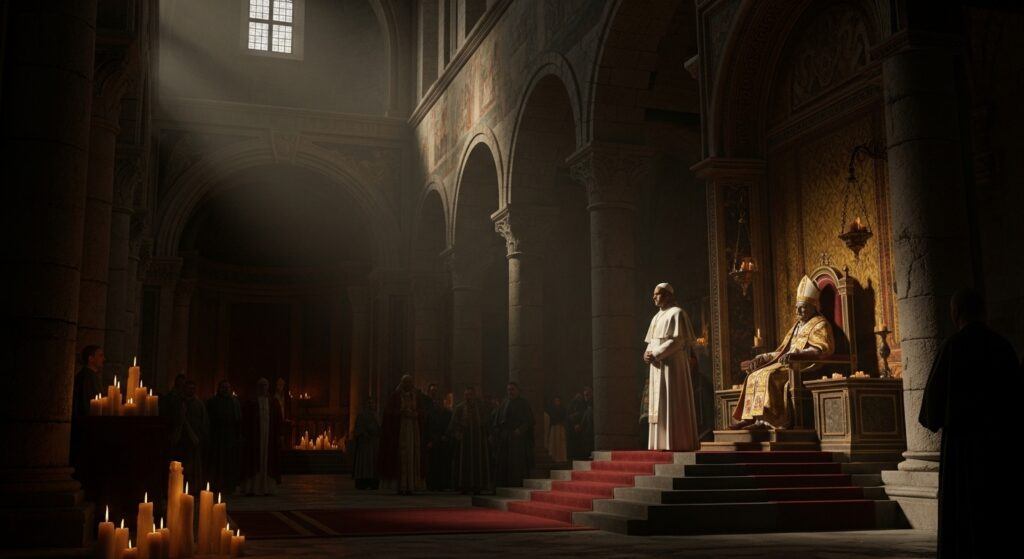
In the late 800s Rome ran on factions. Noble families fought over streets, titles, and church offices, and the papacy changed hands so fast it barely had time to settle. In that churn, a pope’s choices about kings and crowns could turn into a death sentence, even after the funeral.
In January 897, a church court met at the Basilica of St. John Lateran and did something almost without precedent. Pope Stephen VI ordered the body of Pope Formosus, dead for months, brought into court and tried. The episode became known as the Cadaver Synod.
The broad outline is well-attested, even if motives stay contested. Later medieval narrators colored the scene, church records hint at what followed, and historians still argue about who pushed whom. What doesn’t change is the point of the event: power, dressed up as law.
Why Formosus became a target, even after he died
Formosus didn’t start as a lightning rod. He was bishop of Porto (a major suburbicarian see near Rome), and he built a reputation as a capable churchman. Earlier in his career, he served as a papal envoy abroad, including a high-profile mission in Bulgaria. That kind of visibility created allies, but it also created enemies.
He became pope in 891 and reigned until 896. Those years sat inside a larger Italian crisis, when outside rulers and local strongmen treated Rome like a prize. The pope could legitimize a claim with a crown, or undermine it by inviting a rival. Formosus did both, depending on the moment.
His biggest problem was that old disputes never stayed buried. A conflict with earlier leadership, especially Pope John VIII, left a paper trail of accusations and penalties. Later opponents could re-use that history as legal fuel. Even if some details were disputed, the charges sounded familiar, and familiar charges travel well in a courtroom.
A chaotic Rome with too many rivals and too many short papacies
The late ninth century was a rough stretch for the office itself. Popes rose and fell quickly, and every short reign invited the next round of payback. In this climate, the papacy wasn’t just a spiritual job, it was a seat inside a street-level power struggle.
Two forces mattered most. First, Roman factions, families with muscle and money, pushed candidates who served their interests. Second, competing rulers outside Rome fought for the imperial title and influence in Italy. The Spoletan line, tied to central Italy, clashed with Carolingian claimants from the north.
Formosus tried to balance them. He crowned Lambert of Spoleto as co-ruler in 892, then later called on Arnulf of Carinthia for military help and crowned Arnulf emperor in 896. That kind of swing could make yesterday’s ally into tomorrow’s enemy, and it left a deep grudge after Arnulf withdrew and both men died soon after.
The accusations that could erase a pontificate
The Cadaver Synod focused on charges that hit legitimacy, not personal sin.
Perjury meant breaking an oath. Medieval writers connect this to alleged promises Formosus made during earlier disputes. The basic claim was simple: he swore something, then acted against it. The exact terms of any oath are reported differently, so historians treat parts of that backstory with caution.
Illegal “translation” of a bishop meant moving from one bishop’s seat to another in a way church law disapproved. The idea was to stop bishops from collecting cities like trophies and turning church offices into private power bases.
A third claim painted him as acting without proper standing, sometimes framed as behaving like a bishop while treated as a layman. It sounds odd now, but in church politics it worked as a legal wedge: if the foundation is unlawful, everything built on it can be attacked.
Inside the Cadaver Synod, what happened at the dead man’s trial
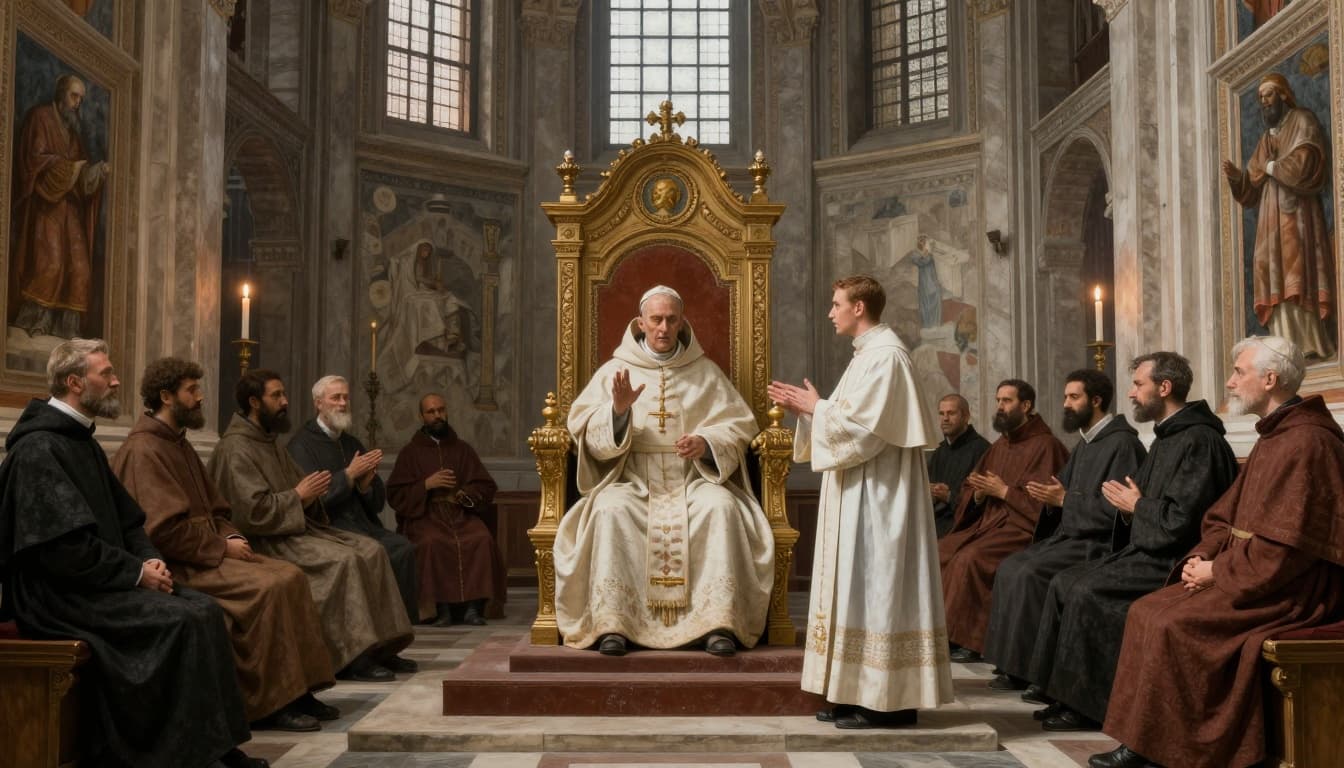
The Cadaver Synod wasn’t a rumor passed around a tavern. It was a synod, a formal church gathering with judicial force. It met in Rome’s cathedral, the Lateran basilica, and it used the shape of a real trial to deliver a political verdict.
Around January 897, Stephen VI ordered Formosus’s body exhumed, months after burial. Medieval accounts agree on the core staging: the corpse was dressed in papal vestments and set up as if still holding office. A deacon was appointed to speak on the dead man’s behalf. That detail matters because it shows the point wasn’t only insult. The court wanted the look and feel of procedure.
Stephen led the questioning. Later sources describe him addressing the body directly, pressing accusations of ambition and unlawful rule. The dialogue, as written, comes from authors working after the fact, so the exact words are hard to verify. The intent is easier to read: put the dead pope on record as guilty.
For a quick, sourced outline of the event and its aftermath, see this Cadaver Synod overview.
A courtroom staged in the Basilica of St. John Lateran
The setting was heavy with symbolism. St. John Lateran wasn’t a random hall. It was the seat of Roman episcopal authority. Holding the synod there signaled that the verdict would claim the church’s full weight.
The procedure copied living trials. The corpse was placed as an accused party. The deacon answered in its name. Clergy gathered as judges and witnesses. The synod then treated earlier disputes, especially rules on bishops and oaths, as if they could still be prosecuted after death.
That performance did two things at once. It shamed Formosus. It also warned everyone watching that office would not protect them, not even in the grave, if the next regime wanted a reversal.
Verdict, symbolic punishment, and the attempt to cancel Formosus’s legacy
The synod convicted Formosus and declared his papacy invalid. That ruling wasn’t abstract. It aimed straight at the machinery of the church.
If Formosus’s acts were void, then appointments and ordinations tied to his reign could be questioned. That included bishops, clergy, and political allies who benefited from his decisions. The threat wasn’t only theological, it was practical, it could reshuffle power across Italy.
Medieval narrators also report a series of humiliations imposed on the body after the verdict. Accounts describe stripping vestments, cutting off the fingers used for blessings as a public sign that his authority was “removed,” and disposing of the corpse in disgrace, including a report that it was thrown into the Tiber. Some of those details are repeated across later sources, but they still come through hostile or sensational lenses. The safest reading is that the punishments were meant to make the legal claim visible: no pope, no acts, no legacy.
Backlash, reversal, and what historians still argue about
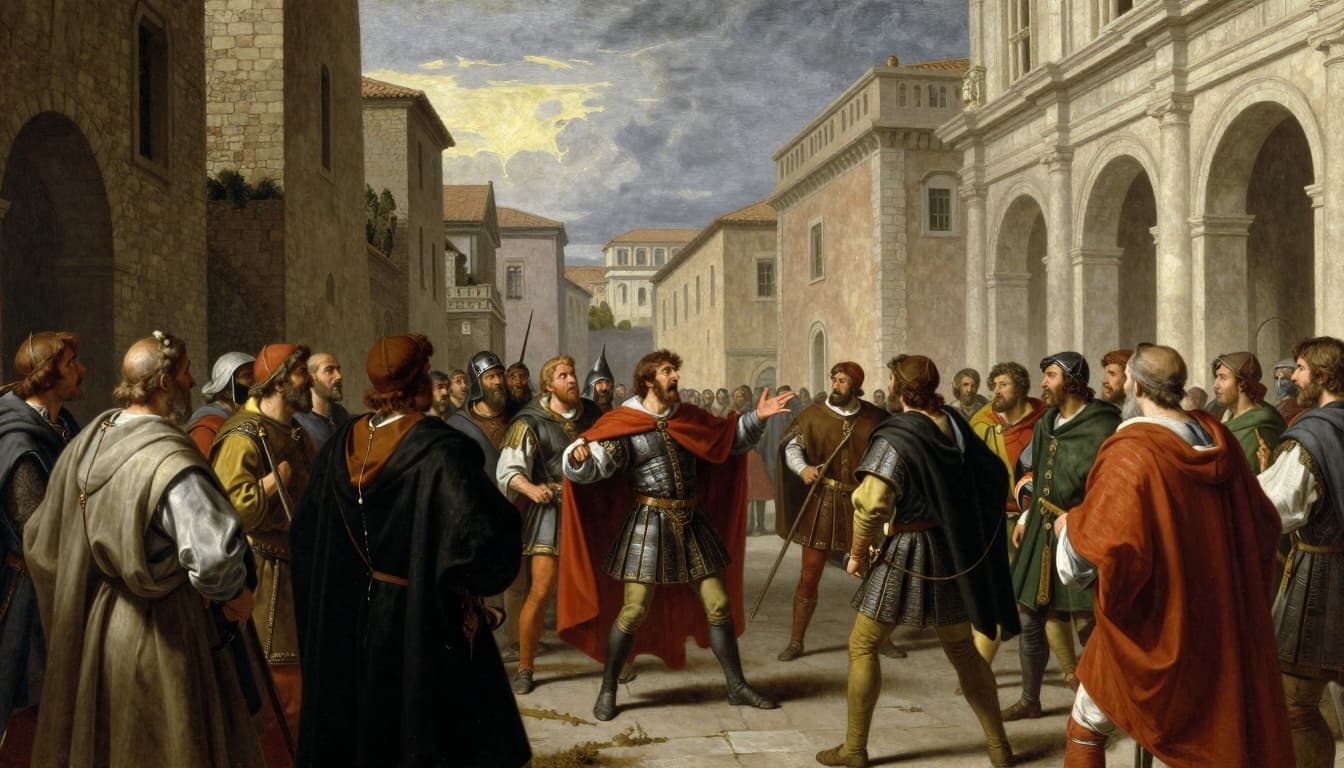
The Cadaver Synod didn’t stabilize anything. It shocked Rome, and it turned the city against Stephen VI. The sources tie the public mood to the trial’s spectacle and to fear of what its legal claims could unleash.
Stephen fell fast. He was deposed, imprisoned, and later killed in 897. That speed tells you how thin his support had become, and how dangerous the synod’s fallout was for everyone around him.
Then came the cleanup. In late 897, Pope Theodore II convened a synod that annulled the Cadaver Synod and restored Formosus’s standing, ordering his body reburied with proper honor. In 898, John IX confirmed reversals through synods in Rome and Ravenna, and church leadership moved to prevent any repeat, including banning trials of corpses and calling for the record of the earlier synod to be destroyed.
Rome turns on Stephen VI, and later popes undo the trial
The reversals weren’t gentle. They were official and pointed. They treated the Cadaver Synod as an abuse of process and a threat to church order. By re-validating Formosus, they also protected a wide web of clergy whose legitimacy had been put in doubt.
This is the part that often gets missed. The dead pope mattered, but the living clergy mattered more. If too many ordinations and appointments collapsed, the church would face a chain reaction of disputes.
What we can say with confidence, and what remains uncertain
The core facts are steady: January 897, St. John Lateran, Stephen VI presiding, Formosus’s corpse brought to judgment, and a guilty verdict that claimed to void his papacy. The aftermath is also firm: Stephen’s overthrow in 897, then annulments under Theodore II and John IX in 897 and 898, plus a ban on corpse trials.
The gray areas sit around motive and scripting. We don’t have a complete transcript of the hearing. We rely heavily on later narrative voices, including Liutprand of Cremona, and on writers arguing for or against Formosus. The Spoletan role is debated too. Older accounts pinned the whole thing on Spoletan pressure, later scholarship warns that the chain of instigators is harder to prove.
Conclusion
The Cadaver Synod was a documented posthumous trial, used as a weapon in a crisis of legitimacy. Stephen VI took legal forms, a synod, charges, a verdict, and aimed them at a dead rival to unmake his rule and shake loose the people he had promoted.
It failed. Rome’s backlash toppled Stephen, and later popes reversed the judgment to protect the church from endless doubts about offices and sacraments. The episode still lands because it shows how institutions can look lawful while acting out a feud. It also reminds us why careful sourcing matters, since the strangest parts of the story come to us through writers with axes to grind.
👉Also read about when a Pope went to war.👈
Key Takeaway
The Cadaver Synod was not random madness. It was a political trial staged as church law, aimed at undoing a dead pope’s decisions and weakening his allies. The backlash shows how fragile authority was in 9th-century Rome, and how far factions would go to control legitimacy.
Frequently Asked Questions About the Cadaver Synod
What was the Cadaver Synod?
The Cadaver Synod was a church trial held in Rome in January 897 in which Pope Stephen VI ordered the exhumed body of former Pope Formosus to be placed on trial. Church officials conducted formal legal proceedings against the corpse and declared his papacy invalid.
Why was Pope Formosus put on trial after his death?
Formosus had been involved in political struggles over control of Italy and the imperial title. After his death, rival factions used earlier disputes and church legal technicalities to challenge his legitimacy. The trial aimed to undo his decisions and weaken the allies he had appointed.
What happened during the Cadaver Synod?
Formosus’s body was dressed in papal vestments and placed on a throne in the Basilica of St. John Lateran. A deacon spoke on behalf of the corpse while Stephen VI led the prosecution. The synod found Formosus guilty, declared his papacy void, and symbolically punished the body.
What were the consequences of the verdict?
The ruling threatened to invalidate many of Formosus’s official acts, including church appointments and ordinations. This created widespread instability, since it cast doubt on the legitimacy of clergy and political alliances tied to his reign.
Was the Cadaver Synod later reversed?
Yes. Public backlash in Rome led to the overthrow of Stephen VI later in 897. Subsequent popes annulled the Cadaver Synod, restored Formosus’s reputation, and banned future trials of corpses to prevent similar abuses.