
Sasquatch, better known as Bigfoot, started as a regional story about strange tracks and uneasy woods. Now he’s a full-blown media character, the kind you can drop into a horror movie, a family comedy, or a beef jerky ad and everyone instantly gets the joke.
This matters because pop culture doesn’t just entertain, it teaches us what to expect. A few famous images and story beats can harden into “how Bigfoot is,” even when the real-world evidence question remains unsettled. That’s the boundary for this article: we’re talking about documented media history and why it works, not trying to prove anything is out there.
Across film, TV, and marketing, Sasquatch keeps returning in three big roles: symbol of wilderness and the unknown, flexible character (monster or sweetheart), and a tool for selling stories, products, and places.
From blurry footprints to a media icon, how Bigfoot became famous
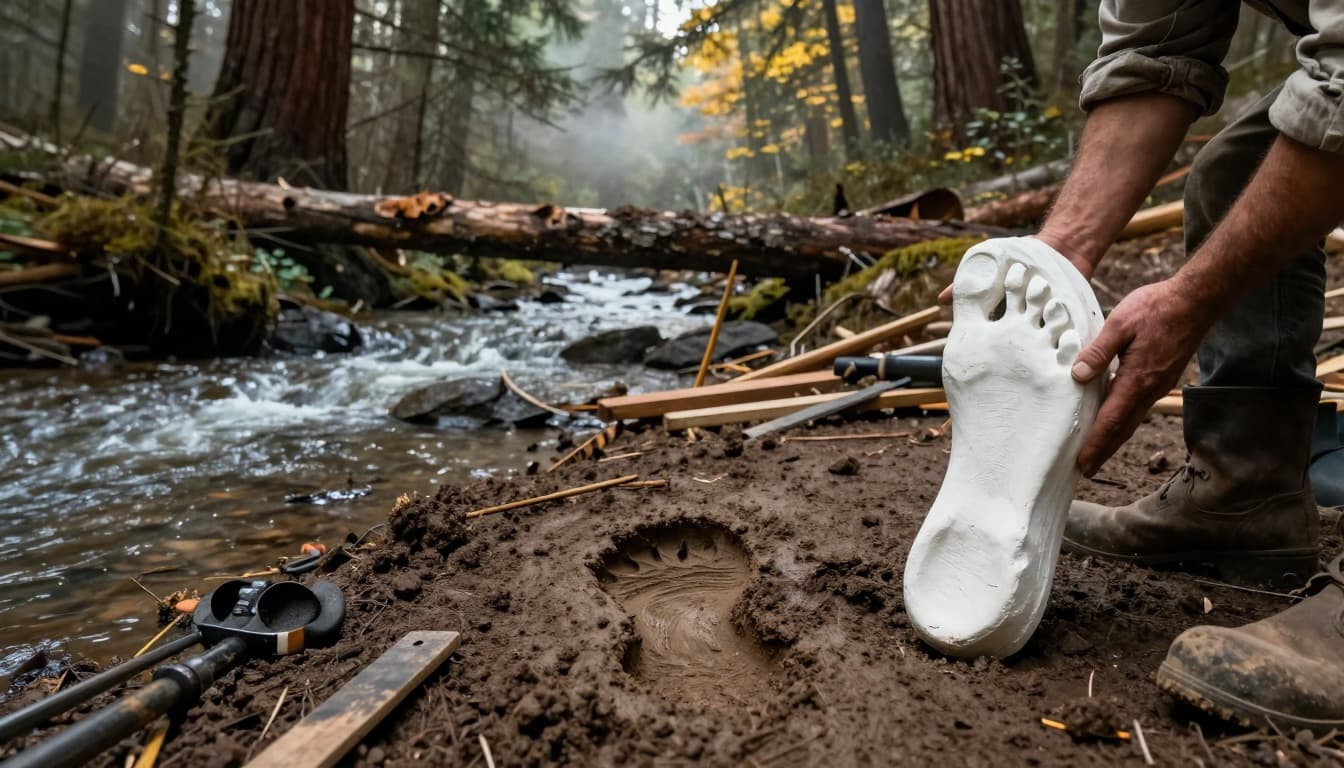
Long before streaming and social media, Bigfoot got something even more powerful: repetition. The modern Sasquatch story didn’t spread because it was proven; it spread because it was printable. A footprint photo fits neatly into a column. A plaster cast looks great on a desk. A mysterious figure in the trees gives editors a headline they can run again next week.
That’s the key shift. Folklore lives locally, passed from person to person. Mass media turns a local tale into a shared national reference point. Once the outline is familiar, creators can remix it forever: the lonely back road, the dark treeline, the single witness who can’t quite explain what happened.
And once the character becomes familiar, the public starts “seeing” him with the same set of expectations. It’s the same logic that shows up in other mysteries: the more a story is told, the more it gains a default shape. If you enjoy that tension between huge questions and thin evidence, the framing of why the galaxy seems silent has a similar feel, missing data, big meaning, lots of human interpretation.
The 1958 Bluff Creek footprint story and why the name Bigfoot stuck
In 1958, reports of oversized footprints near Bluff Creek in Northern California made headlines. The details that mattered most for pop culture weren’t biological. They were media-friendly: clear tracks in mud, working men on a job site, and a cast you could photograph from any angle.
This is where “Bigfoot” becomes sticky branding. A nickname like that is easy to remember, easy to headline, and easy to joke about. Over time, the label turns the unknown into a character you can reference without having to explain anything else.
If you want the cleanest mainstream summary of how that 1958 newspaper moment helped shape the modern legend, HISTORY’s breakdown is a solid starting point: how the Bigfoot legend began.
The Patterson-Gimlin film and the look of Sasquatch we still use today
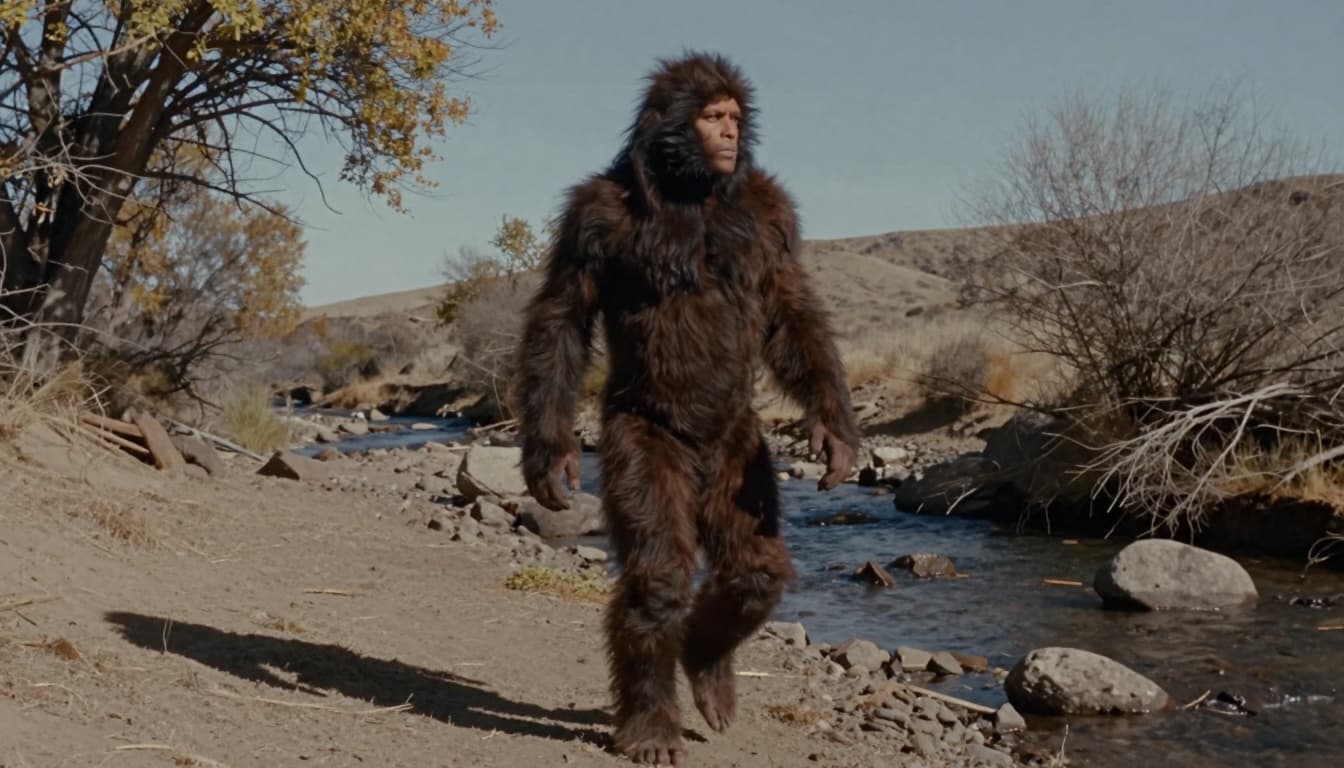
In 1967, the Patterson-Gimlin film gave Bigfoot something print never could: a moving body. The clip is short, filmed near Bluff Creek, and debated to this day. That dispute is part of its cultural power; it’s always “almost proof” to some viewers and “almost a costume” to others.
But either way, the film set a template. The posture, the long stride, the glance back over the shoulder, a lone figure in a raw landscape. When modern movies, cartoons, and Halloween costumes “do Bigfoot,” they often borrow from that visual grammar, even if they don’t say they are.
That’s the strange trick of media: one image can become the default memory for millions of people who were never anywhere near the original place.
Why Sasquatch works in movies and TV, it can be scary, funny, or oddly human
Sasquatch is a writer’s dream because he’s vague on purpose. No official origin story. No fixed “rules.” Just a silhouette and a mood. Drop him into the right setting, and the audience fills in the rest.
When filmmakers want fear, Bigfoot becomes the wilderness itself, the sense that the woods don’t belong to us. When they want comfort, he becomes the outsider who’s more innocent than the people chasing him. When they want laughs, he’s the hairy punchline who reacts to modern annoyances like any of us would, only louder.
This flexibility explains why Sasquatch keeps showing up across genres, decade after decade. One year, he’s a threat in the treeline. Next, he’s a confused neighbor, blinking at your refrigerator light like it’s sorcery.
Horror Sasquatch, the wilderness as a threat
Horror doesn’t need Bigfoot to be “real.” It needs him to be able to see in the dark. Films like The Legend of Boggy Creek (1972) and later found-footage entries such as Exists (2014) use a familiar set of tools: isolation, shaky camerawork, quick sounds off-screen, and the uneasy idea that the forest has rules you don’t know.
Bigfoot works here because he’s almost the opposite of a traditional movie monster. There’s no castle, no laboratory, no neat explanation. Just distance, darkness, and the feeling that help won’t arrive fast.
Keep it simple, and it lands: you went into the woods thinking you were in charge. The movie spends 90 minutes proving you aren’t.
Family-friendly Sasquatch, the misunderstood neighbor of the forest
Then there’s the softer Bigfoot, the one who looks dangerous until you sit with him long enough to notice he’s scared too.
Harry and the Hendersons (1987) is the big cultural pivot point for this version. The film portrays Sasquatch as curious, displaced, and oddly gentle, and it famously won the Academy Award for Best Makeup. It also led to a TV adaptation, which helped lock in the “Bigfoot as household guest” idea for a generation.
You can see the same shift in kids’ media: Bigfoot becomes a mirror for human behavior. The joke isn’t that he’s a monster; it’s that people panic, stereotype, and make a mess of the wild. Animated takes like Smallfoot lean into that reversal, treating the “unknown” as a misunderstanding on both sides.
It’s a clever move. Make Sasquatch sympathetic, and suddenly the story isn’t about hunting him, it’s about how we treat what we can’t control.
Mascot, meme, and message, what Sasquatch sells and what it stands for
Once a character is this recognizable, marketing shows up. And Bigfoot is unusually safe as a symbol. He’s mysterious, but not tied to a single religion or political identity. He’s spooky, but also silly. He can be a warning about nature, or a wink at modern life, depending on the script.
That’s why Sasquatch pops up in roadside towns, souvenirs, festivals, and local branding. It’s also why he’s useful for environmental subtext. In many stories, Bigfoot is basically the forest’s resident, and humans are the noisy intruders. You don’t have to make a speech about deforestation for the audience to feel the message.
And yes, there’s money in it. Not as a conspiracy, just as a pattern: a famous mystery becomes a shared theme, and shared themes attract visitors and buyers.
Advertising and the joke everyone gets, Messin’ with Sasquatch and other campaigns
The Jack Link’s “Messin’ with Sasquatch” commercials are the cleanest example of ad-ready Bigfoot. He’s instantly readable in one second: tall, hairy, alone in the woods. Then comes the gag. Humans act rudely. Sasquatch retaliates. The audience laughs because the stakes are low and the character feels like a folk figure dropped into modern slapstick.
It works because Sasquatch can be “wronged” without turning the ad cruel. He’s not a real person, not a pet, not a child. He’s a mythic grump. A perfect mascot for quick, visual comedy.
Bigfoot mania as a cottage industry, tours, museums, and local identity
Bigfoot fandom isn’t just media consumption; it’s participation. People join conferences, pose with statues, buy mugs, and take guided trips that turn a night in the woods into a story they can own.
Folklore scholars have noted that this kind of fandom can also serve as community glue. Joshua Blu Buhs, for example, has argued that modern Bigfoot culture grew alongside shifts in consumer life, with fans using the character to build identity, swap “inside knowledge,” and create their own traditions inside a very modern marketplace.
It’s easy to sneer at that. It’s also easy to miss what’s happening. For many people, Bigfoot isn’t just a claim about an animal. It’s a shared language for wonder, skepticism, and the feeling that not everything has been mapped.
The Final Footprint
Sasquatch didn’t become famous because the case was closed. He became famous because the media gave him a face, a walk, and a role that could shift with the times. One decade wants horror, another wants comfort, another wants a punchline in the woods. Bigfoot can handle all of it.
The clean takeaway is this: pop culture keeps Sasquatch alive by making him useful, as a symbol of wilderness, a flexible character, and a sellable mystery. But that same success blurs the line between story and evidence. Enjoy the myth, study the history, and keep the real-world question in its proper place: still open, still disputed, still not settled by the screen.