

Real Unexplained Phenomena
Mysteries aren’t limited to fiction. Even though science has explained a lot about the world, some real-life phenomena have left researchers puzzled for years. Sometimes, it’s about odd patterns that don’t fit, signals that can’t be traced, or events so rare and well documented that shrugging them off feels lazy. It’s not about chasing supernatural stories; it’s simply noting there are places and events that science hasn’t fully solved yet.
All of the examples here come from real, documented cases with credible sources. These include historical records, peer-reviewed studies, and trusted observations. Many experts have weighed in on these puzzles, contributing theories and running experiments, but a full explanation still stays out of reach for now. Gaps in knowledge are common, and these stories serve as reminders that there’s still much we don’t know about the world around us.
1. The Taos Hum

Since the early 1990s, some residents of Taos, New Mexico, have reported a persistent low-frequency humming noise. Only a small portion of the population claims to hear it. Research teams, including scientists from Los Alamos National Laboratory and the University of New Mexico, have tested environmental factors, sound recordings, and interviewed the so-called “hearers.” No mechanical source, consistent measurable signal, or clear medical link has been found. A summary of the results was published in 1995 in the Journal of Scientific Exploration, but the origin of the hum remains unidentified. So far, researchers can say it’s real for those who experience it, but no single cause matches the facts.
What Makes This So Unusual?
- The hum isn’t just heard indoors or outdoors; reports come from both places.
- No common health condition is shared among those who report it.
- No physical source (machinery, pipes, or geological noise) has been located.
Read the full post- The Taos Hum
2. The Wow! Signal

On August 15, 1977, a radio telescope at Ohio State University picked up a strong, narrowband radio signal from outer space. Astrophysicist Jerry R. Ehman circled the printout and wrote “Wow!”—which gave the event its name. The signal matched what was expected from interstellar transmission, but it only lasted 72 seconds and hasn’t been detected again, despite repeated searches. Peer-reviewed analysis, including work published in The Astrophysical Journal, found no evidence to suggest a repeating source or any satellite, spacecraft, or known natural object. This event remains one of the most talked-about unexplained signals in radio astronomy.
Attempts to Reproduce the Signal
- Follow-up scans of the same region (Sagittarius) have never found a repeat.
- A technical error, a deliberate hoax, or involvement by a known space object has been ruled out.
Read the full post- The Wow! Signal Explained: What Happened in 1977
3. Ball Lightning
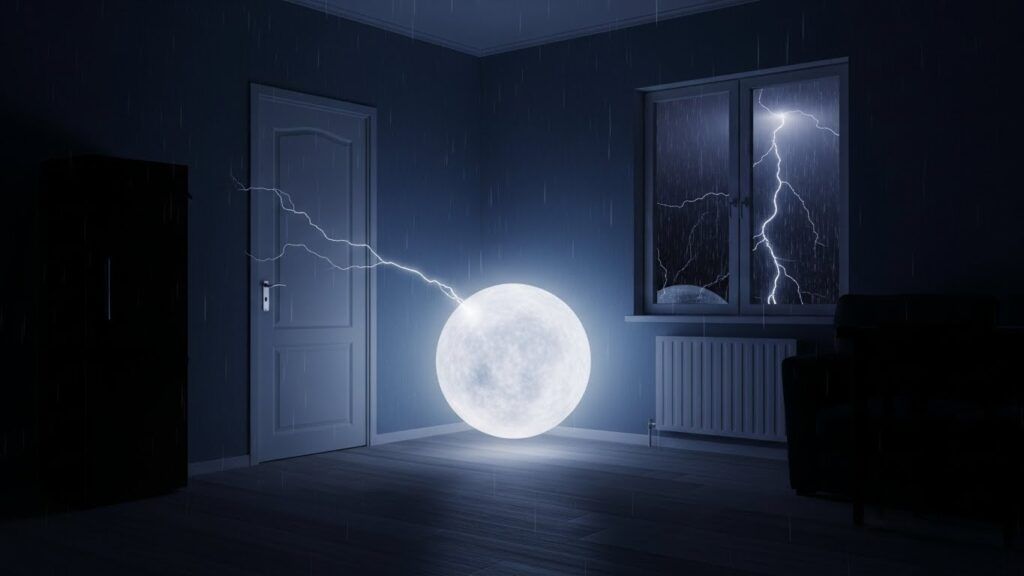
Ball lightning is a rare phenomenon where glowing, spherical lights—sometimes as big as a grapefruit—appear during thunderstorms. Eyewitness accounts go back centuries, and thoroughly documented reports exist in medical and physics journals. Although some researchers have reproduced similar effects in lab settings, the cause and behavior of natural ball lightning remain poorly understood. A super detailed review appears in the journal “Nature.” The most consistent real-world reports agree: the lights are vivid, last a few seconds, float or bounce, and sometimes pass through windows or walls, leaving no mark.
Key Points From Research
- Ball lightning has been spotted by pilots, scientists, and many others.
- A chemical or plasma reaction is suspected, but not confirmed.
Read the Full Post- Ball Lightning: What Credible Reports Actually Agree On
4. The Dyatlov Pass Incident
In 1959, nine experienced hikers died in Russia’s Ural Mountains under circumstances that have defied simple explanation. Soviet investigators found their tent ripped from the inside, bodies scattered, some with trauma, others showing hypothermia, and odd details like missing clothing. A 2019 study in “Communications Earth & Environment” suggested a rare combination of avalanche and weather conditions could explain some injuries. Still, some questions remain unsettled in the Russian case files, and modern pathologists still debate certain forensic details. Even with all original evidence and records preserved, many aspects remain puzzling for experts in outdoor survival and forensic science.
This chilling story has captured international attention for decades, with books, documentaries, and podcasts made about it. While each new study sheds a little more light, the heart of the mystery persists: What exactly made the group flee the safety of their tent into harsh conditions at night? With competing theories ranging from snow slab avalanches to infrasound-induced panic, the Dyatlov Pass mystery remains an enigmatic chapter in mountaineering history.
5. Hessdalen Lights
Since the early 1980s, the secluded Hessdalen valley in Norway has been known for recurring, mysterious lights appearing above the landscape, sometimes during perfectly clear nights, sometimes when it’s cloudy. Norwegian and Italian scientists have established year-round observatories and published their findings in the “Journal of Atmospheric and Solar-Terrestrial Physics.” Recorded lights show up in multiple spectrums and shapes, sometimes hanging motionless before dramatically speeding away. While suggestions include electrical discharges or rare atmospheric plasma, no single theory has been thoroughly proven.
Some new monitoring efforts use automated cameras and sensors to track these lights, providing hundreds of hours of footage. Researchers team up with citizens and other scientists worldwide in an effort to collect more robust data. Still, the glow of the Hessdalen lights continues to intrigue those looking for clues about rare atmospheric phenomena—or perhaps even something new in the realm of physics.
6. Deep Ocean “Bloop” Sound
In 1997, the U.S. National Oceanic and Atmospheric Administration (NOAA) detected a series of ultra-powerful, low-frequency underwater sounds using hydrophones scattered across the Pacific. The strongest sound, nicknamed the “Bloop,” didn’t match any known whale, submarine, or volcanic activity recorded up to that point. Peer-reviewed analysis published in “The Journal of the Acoustical Society of America” confirmed its reality and suggested it probably originated near Antarctica. Recent research points to large icebergs fracturing or moving beneath the waves, but no recorded icequake has matched the precise acoustic pattern of the Bloop.
This mystery highlights how little is truly understood about the deepest parts of Earth’s oceans. With new listening technologies and remote vehicles now in use, perhaps the Bloop will one day be reproduced—or we might realize our world holds even more strange underwater sounds waiting to be tracked down and studied.
7. The Tunguska Event
On June 30, 1908, an explosion devastated about 2,000 square kilometers of Siberian forest near the Tunguska River. Research published in “Acta Astronautica,” along with seismic readings, eyewitness accounts, and analysis of felled trees, all suggest a powerful atmospheric blast—roughly 10–15 megatons—caused by something entering Earth’s atmosphere at an incredible speed. However, no impact crater or remnants have ever been found. While most current papers suggest a disintegrating meteoroid or comet, some expected chemical markers are still missing. Decades of expeditions by Soviet and Western scientists have collected data on tree rings, soil samples, and memories of local residents. The Tunguska event stands as a dramatic but still unexplained cosmic occurrence.
8. Havana Syndrome
Starting in 2016, U.S. and Canadian embassy employees in Havana, Cuba, described sudden and lasting symptoms: loud noises, oddly directional pain, dizziness, headaches, and cognitive issues like memory trouble. Medical journals, including “JAMA,” have published clinical studies and MRI findings showing changes in the brains of some affected patients, but the significance of this data is debated within the scientific community. No definite cause—be it biological, chemical, technological, or environmental—has been proven or accepted by investigating authorities. In 2022, a U.S. intelligence review stated that the source remains unknown. International medical teams keep working through available records, hunting for patterns that could solve this modern medical mystery.
9. The Devil’s Kettle Waterfall
At Judge C. R. Magney State Park in Minnesota, one half of a split waterfall drops directly into a deep hole in the rock, locally called the Devil’s Kettle. For years, objects tossed in—dyes, ping pong balls, and more—seemed to vanish without a trace. In 2017, the state Department of Natural Resources hydrologists traced the water’s path using high-tech equipment and confirmed it likely rejoins the Brule River below ground. But because no obvious entry or cave has been found connecting the holes, and no direct visual link beneath the riverbed exists, curiosity persists about this disappearing act.
Today, the Devil’s Kettle is a popular tourist draw, and the lack of a perfectly transparent answer only adds to its local legend. Geologists continue to monitor seasonal flows and look for minor changes, hoping the actual path will eventually be mapped out in detail.
10. The Great Silence (Fermi Paradox)

Enrico Fermi, a Nobel Prize-winning physicist, asked a simple but big question in 1950: If the universe is old and vast enough for life to develop elsewhere, why have we never seen proof? Published research in “Proceedings of the Royal Society” and “Astrobiology” has reviewed decades of sky scans, radio searches, and studies of possible planets. No solid signals or visits have shown up, leaving famous thinkers, astrophysicists, and biologists scratching their heads. There could be many explanations, but for now, the lack of evidence remains a central scientific riddle for anyone curious about our place in the cosmos.
Read Full Post- The Fermi Paradox Explained
How Researchers Approach These Mysteries
With all of these strange events, scientists gather data, run experiments, publish their results in trusted journals, and revisit the cases as new technology opens up fresh possibilities. Sometimes, this means ruling out old ideas or giving a once-over to theories that once seemed unlikely. Peer review and transparency mean everything. The most eye-catching mysteries rely on solid facts, repetition, and serious investigation. While not every question is settled, these ongoing puzzles get people thinking—and sometimes, discoveries do pop up years later.
It’s always possible that some of these mysteries will be solved as science marches forward. For now, the cases listed here are real, carefully recorded, and serve as reminders that our world still holds big unanswered questions that just can’t be shrugged off or quickly explained away, at least not yet. And maybe that’s what keeps us interested: the possibility that the subsequent discovery is just around the corner.