
On January 15, 1919, around 12:30 p.m., Boston’s North End near the harbor turned into a trap better known as the Great Molasses Flood. At about the 529 Commercial Street area, a huge storage tank failed and released roughly 2.3 million gallons of molasses into the streets.
This wasn’t a tall tale or a weird headline that faded. It became a hard lesson in engineering, oversight, and what happens when shortcuts meet pressure. Here’s what happened, why it hit with such force, what investigators later focused on, and what changed after the cleanup ended.
What happened on January 15, 1919, and why the wave moved so fast
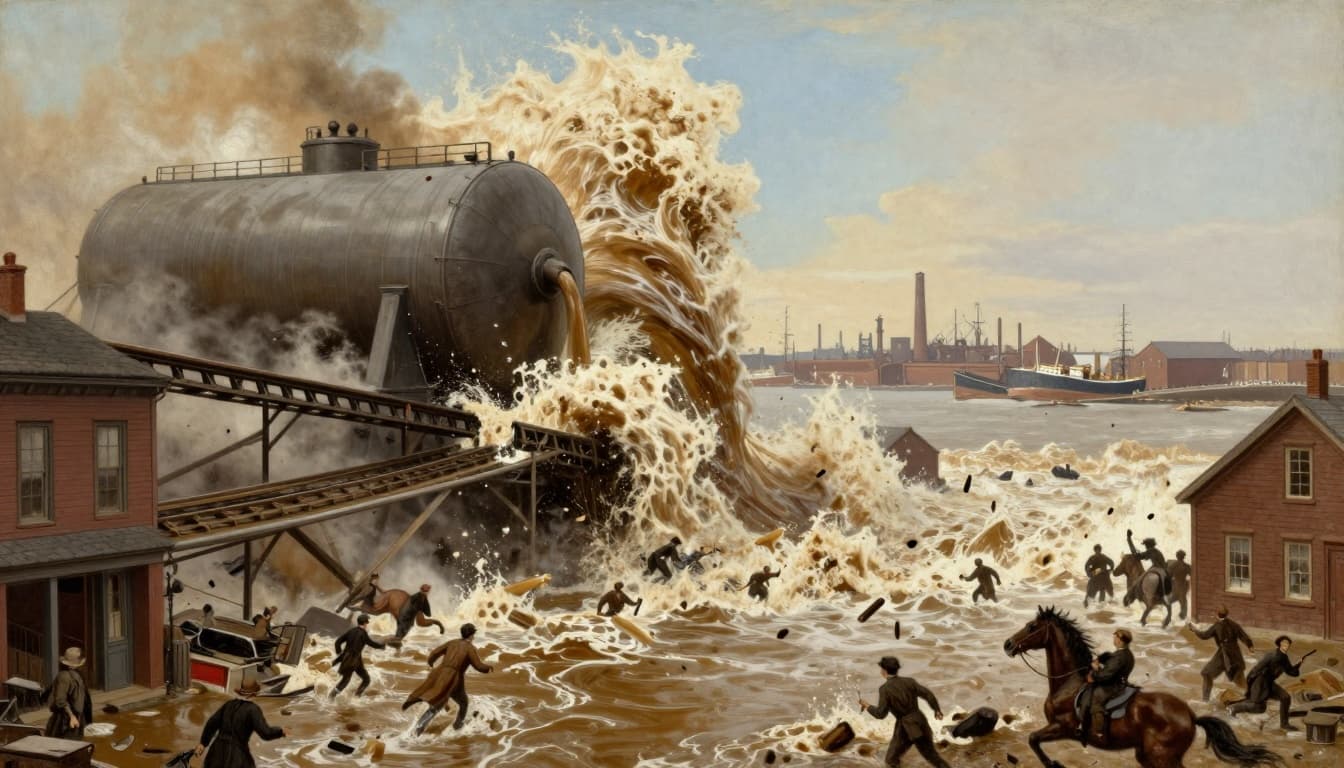
An artist’s view of the molasses surge tearing through the North End, created with AI.
The tank let go without warning, steel ripping open and sending molasses out like a collapsing dam. Accounts describe a wave that moved far faster than anyone expected from something that thick. Many retellings cite an initial speed around 35 mph, but the exact figure varies by source.
The same goes for height. Different reports put the surge somewhere in the 25 to 40-foot range near the first blast. What doesn’t vary is the damage: buildings were crushed or pushed off their bases, parts of the elevated rail structure buckled, and several blocks ended up coated. In places, streets sat under 2 to 3 feet of molasses, turning sidewalks into glue.
The human cost, and why molasses trapped people instead of washing past
The toll was clear and recorded: 21 people died, and about 150 were injured. Animals were caught too, including horses working the area.
Molasses can act two ways. Under force and with warmth, it can rush and spread quickly. Then it cools in winter air and thickens fast. A later Harvard-led study (2016) helped explain that shift, showing how cooling syrup would turn from moving flood to heavy drag in minutes. That change slowed escapes and made rescues painfully hard.
Why the tank failed, the safety problems investigators focused on
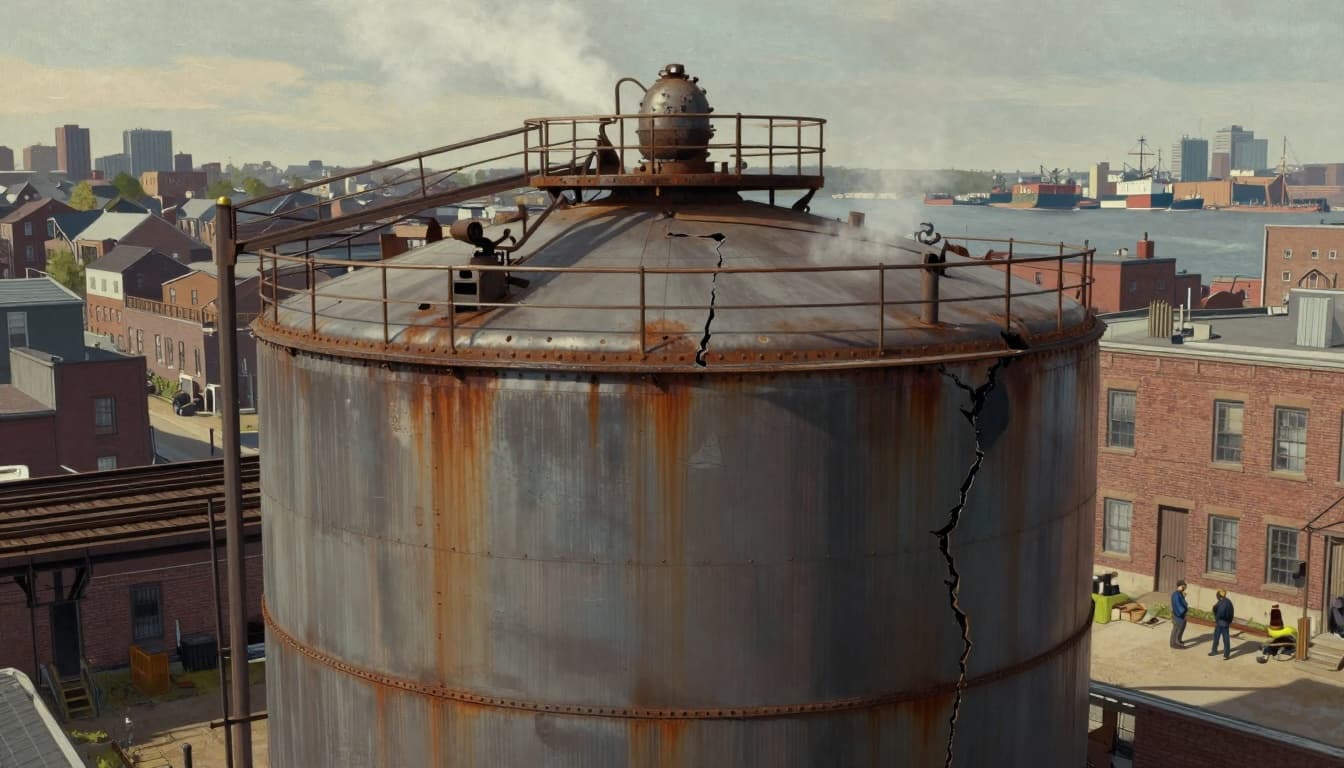
The tank’s weak points, rivets, and stressed steel imagined as it might have looked before failure, created with AI.
Investigators and later engineers kept circling the same theme: preventable risk. Reports described a tank that had leaked earlier in its life, with warning signs brushed aside. It wasn’t put through a proper full-pressure test, and oversight was thin.
Later engineering analysis pointed to structural problems, including steel and rivet weaknesses that made cracks more likely under repeated filling. Weather mattered too. After bitter cold, Boston warmed to above 40°F, and a fresh, warmer load had recently been added. That combination could make the molasses thinner at first while pressure built inside the tank.
No single detail explains everything. A cluster of avoidable failures does.
What people claimed at first, and what evidence did not support
Early on, sabotage talk spread fast, shaped by the Red Scare mood of the time. Some claimed a bomb or an anarchist attack.
The strongest findings didn’t back that up. Fermentation pressure was discussed historically as a possible contributor, since stored molasses can produce gas over time. But the case that held up centered on negligence and structural weakness, not a proven explosive.
Great Molasses Flood Aftermath, the lawsuit, and the changes that outlasted the smell
Rescuers fought the same thing that hurt people: stickiness. Responders waded in and pulled survivors out by hand, while crews tried to clear streets that wouldn’t rinse clean. Cleanup used salt water and sand, and molasses got tracked into everyday life across the city. Some reports said the harbor stayed stained for months.
Residents brought a major case against the company, often described as an early class-action style fight in Massachusetts. After long hearings, a court-appointed auditor held the company responsible, and damages were paid. The disaster pushed tougher expectations for building oversight, including the need for review by licensed professionals and real safety testing. The site today is parkland, with a plaque marking what happened.
In the end, the Great Molasses Flood was a rare kind of flood, caused by a familiar failure. Sources disagree on the exact wave height and speed, but the core facts don’t move: the date, the North End location, the tank’s massive volume, 21 dead, and about 150 injured, followed by a negligence finding. The lesson is plain. When design, testing, and oversight slip, the bill comes due in people, not paperwork.
Great Molasses Flood of 1919 – FAQ
What caused the Great Molasses Flood of 1919?
The disaster was caused by the failure of a massive steel storage tank holding over 2 million gallons of molasses. Investigations later pointed to poor construction, weak rivets, and lack of proper safety testing rather than sabotage.
How fast did the molasses wave move?
Some historical accounts estimate the initial surge moved as fast as 35 miles per hour. Exact speeds are debated, but witnesses agreed the wave traveled far faster than expected for such a thick substance.
How many people died in the molasses flood?
Twenty-one people lost their lives, and around 150 others were injured. Horses and other animals working in the area were also killed or trapped in the thick syrup.
Why was molasses so deadly instead of just messy?
Molasses can flow quickly when warm and under pressure, but it thickens rapidly as it cools. Victims were first knocked down by the surge, then trapped as the syrup became dense and sticky, making movement and rescue extremely difficult.
Was the disaster caused by sabotage?
Early rumors blamed anarchists, influenced by the Red Scare era. Later investigations and court findings focused on negligence, structural weakness, and lack of oversight rather than a proven explosive attack.
Did the molasses flood change safety laws?
Yes. The court case that followed helped push stricter building inspections and engineering oversight in Boston, setting precedents for modern construction safety standards.