

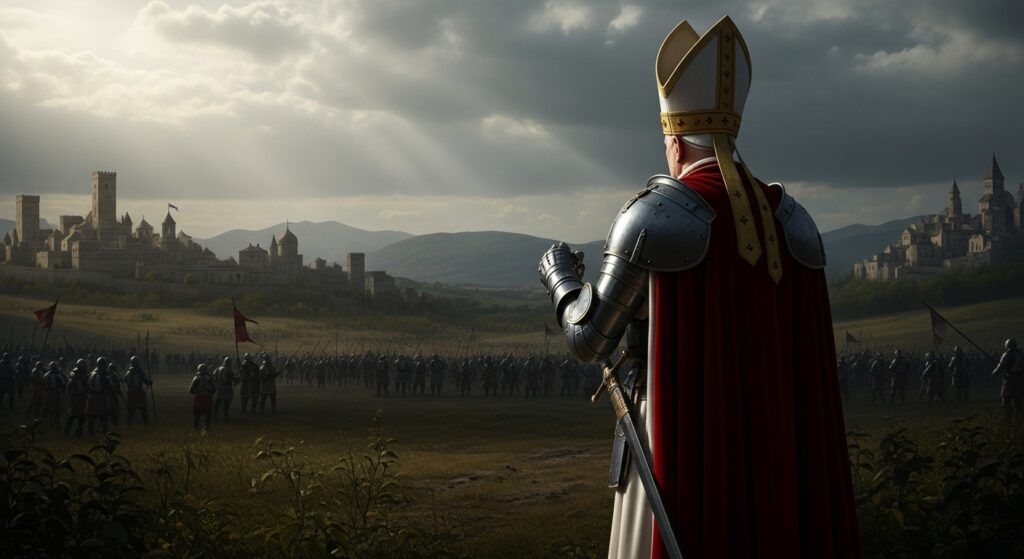
The Papal Wars
For most people, the idea of the pope leading armies into battle sounds pretty far-fetched. When I first learned that popes weren’t always just spiritual leaders but also crossed swords—sometimes literally—I had to double-check the history books. But if you look through church records and academic papers, you’ll see a string of papal battles that don’t get much attention in high school textbooks. From local skirmishes to full-on wars, the popes of centuries past were often right in the thick of Europe’s political chaos.
Papal Power and War: The Context Most People Miss
The Vatican we know today is this tiny, mostly quiet city-state, but for hundreds of years, the papacy was a major player on the battlefield, not just the pulpit. Historians like Thomas F. Madden and Eamon Duffy lay out how the pope’s authority wasn’t just religious. It was deeply tied to politics and land, especially through the Papal States. This large chunk of central Italy was directly under the pope’s control from about the eighth century through the nineteenth century. It didn’t just manage itself; the church governed, taxed, enforced laws, and actively safeguarded its borders.
Papal armies had to defend territory, suppress revolts, and sometimes seize additional territory. Plenty of popes grew up around knights and soldiers, and it wasn’t uncommon for them to wear armor, or at least fund a suit or two for their commanders. So when thinking about popes going to war, the context matters. The line between “church” and “state” looked very different, and often, it hardly existed at all. Sometimes, the pope was the sole political authority in the region, so his involvement in war was simply a part of governance. In other words, religion and politics in medieval and Renaissance Italy were two sides of the same coin.
Early Battles: The Birth of the Papal States
Most historical records trace the beginning of papal military power back to the eighth century. In 756, Pope Stephen II called in a favor from the Frankish king, Pepin the Short. The resulting campaigns against Lombard rulers led to the creation of the Papal States, with lands transferred to church control. Primary sources from that era, such as the “Liber Pontificalis” (Book of the Popes), detail these grants and the military actions that came with them, even if the popes weren’t personally swinging swords.
This wasn’t a one-off event. Throughout the next centuries, popes like Leo IX and later Gregory VII found themselves directly involved, sometimes by leading troops (as Leo IX did at the Battle of Civitate in 1053), and sometimes by rallying armies to defend Rome or church interests. These campaigns could be brutal. The records show popes captured, cities sacked, and long periods of instability for anyone living in these contested lands. Defending the Papal States meant making decisions that combined faith, politics, and raw survival.

The Papal Wars You Probably Never Heard About
- The War of the Eight Saints (1375-1378): This barely makes it into most world history classes, but it was basically Florence and other Italian cities banding together against Pope Gregory XI. The pope used mercenary bands, and the resulting violence devastated large parts of central Italy. Church records and Florentine archives give a sense of how shockingly destructive these battles became: famine, disease, wanted posters for leading churchmen, and hundreds dead.
- The Sack of Rome (1527): It’s famous, but the role of Pope Clement VII isn’t always told straight. When imperial troops of the Holy Roman Emperor Charles V ran amok in Rome, Clement had tried to form a military alliance against Charles. When it failed, he holed up in Castel Sant’Angelo and watched as much of Rome was looted and destroyed. Vatican letters and diaries from survivors show just how terrifying this was. The church nearly vanished as an institution during these harrowing days.
- Papal Resistance to Italian Unification (1848-1870): This period is less about epic medieval clashes and more about the pope’s army (made up of both locals and foreign volunteers) trying to resist the unification of Italy under a secular government. The defense of Rome in 1849 and later in 1870 pulled together mercenaries, Catholic volunteers, and whatever soldiers the pope could pay. The city’s defense was fierce, but the Papal States fell anyway. Contemporary reports and newspaper accounts describe desperate last stands, destroyed neighborhoods, and the confusion faced by Vatican officials as the world changed around them.
Why Did Popes Go to War?
Papal warfare almost always boiled down to territory and power. Church leaders argued they needed to defend Rome and the lands that provided the church’s independence. Historians such as John Julius Norwich point out that the revenues from these lands kept the papacy afloat, funding everything from massive building projects to feeding the poor, and, yes, keeping soldiers on the payroll.
Not every pope loved the battlefield, though. Some reluctantly got pulled in when Roman mobs threatened the city or rival states invaded Papal territories. Others saw military power as necessary to keep Catholic church leadership independent of foreign rulers, a tension that grew even more pronounced when armies from France, Spain, or the Holy Roman Empire passed through Italy. A few popes even tried to avoid fighting, only to find themselves surrounded by forces beyond their control.
What Actually Happened in Battle?
Contrary to a few medieval paintings, most popes didn’t lead charges. Historical evidence shows they hired mercenaries, called in loyal nobles, or used diplomacy alongside force. Leo IX is a notable exception; records from the “Chronicon Amalphitanum” and other sources say he wore armor at Civitate but was captured by Norman troops. Other popes rallied troops from a safe distance behind the lines.
Papal armies were as mixed as any medieval force. During the Renaissance, the papacy even hired the legendary Swiss Guard, who originally were fighting soldiers, not just ceremonial bodyguards. Letters and military contracts from the Vatican archives show how money, alliances, and politics all played into who fought and why. The fighting itself could range from sieges that starved populations to quick, chaotic field battles. Armies under papal control were supplied with everything from swords and crossbows to, in some cases, cannon, reflecting whatever military technology and manpower they could muster at the time.
The End of the Pope’s Army
By the nineteenth century, the age of popes with serious military power was winding down. The Papal States shrank as Italy unified. After 1870, when Italian forces marched into Rome, the pope’s role became mostly spiritual. A few loyal units stayed on, like the Swiss Guard, but their marching days were basically done. The pope even considered himself a “prisoner in the Vatican” for decades after losing control of Rome, refusing to leave the confines of the tiny city-state to protest the new Italian rule.
By 1929, with the Lateran Treaty, Vatican City officially became an independent, neutral state. The whole idea of the pope as a military ruler faded away, replaced by the image most people have now. Records from the Vatican and the Italian government are pretty clear on what changed: the pope’s power became symbolic, and the church stuck to influencing politics off the battlefield. This transformation marked a dramatic turn in world history and set a new standard for spiritual and political separation.
Things to Consider When Thinking About the “Holy Wars”
- The separation between religion and politics wasn’t clear-cut. Papal battles weren’t only about faith; they were about the economics and survival of the institution itself. Papal bulls, letters, and government records make these practical aims obvious.
- The records are messy and sometimes incomplete. Chroniclers were biased, and many old archives haven’t survived. There are gaps, especially for smaller battles or failed campaigns. When in doubt, historians compare church and secular sources to piece things together, but mysteries remain.
- The long-term impact still shows up today. Arguments about the Vatican’s financial holdings and its unique diplomatic position stem from these centuries, when the pope ran a government and an army. Newer books on Vatican politics track down a line right back to the era of papal warfare.
Papal Wars and Modern Views
When looking back, it’s worth separating the myths from the genuine records. Many paintings or legends show popes as larger-than-life warriors, but the more you get into the documented history, the more complex and sometimes awkward the truth becomes. The popes who went to war made decisions like any ruler defending something. Several regretted it, and a few seemed to thrive on it. The mix of faith, politics, and self-preservation shaped their choices in dramatic and unpredictable ways that we still try to grasp today.
Frequently Asked Questions About Papal Battles
Did the pope really lead an army in person?
Most of the time, popes led from behind the scenes, but a few—like Leo IX—did take a personal role on the battlefield, according to records from the eleventh century. It was rare, and most preferred to leave the actual fighting to generals or trusted noble allies while focusing on diplomacy and strategy from their headquarters.
Why did the papacy need so much territory?
The Papal States provided both income and independence from local kings and emperors, as historians like Eamon Duffy detail. Losing those lands meant losing power and freedom to act. Maintaining some territory also meant the church could act as a mediator between rival European powers, further reinforcing its unique position in world politics.
What happened to the papal army?
The papal army slowly disbanded after 1870, following the unification of Italy and the loss of church-controlled lands. Today, the Vatican has only a ceremonial guard and no military force. The Swiss Guard, known for its eye-catching uniforms, is primarily ceremonial and responsible for the pope’s security and that of visitors.
What’s Still Unclear About Papal Warfare?
Many details from these wars remain fuzzy. Archival losses, biased chronicles, and the secrecy of church politics mean that discussions of specific battles or motivations often run into dead ends. Sometimes, only one side of the story survived at all. Most church historians will admit the documentation is patchy, especially for the early and lesser-known clashes. Even digging into recent research or newly discovered letters, some gaps are simply impossible to fill.
For anyone curious about the tangled history of popes in armor, careful research helps bring the real picture into focus. But even now, some corners of this story will probably stay in the shadows, keeping history lovers always searching for the next hidden detail or untold tale.



Wow, this is a really cool website. I will read a lot more here. I need a reminder though, to look for your website sometimes. I did not see a sign up option to receive reminders.
MAC
I have not added it yet as this is still a new site and I need content first. I will be adding the feature soon. Thanks for stopping by.
Michael