

On November 22, 1987, Chicago TV viewers saw something that wasn’t supposed to be there. In the middle of normal programming, the picture cut out and a masked figure appeared, babbling through distorted audio against a shifting metal backdrop.
The max headroom hijack is still famous because it wasn’t a studio prank that “got on TV” later. It interrupted real broadcasts, twice, on major stations. That takes planning, gear, and a feel for how broadcast systems worked in the analog era.
What follows is what’s documented, what the strongest suspect profiles look like, what the technical limits were in 1987, and why the case remains unresolved as of January 2026.
What happened during the 1987 Max Headroom broadcast hijack
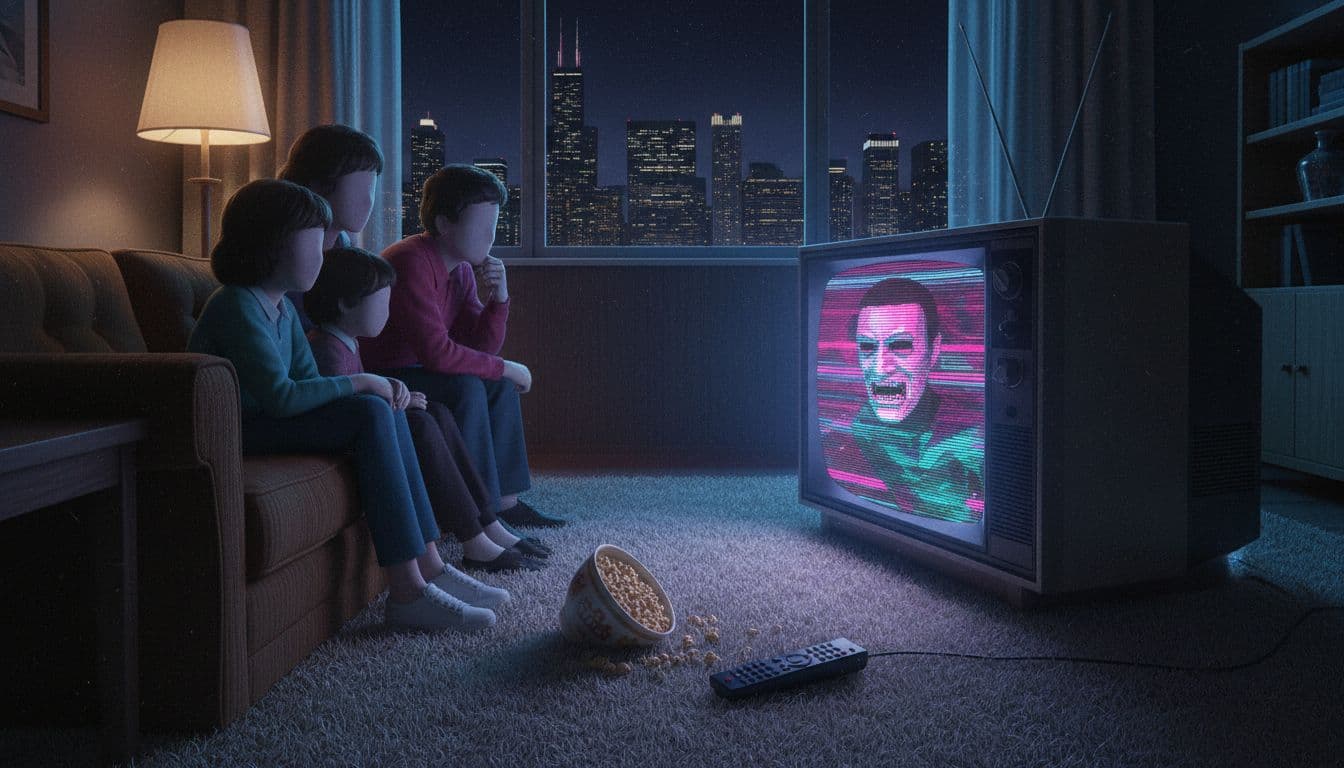
The intrusions happened on the same night, minutes apart. The first was brief, on commercial station WGN-TV, cutting into a broadcast for only a short burst (commonly reported as around 20 seconds). The second was longer, on PBS member station WTTW, interrupting a showing of Doctor Who (often described as about 90 seconds).
Recordings that survive show a person wearing a Max Headroom style mask and sunglasses. The real Max Headroom character was well-known in the mid-1980s, a stuttering, computer-generated looking TV personality. The hijacker copied that look, but the performance was rough and homemade, with warped sound, strange comments, and slapstick bits that didn’t clearly land as either satire or protest.
The stations didn’t “air” the footage in the normal sense. Their signal was replaced. Viewers at home couldn’t do anything about it, and the station engineers had only limited time to react because the intrusions were short.
For a grounded retelling with interviews and context, WBUR’s Endless Thread episode, “The Max Headroom Incident: Revisiting the Masked Mystery”, is a helpful listen.
What matters most is this: it wasn’t one accidental glitch. It was a deliberate act, repeated, and it targeted the weak points of 1980s broadcast delivery.
How the max headroom hijack likely worked (and what it couldn’t do)

A common misconception is that someone “hacked the TV station” like a modern network breach. In 1987, the more likely path was physical and radio-based: overpowering a link that carried the program feed from the studio to the transmitter site.
Many stations used a studio to transmitter link (often a microwave relay). If an attacker could transmit a stronger signal on the same frequency, aimed at the receiver dish, they could replace the station’s program before it ever reached the main broadcast transmitter. It’s less like breaking into a vault and more like shouting over someone into a microphone, but with the right frequency and timing.
That still wasn’t easy. The hijacker needed:
- Correct frequency and signal format, or the receiver wouldn’t lock on.
- A directional antenna or dish aimed at the station’s receiving point.
- Enough power to “capture” the receiver over the legitimate feed.
- A video source (likely tape playback) synced well enough to look like a real broadcast.
Here’s a simple way to think about the technical limits:
| Requirement | Why it mattered in 1987 |
|---|---|
| Line-of-sight or near line-of-sight | Microwave links are picky, obstructions kill the path. |
| Higher effective signal strength at the receiver | The station’s link was already strong, you had to beat it. |
| Matching modulation and timing | Bad sync makes the picture roll, tear, or drop out. |
| Fast setup and exit | The window was minutes, not hours, and attention would spike fast. |
This is why the “inside job” idea never goes away. Not because it’s proven, but because knowing which link to target, where to aim, and what settings to use suggests someone comfortable with RF systems.
For a technical, plain-language breakdown of this likely method, see Broken Signal’s overview of the incident. Treat it as an informed synthesis, not an official report, but the basic engineering idea matches what broadcast engineers have said for years.
Just as important is what the hijacker probably couldn’t do. They likely didn’t penetrate studio cameras, edit bays, or station computers. They didn’t need to. A well-timed RF override could cause the same chaos with far fewer moving parts.
Strongest suspect profiles, and why it’s still unsolved
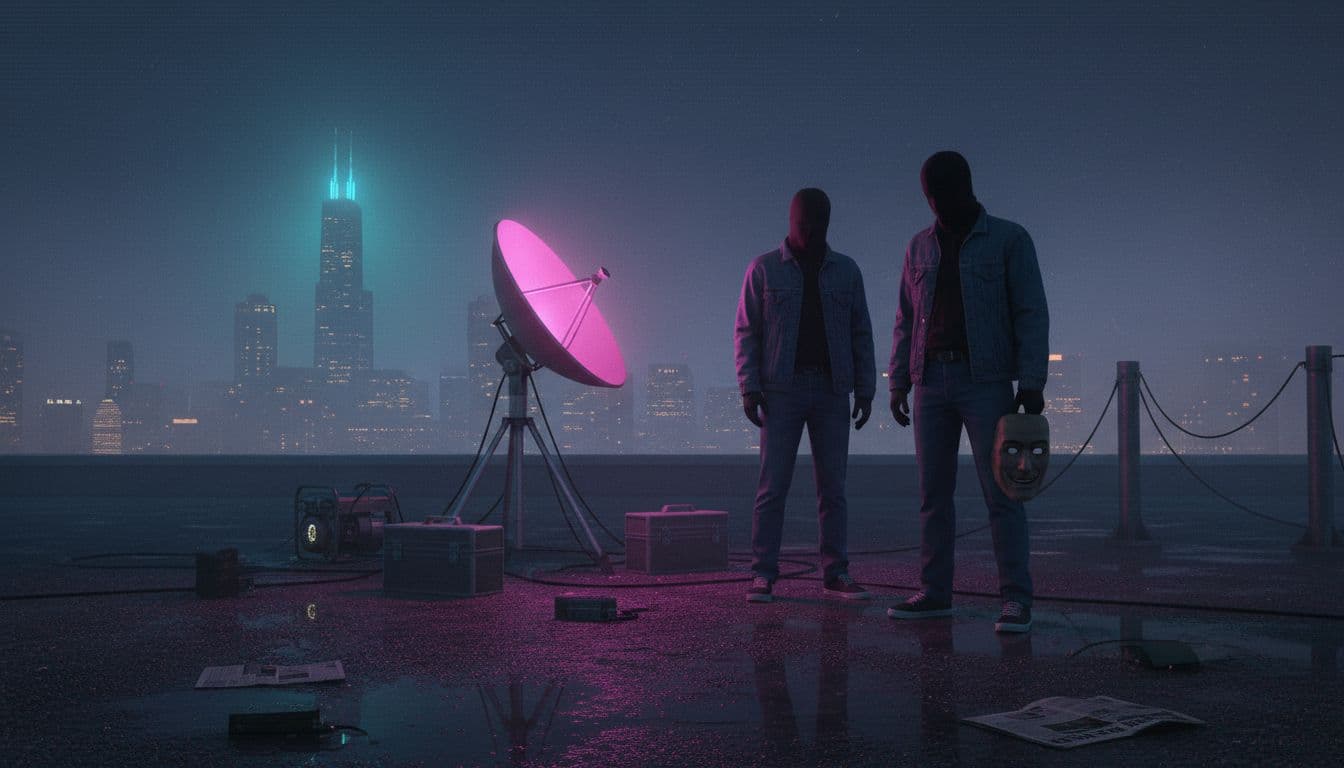
The honest answer on suspects is blunt: there are no publicly confirmed perpetrators, and no arrest has ever closed the case. Still, “strongest suspects” doesn’t have to mean naming people. It can mean identifying the smallest circle of people who could plausibly pull it off.
Based on the technical demands, the strongest suspect profiles tend to share a few traits:
1) RF and broadcast know-how
This could be a broadcast engineer, a telecom tech, a serious ham radio hobbyist, or anyone who had spent time around microwave gear. The hijack had to be engineered, not improvised.
2) Access to equipment that wasn’t common
A capable microwave transmitter setup, antennas, amplifiers, cabling, and a stable power source were expensive and awkward in the 1980s. That doesn’t require a corporate budget, but it does narrow the field to people with real resources or connections.
3) A small team, not one person
Even if one person appeared on screen, the operation likely benefited from at least one helper, someone to run playback, watch timing, or adjust the RF chain. That’s not proven, but it fits the workload.
4) Familiarity with Chicago’s broadcast geography
To aim a dish effectively, you need to know where the receiving target is and how to get a clean path. That points to someone local, or someone who had scouted the area.
So why isn’t it solved? Partly because the evidence trail is thin. The intrusion was brief, the perpetrators weren’t seen in public, and the act didn’t leave obvious fingerprints. There’s also no reliable “digital exhaust” from 1987 to mine later. Add decades of rumor, unverified claims, and copycat storytelling, and the signal gets noisier every year.
A concise summary of the known facts and investigation basics is collected on the Wikipedia article about the Max Headroom signal hijacking, which also reflects the key limitation: no identification has been confirmed by authorities.
Conclusion
The max headroom hijack still holds up because it sits at the edge of what was possible with analog broadcast systems: hard, but not impossible. The technical limits point to a knowledgeable, prepared person (or group), yet the short timeline and lack of physical evidence kept the case from ever snapping into focus.
As of January 2026, it remains unsolved, and any “confession” without verification should be treated as noise. If you had to bet on one thing, it’s that the answer is boring in the way real answers often are: someone skilled, local, and careful enough to stop before they got caught.