
People say haunted bridges have a pattern. A phantom from local legend at the rail that vanishes when you blink. Encounters with spirits, like a voice that seems to come from the water. A cold spot that makes your skin go tight, even in summer. I’m not here to “prove” any of that, and I’m not here to laugh at it either.
This is the ground rule: we stick to what can be checked in public records, established history, and credible reporting. Paranormal claims stay within the “unproven” box because that’s where evidence puts them.
Bridges attract legends for plain reasons. They’re isolated at night. Wind and traffic turn ordinary sounds into something almost human. And some bridges carry a hard, documented history of tragedy, accidents, and suicide, which changes how a place feels, even if you never read a single ghost story.
How Bridge Legends Earn a Haunted Reputation (Even When the Cause Is Not Supernatural)
A “haunted” label rarely begins with a ghost for haunted bridges. It usually starts with a story someone tells to explain a feeling they couldn’t place. Then the urban legend gets repeated, trimmed, sharpened, and handed to the next person like a family recipe. At some point, the bridge stops being a structure and starts being a character.
This doesn’t mean people are lying. It means people’s minds are active. Their memory is foggy. Real haunts, places with strong emotions baked into them, can make ordinary details feel loaded, like the air is carrying a secret.
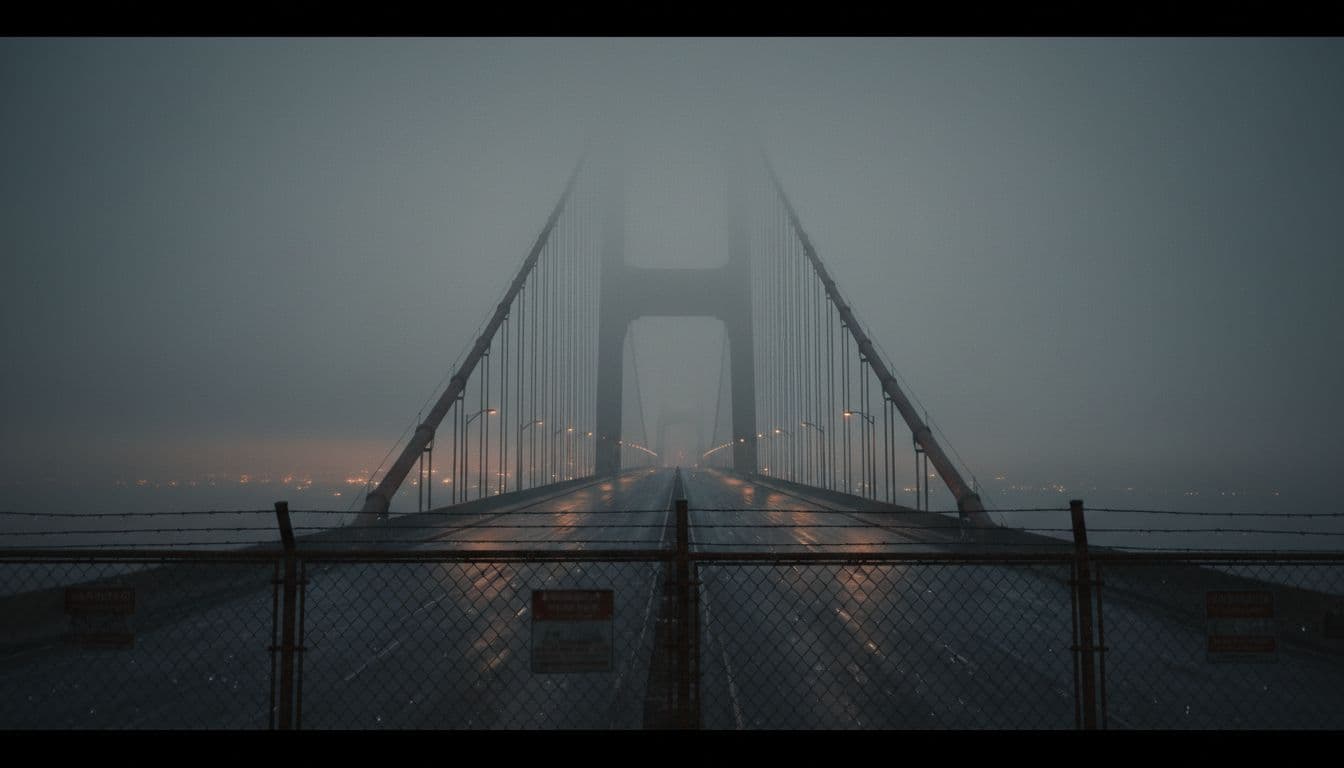
Bridges and overpasses also have built-in eeriness. They’re narrow passages between two places. They force you to move forward. They suspend you over water, traffic, or open air, which is a quiet reminder that gravity is patient and doesn’t negotiate. Add darkness, fog, and a local rumor, and your mind starts filling gaps like it’s being paid by the hour.
The two forces do most of the heavy lifting: documented tragedy and the way bridges play tricks on your senses.
The role of documented deaths: accidents, suicides, and public memory
When a bridge has repeated, recorded deaths tied to it, the place can carry a social scar. People remember what happened. The newspaper archives the facts. Families grieve their losses. City councils debate what to do. Over the years, that record becomes a kind of shadow history that locals absorb, even if they can’t quote dates.
Some bridges are widely known for suicide deaths, and those deaths are tracked in official counts, research summaries, and long-running news reporting. Even when exact totals vary by source, the broader fact remains: a tragic pattern occurred there, shaping the community’s relationship with the site.
The “haunting” often grows out of that. A person hears there were deaths. Then they hear someone say, “My cousin saw a ghostly sighting, a woman crying on the walkway.” The brain stitches the pieces together. It’s a human trait, not a supernatural one.
A careful note: when a bridge is tied to suicide, the right response is respect, not tourism. If a place is known for loss, treat it like you would a cemetery, even if it has streetlights and a speed limit.
Why bridges feel eerie at night: sound, sightlines, and suggestion
Bridges are sound machines that produce eerie noises. Wind funnels through the trusses. Tires hiss. Metal expands and contracts. Footsteps echo and return a half-second late, just long enough to feel like someone else is walking behind you.
Then there’s the vision aspect. Fog erases the actual distance. Headlights smear into shapes. Shadows stretch across beams and railings. On older bridges, irregular stone and rust can mimic face shapes the way clouds mimic dragons. Your eyes do what eyes do: they look for meaning in what feels like an unseen force.
Expectation matters too. If you show up already primed with a legend, your attention narrows. You start scanning for the “sign.” In a group, storytelling can compound the facts. Someone says they felt a cold patch, and suddenly, three people “notice” it. The experience can still be vivid, even life-stoppingly vivid, without proving anything paranormal like spirits happened.
That’s the uncomfortable truth. Feelings are real, but the causes are often ordinary.
A few famous haunted bridges, and what the historical record actually shows
“Famous haunted bridges” lists are a weird genre. They often mix solid history with campfire fog, as Cry Baby Bridge tales of a crying baby heard near railroad tracks or claims of haunted hitchhikers in a white dress on a covered bridge. So let’s separate what’s documented from what’s rumored, without turning tragedy into a spooky prop.
Below are well-known bridges that attract ghost talk. In each case, the verified part is the human history of tragic accidents. The ghost part is a claim people repeat, not a fact the public record can confirm.
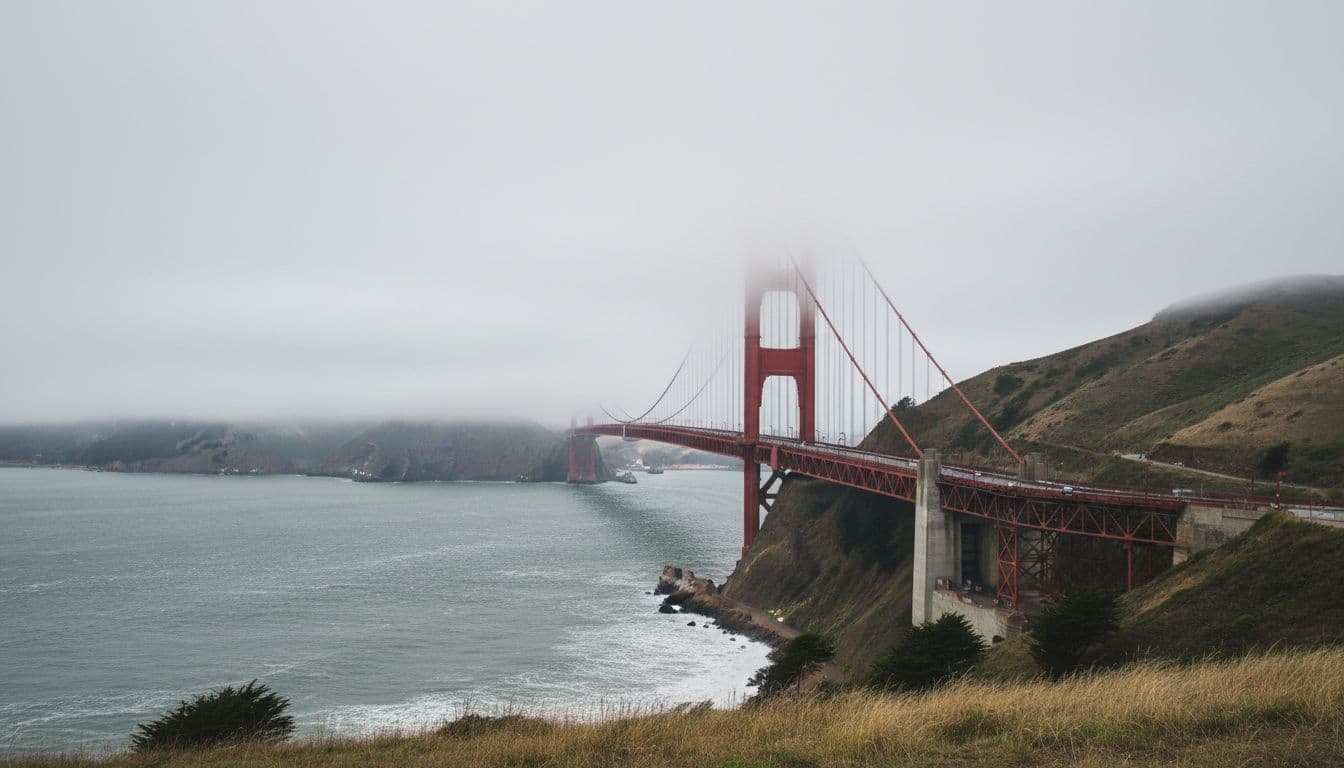
Golden Gate Bridge (San Francisco): a well-documented tragedy site that drew ghost lore
The Golden Gate Bridge opened in 1937, and it’s one of the most studied bridge sites in public suicide reporting. Compiled counts often cite more than 1,600 people who committed suicide since opening, and some recent summaries place the lifetime total closer to about 2,000 through 2024, with totals varying by method of counting and confirmation. What’s also documented is change: suicide-prevention nets completed in January 2024 were followed by a sharp reported drop in deaths in subsequent reporting.
Ghost stories exist around the bridge, but they aren’t the verified headline. The verified headline is long in public memory, and real efforts to reduce loss.
Nanjing Yangtze River Bridge (Nanjing): large recorded death totals and lasting rumors
The Nanjing Yangtze River Bridge is often described in Chinese and international reporting as a site with a heavy suicide history. A figure frequently cited in compiled summaries is more than 2,000 untimely deaths recorded between 1968 and 2006. As of January 2026, it’s hard to find a single public source with easily accessible, up-to-date official totals, so treat that number as a commonly repeated compiled count, not a live dashboard.
Rumors of hauntings follow the pattern: repeated tragedy plus a dramatic setting equals a story that won’t die, even when the “ghost evidence” never graduates beyond anecdote.
Aurora Bridge (Seattle): documented suicide history and the stories people tell around it
Seattle’s Aurora Bridge (the George Washington Memorial Bridge) has a long-running public reputation tied to suicide incidents and a car accident. Compiled reporting has placed the total at more than 230 over time, with 2012 often mentioned as a peak year in local news discussions. As with many sites, totals can vary by source and time window, and recent official updates aren’t always easy to locate in one place.
The “haunted” talk tends to orbit grief. People report strange feelings on the span. The record, though, points back to the same grim anchor: repeated loss changes how a city talks about a structure.
Clifton Suspension Bridge (Bristol): a long historical record of deaths and a long life of legends
Clifton Suspension Bridge, a historical landmark opened in 1864, matters because older structures simply have more time to accumulate events, headlines, and folklore. Compiled reporting and historical summaries commonly cite more than 500 deaths over its history, though precise totals depend on what’s included and which records are used. As of January 2026, a single definitive public number isn’t consistently presented across all sources, so it’s best read as a long-term compiled estimate.
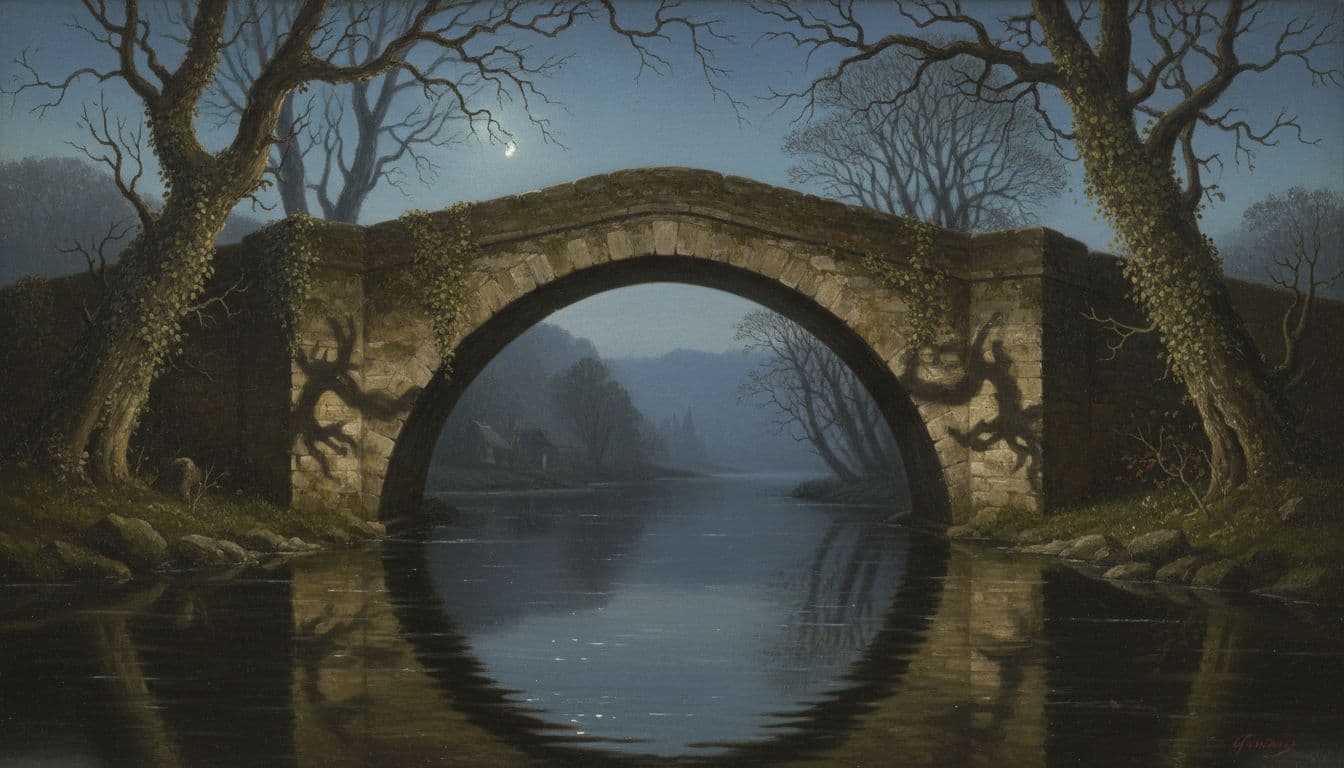
Legends grow easily around Victorian engineering because it already looks like a gothic novel, complete with ghostly apparitions as a local legend. Add real deaths and a century of retellings, and the bridge becomes a myth factory.
These documented tragedies represent the real haunts, far more enduring than folklore.
If you visit a “haunted bridge,” how to be safe, respectful, and honest about what you experienced
If you’re going to visit haunted bridges, treat them like you’re entering two things at once: a physical hazard, and a place with human history. Both can hurt you if you get sloppy.
A good rule is boring on purpose. Don’t trespass. Don’t climb barriers. Don’t go looking for “the best spot” if that spot is an active lane, a closed walkway, a restricted area under the bridge, or an overpass exposed to traffic. Bridges don’t care about your story, and neither do cars.
Also, be careful with your own head. These sites often carry histories tied to suicides, car accidents, lovers’ quarrels, or other tragedies. If that topic is personal for you, go with someone you trust, or skip the visit. That’s not a weakness. That’s self-respect.
Safety first: traffic, footing, weather, and local rules
Plan like an adult, not like a dare, especially when navigating haunted roads on your way to the site. Visit in daylight when you can. Use official viewpoints and open walkways. Wear reflective gear if you’ll be near traffic, and keep your phone charged. Obey all local rules, even under the bridge.
Check wind, rain, fog, and temperature. Wet steel and slick stone turn a casual step into a hospital bill, and standing on active spans risks a deadly car accident. Skip alcohol. It doesn’t make you brave; it makes you stupid, and bridges punish stupidity fast.
Respect matters: tragedy sites are not props
If a bridge is known for deaths, don’t treat it like a ghost tour stage set. No “pranks.” No posing on railings. No chasing strangers at night or honking your horn because you want a reaction for a clip. Accidents can and usually do happen when you’re just joking around. There is no reason to become a statistic for that bridge’s history.
If you talk about what you experienced, separate facts from feelings. Stick to what you can verify (dates, public history, safety measures). Avoid naming private individuals. If you describe a rumor, label it as a rumor. That simple honesty is the difference between curiosity and exploitation.
The Errie Ending
Haunted bridges don’t need ghosts to feel heavy. Many of them sit at the crossroads of documented tragedy, harsh physics, and the bridge legends people pass down like heirlooms through generations. Paranormal claims of spirits can be sincere and vivid, but they remain unproven; the record usually points to human causes, separating dramatic rumors like being buried alive from verified myths.
If you visit, learn the history behind each local legend, follow the rules, and don’t turn someone else’s loss into your entertainment. The bridge will still feel strange. That’s fine. The honest sentence is also the hardest one: we can’t always explain a feeling, but we can still respect the facts.